Maximize Savings Through 2026 Heat Pump Rebates
Rising energy expenses prompt homeowners to seek effective solutions that maintain comfort levels. The 2026 heat pump rebate initiatives facilitate this by incentivizing upgrades to efficient systems. Individuals replacing outdated furnaces, adding water heaters, or overhauling HVAC setups stand to gain thousands in savings alongside reduced energy consumption.
Understanding rebate mechanics proves essential for leveraging heat pumps as a strategic choice. Proper preparation enables claims on significant incentives, diminishes carbon emissions, and delivers year-round home comfort.
Overview of 2026 Heat Pump Rebate Structures
The 2026 energy rebate frameworks assist homeowners in offsetting expenses for high-efficiency installations. Availability and amounts differ by state, yet most programs support air-source and ground-source heat pumps, plus heat pump water heaters.
Eligible incentives include:
- Upfront rebates that directly reduce equipment and labor expenses
- Tax credits redeemable during annual tax filings
- Utility incentives offering bill reductions or direct payments for efficiency improvements
Programs establish criteria based on income levels, system capacities, and efficiency ratings. Certain rebates fund up to full costs for qualifying low-income households, while others provide graduated rewards according to equipment categories.
Federal and state funding allows layering of incentives, amplifying overall benefits. Homeowners frequently combine support for hardware, installation, and electrical enhancements to prepare comprehensively for upgrades.
Steps to Prepare Rebate Applications
Preparation for heat pump rebates demands organized effort. Begin by compiling information on existing systems, energy consumption patterns, and insulation quality. Energy auditors advise conducting a full home assessment prior to any modifications.
Proceed with these actions:
- Arrange a professional energy audit to pinpoint inefficiencies and verify rebate qualifications.
- Assemble records such as utility statements, installer quotes, and efficiency specifications.
- Review specific program guidelines, which may mandate Energy Star-certified products or approved installation methods.
- Engage certified installers, as their documentation supports rebate approvals.
- File applications promptly, given that funds deplete quickly and priority goes to early submissions.
Participants in online communities like Reddit's r/HomeImprovement stress scrutinizing rebate details. One contributor noted, "I missed out on a bonus credit because I didn’t register the equipment within 90 days." Such oversights can substantially affect final rebates.
Estimating Your Savings Potential
Savings from adopting a heat pump vary with regional electricity prices and the replaced system. Typically, substituting an electric furnace or resistance heater with an air-source heat pump yields 30 to 50 percent reductions in heating expenses.
Rebates enhance these gains significantly. Consider an $8,000 air-source heat pump installation: a $2,000 rebate paired with a 30 percent tax credit lowers the effective cost by approximately half. Ongoing lower utility payments accelerate the investment recovery over time.
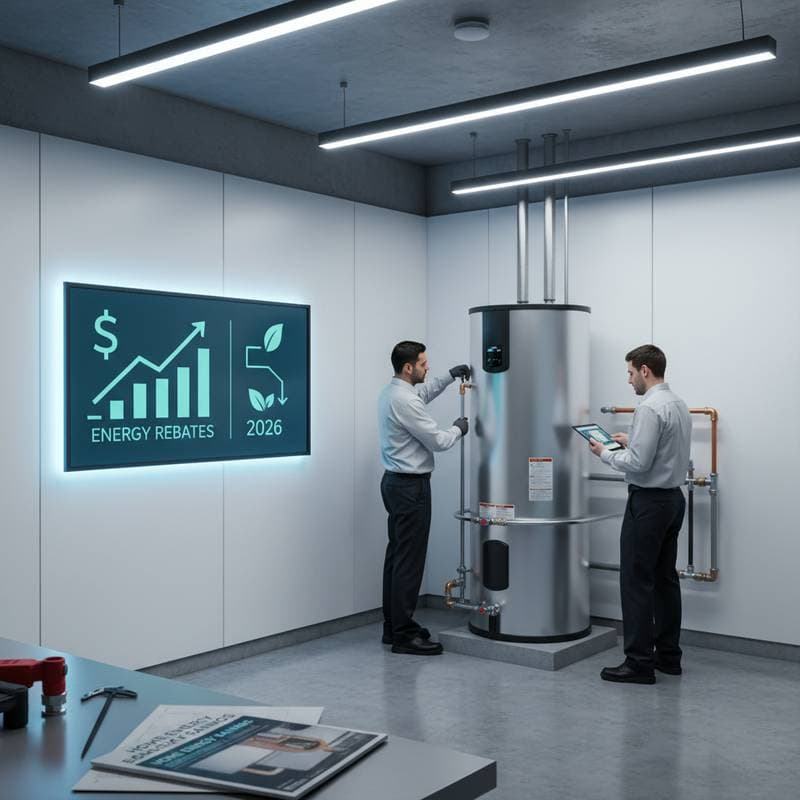
Heat pump water heaters produce comparable outcomes, with annual water heating savings often exceeding $300. Integrated with rebates, these systems achieve payback within a few years.
Addressing Key Challenges
Performance in cold regions concerns many prospective users. Contemporary cold-climate heat pumps function effectively at sub-freezing temperatures. Manufacturers such as Mitsubishi, Daikin, and Trane produce models that sustain heating output in harsh weather.
Electrical infrastructure poses another hurdle, particularly in older residences requiring panel expansions. Dedicated rebate options frequently cover these modifications, streamlining the path to enhanced efficiency.
System sizing demands attention to avoid inefficiencies. Excessively large units lead to short cycling, which hampers savings and comfort. Units too small falter in peak conditions. Expert evaluations guarantee optimal performance and full rebate eligibility.
Secure Your Upgrade Now
As 2026 rebate programs launch, proactive steps secure funding availability. Investigate state-specific opportunities, book an energy audit, and obtain multiple contractor bids.
Consider broader advantages beyond cost reductions. Heat pumps elevate property values, decrease upkeep needs, and ensure steady seasonal comfort. For long-term residents, efficiency improvements yield repeated returns on the initial outlay.
Those who plan ahead position themselves to capture complete rebate advantages upon program activation. Through deliberate actions, replace obsolete equipment, reduce ongoing energy expenditures, and establish a sustainable, efficient living environment for the future.