When to Change HVAC Filters This Fall and What Type
Fall brings cooler air, shorter days, and a shift in how your home HVAC system operates. As temperatures drop, your furnace takes on more of the heating load. That means the air filter becomes even more important in keeping indoor air clean and ensuring efficient performance. Replacing the filter at the right time and choosing the right type protects the system from strain while reducing energy costs.
Why HVAC Filters Matter in the Fall
An HVAC filter captures fine debris such as pollen, pet dander, and microscopic particles that affect indoor air quality. During fall, allergens like ragweed and mold spores remain present. Closed windows trap these particles inside, so a clean filter supports cleaner air circulation and steady airflow.
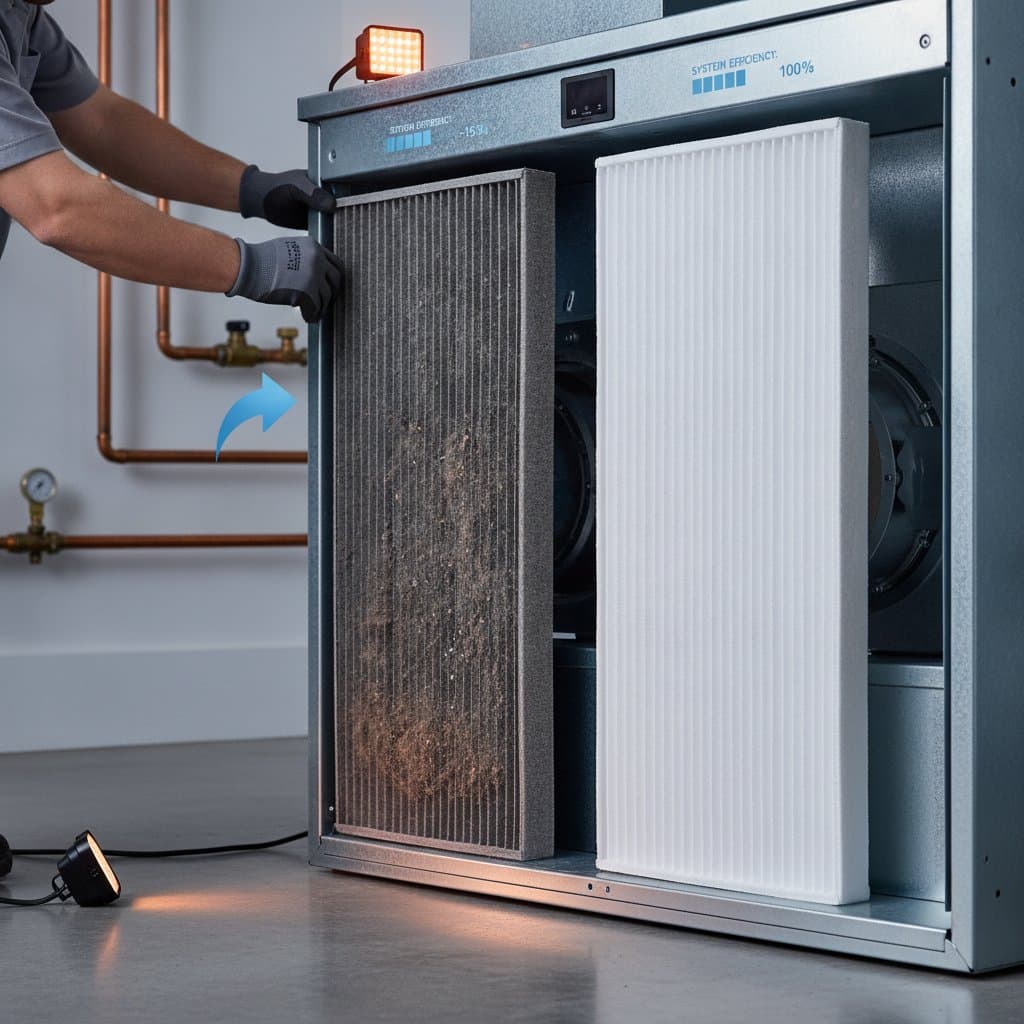
A clogged filter forces the blower motor to work harder. This extra strain shortens furnace life, raises energy bills, and reduces comfort. Replacing a dirty filter with a clean one can lower HVAC energy consumption by up to 15 percent.
How Often to Change Your HVAC Filter in Fall
The ideal replacement schedule depends on filter material, home air quality, and system run time. Most homeowners should check filters monthly during fall and replace them every one to three months.
Consider these key factors when deciding how often to replace your HVAC filter:
-
Filter Material and Rating
Filters vary in materials and ratings that determine lifespan. A fiberglass filter may last around a month, while a pleated high-efficiency filter can last up to three months. The Minimum Efficiency Reporting Value measures a filter ability to capture particles. A higher rating improves filtration yet increases airflow resistance, so balance quality with system compatibility. -
Household Occupancy and Pets
More people generate more dust, hair, and skin flakes. Pets accelerate filter loading. Homes with multiple pets or heavy shedding breeds should plan monthly replacements to maintain airflow and reduce allergens. -
Allergies and Sensitivity
High-efficiency pleated filters with a MERV rating between 11 and 13 capture finer particles for those with allergies or asthma. These filters may need more frequent checks because they fill faster in homes with higher particle loads. -
Home Environment
Heavy pollen, dust storms, or nearby construction cause faster clogging. Seasonal leaf debris around outdoor units also affects performance, so keep that area clear. -
System Run Time
Temperature fluctuations increase system cycling. Each cycle loads the filter with dust. Daily furnace operation calls for shorter intervals between changes.
Types of HVAC Filters and Their Benefits
Choosing the right filter depends on priorities such as cost, air quality, or efficiency.
Fiberglass Filters
These affordable disposable filters capture large particles like lint and dust but allow smaller contaminants through. They suit homes without pets or allergy concerns and require monthly replacement.
Pleated Filters
Pleated filters trap smaller particles including pollen and mold spores. Their larger surface area holds more debris without restricting airflow quickly. A MERV rating between 8 and 13 offers a strong balance of efficiency and air quality. These filters usually last two to three months.
High-Efficiency Filters
High-efficiency filters capture tiny particles that affect respiratory health and often carry MERV ratings of 14 or higher. Some systems cannot handle the reduced airflow, so confirm compatibility first. Many homeowners find that a MERV 11 to 13 pleated filter delivers similar benefits without stressing the motor.
Washable Filters
Washable filters reduce waste and long-term cost. They require careful cleaning and complete drying to prevent mold growth. These filters work best for homeowners who commit to regular maintenance every few weeks.
Electrostatic Filters
Electrostatic filters use static electricity to attract charged particles. They come in disposable and washable versions and capture smaller contaminants than fiberglass options. Consistent maintenance ensures reliable performance.
Signs It Is Time to Replace Your Filter
Weak airflow from vents, visible dust buildup, or unusual furnace noise indicates a clogged filter. A burning smell when heat activates can signal restricted airflow and overheating. Hold the filter up to light. If light does not pass through easily, replace it. Smart thermostats that track filter life help avoid missed changes.
Steps for Replacing an HVAC Filter
- Turn off the HVAC unit before removing the filter.
- Locate the filter compartment behind a return air grille or inside the air handler.
- Slide the old filter out carefully and note the airflow arrow direction.
- Insert the new filter so the airflow arrow matches system direction.
- Restart the system and confirm steady airflow from the vents.
Cost Considerations and Energy Savings
Filter prices vary by material and efficiency. Fiberglass models cost only a few dollars each, while high-efficiency pleated models cost more per unit. Washable filters carry a higher initial cost but last several years with proper care. Regular replacement remains one of the most cost-effective maintenance tasks. A clean filter keeps the system efficient, reduces repair risk, and maintains consistent comfort.
Professional Insights for Fall Maintenance
Fall is a good time to schedule a professional inspection. Technicians check blower motors, belts, and ducts for early wear. They also confirm filter compatibility with system airflow requirements. Some homeowners upgrade to smart filters that track air quality and send replacement alerts. Pairing regular filter changes with seasonal tune-ups extends system life by several years.
Protecting Your System Year-Round
Keeping the HVAC filter clean supports comfort and efficiency. It reduces allergens, maintains smooth operation, and protects the furnace from strain. Mark the calendar or set a reminder to check the filter every month. Replace it promptly when dirty to sustain performance through the season.