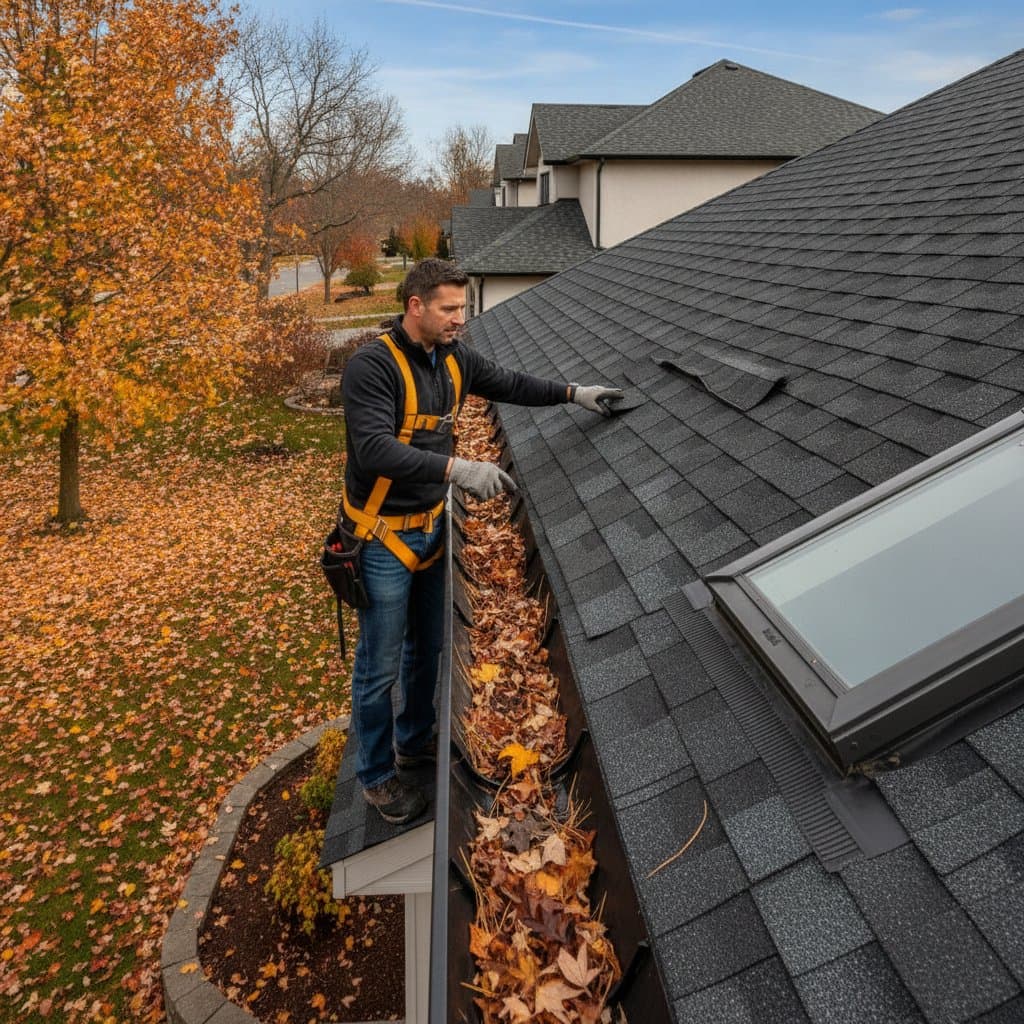
Fall Roof Inspection Prevents Costly Winter Damage
A roof endures every storm and temperature shift, yet problems often surface only after leaks appear. Fall offers the ideal window to examine and repair a roof before winter arrives. Addressing issues now stops minor wear from escalating into major expenses such as ice dams or structural leaks.
Why Fall Roof Inspections Matter
Freezing temperatures contract shingles, stiffen flashing, and expand trapped moisture into larger cracks. An inspection performed before the first frost identifies lifted shingles, clogged gutters, and deteriorated sealants while repairs remain straightforward. The process also reduces heat loss by locating gaps that allow warm air to escape.
Prepare with a stable ladder, binoculars, gloves, a flashlight, and a notebook. Homeowners who feel uneasy on a ladder or face a steep roof pitch should engage a qualified roofing contractor for safe evaluation.
Step 1: Check Shingles and Roofing Material
Begin with a ground-level walk around the house to spot missing, curled, or cracked shingles. Asphalt shingles must lie flat and retain even granule coverage. Dark streaks indicate worn protective granules that shorten service life.
On closer inspection, note these conditions:
- Loose or missing shingles that expose underlayment
- Nail pops that create entry points for water
- Warped flashing around chimneys and vents
- Sagging sections that suggest moisture or structural concerns
Replacement becomes more economical than repeated repairs once damage exceeds fifteen percent of the surface.
Step 2: Clean and Inspect Gutters
Gutters channel water away from the foundation and prevent edge pooling. Remove leaves and debris with a trowel or scoop, then run water through the system to confirm unobstructed flow. Check for rust, loose hangers, and downspouts that terminate less than three feet from the house.
Staining or mildew on nearby siding signals prior overflow. Gutter guards limit future debris accumulation and reduce cleaning frequency.
Step 3: Examine Flashing and Sealants
Flashing shields joints at chimneys, skylights, and vents. Temperature cycles loosen caulk and corrode metal. Inspect these areas with a flashlight for gaps or cracked sealant, then apply fresh exterior-grade roofing sealant and secure loose fasteners.
Verify that step flashing overlaps shingles correctly on chimneys. Replace hardened rubber boots around vents before moisture reaches interior ceilings.
Step 4: Inspect the Attic Interior
The attic reveals hidden roof conditions. Look for damp insulation, discolored wood, and daylight penetrating the deck. Wet or compressed insulation loses thermal performance and requires replacement.
Confirm balanced airflow between soffit and ridge vents. Inadequate ventilation traps moisture that leads to condensation and ice dams. Adding baffles restores proper circulation.
Common Mistakes to Avoid
Homeowners sometimes overlook small defects that grow during winter. Skip these errors:
- Dismissing leaks that appear to dry without intervention
- Walking on cold, brittle shingles
- Using pressure washers that remove granules
- Applying interior caulk to exterior flashing
- Neglecting an attic check after exterior work
Proper materials and methodical attention preserve roof warranties.
When to Call a Professional
Roofs steeper than a six-to-twelve pitch or those showing sagging demand professional equipment and expertise. Inspection fees typically range from one hundred fifty to four hundred dollars. Early detection prevents far larger winter repair costs.
Schedule Repairs Before First Frost
A systematic fall inspection keeps the home secure through harsh weather. Work from the ground up, record findings, and complete needed fixes while temperatures remain mild. Annual attention extends roof life to twenty or thirty years with fewer unexpected problems.