
Fall HVAC Filter Schedule for Peak Efficiency
When cooler air arrives, your HVAC system shifts from cooling mode to heating mode. This seasonal transition offers an ideal opportunity to inspect, replace, or upgrade filters. A structured fall maintenance plan prevents airflow restrictions, reduces energy consumption, and prolongs equipment life.
Why Fall Filter Maintenance Matters
Summer operation draws in dust, pollen, and dander that accumulate on filters. This buildup restricts airflow once heating begins and forces the blower motor to work harder. Regular changes restore balance, stabilize temperatures, and avoid excess energy use.
Understanding Filter Types and Ratings
Filter performance varies by construction and rating. The Minimum Efficiency Reporting Value, or MERV, indicates particle capture capability. Higher ratings trap finer debris but can increase resistance if the system is not designed for them.
- Fiberglass filters offer basic protection at low cost yet provide minimal air quality improvement.
- Pleated filters use folded polyester or cotton to capture smaller particles and last longer than fiberglass.
- Electrostatic filters use static charge to attract dust and suit homes with pets or smokers.
- High efficiency filters deliver hospital grade performance but require verification that the blower can handle added resistance.
Most residences perform best with pleated filters rated MERV 8 to MERV 11. Ratings above MERV 13 often need professional confirmation before installation.
Setting a Fall Filter Schedule
Replacement frequency depends on filter type, home size, and runtime. Fall conditions such as closed windows and increased indoor activity raise demand on the system.
- Inspect filters monthly for visible dust or discoloration.
- Replace standard filters every 60 to 90 days. Reduce the interval to 30 or 45 days in homes with pets or allergy concerns.
- Clean washable filters with low pressure water, allow complete drying, and reinstall promptly.
Phone reminders or smart thermostat alerts help maintain consistency and prevent sudden airflow problems.
Cost and Time Considerations
Filter replacement remains one of the lowest cost maintenance tasks. Disposable options range from a few dollars to roughly twenty dollars each. Premium pleated or electrostatic models cost more yet deliver longer service intervals.
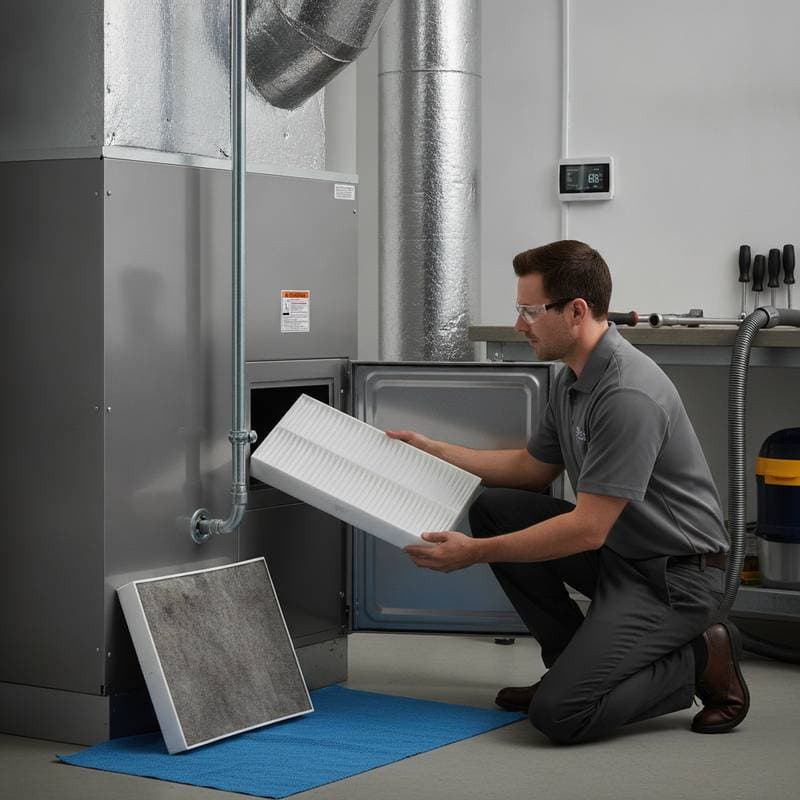
The process requires less than ten minutes. Turn the system off, note airflow arrows on the old filter, and insert the correctly sized replacement. Measure dimensions before purchase because sizes differ by manufacturer.
Signs Your Filter Needs Immediate Attention
Unexpected issues can still occur despite a schedule. Watch for these indicators of restricted airflow:
- Weak air movement from supply vents.
- Rapid dust return on surfaces after cleaning.
- Unusual odors at system startup.
- Elevated monthly energy costs.
- Temperature differences between rooms.
Persistent symptoms after filter replacement point to possible duct blockages or motor issues that require technician diagnosis.
When to Call a Professional
A seasonal service visit covers more than filter changes. Technicians check motor wear, thermostat accuracy, and duct integrity. Typical fall inspections range from one hundred to three hundred dollars depending on system size.
Technicians can also measure static pressure to confirm filter compatibility. If resistance proves too high, they may recommend a lower MERV rating or blower upgrade.
Pro Tips for Success
Consistent filter care produces measurable savings over time. Apply these practices to maintain performance:
- Purchase filters in bulk during sales to reduce unit cost and maintain stock.
- Mark each filter with its installation date for accurate tracking.
- Vacuum return grilles and nearby floors to limit incoming dust.
- Select a thermostat that logs runtime and issues maintenance reminders.
- Combine filter work with gutter cleaning and furnace checks to complete seasonal tasks efficiently.
Extending System Longevity
A disciplined filter routine protects air quality, stabilizes energy use, and reduces repair frequency. Homeowners who follow the outlined steps enjoy reliable comfort through winter without unexpected expenses.




