Fall Chimney Prep Prevents Fires and Carbon Monoxide
A warm fire on a chilly evening offers comfort. Before lighting the first log, the chimney and fireplace require a thorough check. Fall provides the ideal window for preparation. Early attention prevents smoke problems, carbon monoxide buildup, and chimney fires.
This checklist guides homeowners through essential inspections, cleaning tasks, and preparations.
Chimney Maintenance Fundamentals
A chimney directs smoke, gases, and particles out of the home. Neglect allows creosote to accumulate. Creosote forms from incomplete wood combustion and ignites easily. Debris, nesting materials, and weather damage can also block airflow or damage masonry.
Certified professionals recommend one full inspection each year before heating season begins. Some tasks suit homeowner review. Others demand specialized tools to uncover hidden issues.
Step by Step Fall Chimney Checklist
Follow these steps to prepare the fireplace and chimney for winter. Each action supports performance, safety, and comfort.
1. Schedule a Professional Chimney Inspection
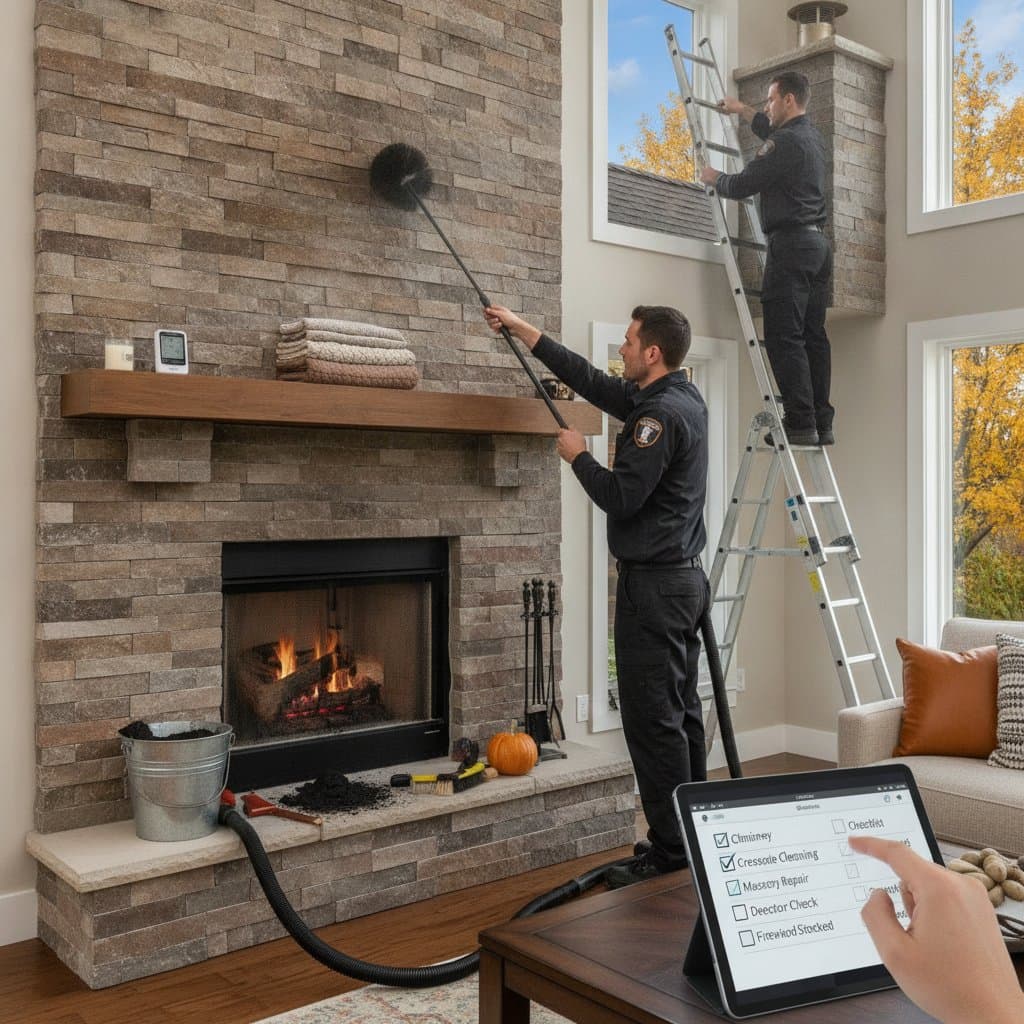
Arrange an inspection with a certified technician before use. The technician examines obstructions, cracks, and creosote levels with cameras and brushes. The visit confirms proper function of the flue, liner, and damper.
2. Remove Creosote and Soot Buildup
Heavy deposits require a complete cleaning. Even thin layers restrict airflow and raise fire risk. Professional cleaning clears residue from chimney walls, smoke chamber, and flue.
3. Check the Chimney Cap and Crown
Verify that the cap remains secure and intact. Inspect the crown for cracks or gaps. Moisture entering through damage leads to brick deterioration in freezing conditions.
4. Assess Masonry and Mortar Joints
Walk around the home and examine the exterior. Note missing mortar, loose bricks, or white efflorescence stains. Prompt repair of crumbling mortar prevents larger structural problems.
5. Verify Damper and Flue Operation
Open and close the damper to confirm a tight seal and smooth movement. A faulty damper allows drafts or smoke entry. Clear the flue of nests or debris at the same time.
6. Test Draft and Airflow
Light a small piece of newspaper in the fireplace. Smoke should rise steadily up the flue. Drifting smoke indicates a blockage or cold air pocket that needs correction.
7. Inspect the Fireplace Interior
Remove old ashes and examine the firebox for cracks or loose parts. Replace damaged grates or screens. Clean glass doors with a nonabrasive product to restore visibility.
8. Confirm Smoke and Carbon Monoxide Detector Function
Test all nearby alarms and replace batteries. Working detectors supply early warnings that protect occupants.
9. Prepare Firewood Storage
Burn only seasoned hardwood dried for several months. Stack logs off the ground under cover. Dry wood produces less smoke and creosote.
10. Examine Flashing and Roof Seals
Check metal flashing at the roofline for gaps or rust. Repair or reseal these areas to block water penetration and ice damage.
Common Questions About Fall Chimney Maintenance
How often should a chimney be cleaned?
Clean whenever creosote reaches one eighth of an inch or at least once a year. Frequent use may require additional cleanings.
What signs indicate chimney repair needs?
Look for crumbling mortar, water stains, odors, or visible cracks. Smoke leakage or poor draft also signals hidden damage.
Can homeowners clean a chimney themselves?
Light ash removal is possible for homeowners. Deeper cleaning requires professionals equipped with high powered brushes and vacuum systems.
Which wood burns best?
Seasoned hardwoods such as oak or maple produce higher heat and cleaner combustion. Avoid treated or painted wood because it releases toxic fumes.
Is a chimney cap required?
A cap prevents rain, debris, and animals from entering and reduces blockage and damage risks.
Why does a fireplace smell smoky when unused?
Odors usually result from creosote buildup or poor draft. Cleaning followed by damper adjustment resolves most cases.
Do gas fireplaces need chimney maintenance?
Gas units vent combustion gases that leave residues and cause corrosion. Annual inspections remain necessary.
Should the damper close after every fire?
Close the damper once embers cool to prevent indoor heat loss.
Ongoing Chimney Safety Practices
After inspection and cleaning, empty ashes regularly throughout the season. Check the damper after windy days. Monitor for unusual smoke or odors and address issues promptly.