2026 Deck Staining Schedule With Top Product Picks
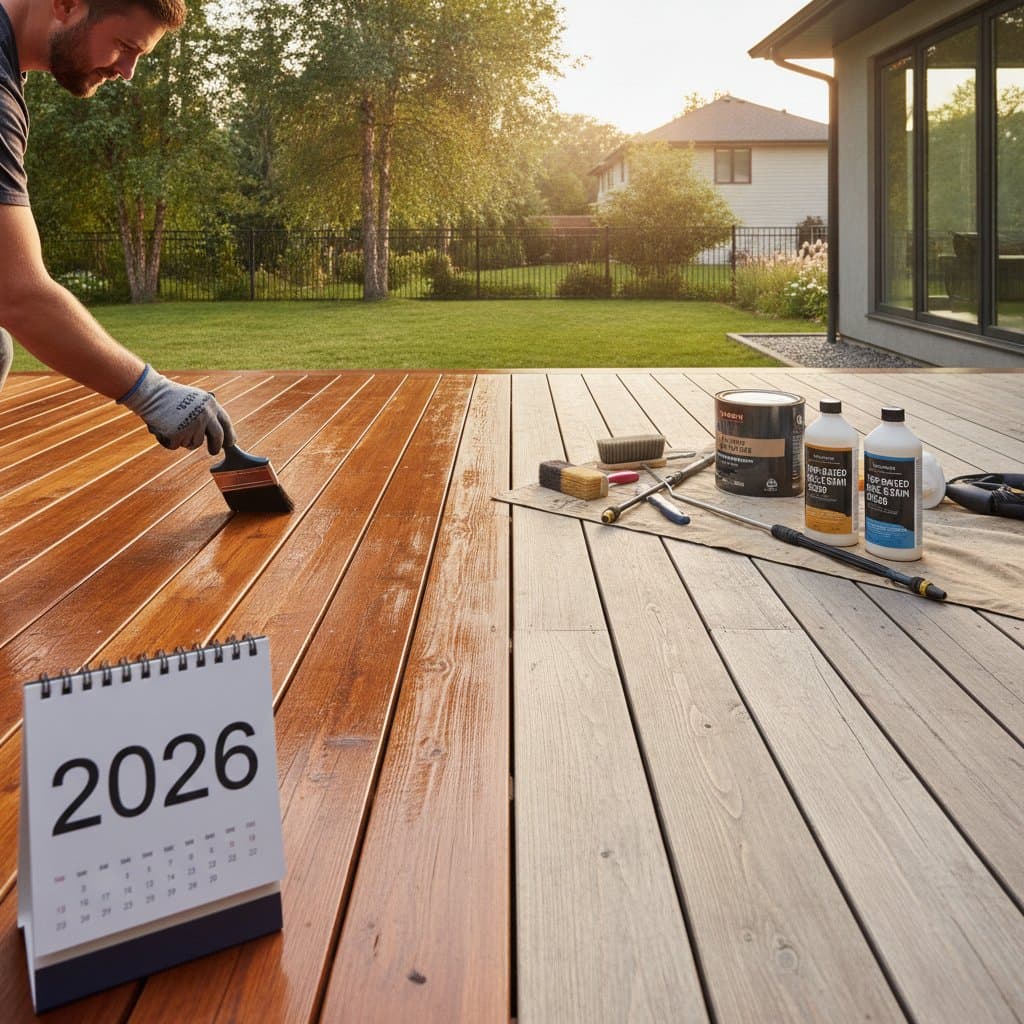
A well maintained deck adds comfort and value to any outdoor space. Without regular care the wood fades, cracks, and eventually rots. Staining forms a barrier against moisture, sunlight, and daily foot traffic. Homeowners who follow a consistent plan protect their investment and enjoy an attractive surface for years.
This guide shows how to build a reliable staining schedule, which products suit different deck types, and what results to expect in cost and effort.
Planning Seasonal Timing
Choose a period of mild temperatures and low humidity. The forecast should remain dry for at least two full days after application. Test the surface with your hand. It must feel dry before any product is applied.
Inspecting and Preparing the Surface
Walk the deck and note loose boards, raised nails, or gray patches caused by sun exposure. Replace damaged sections and secure all fasteners. Clean the wood with a deck wash or oxygen bleach solution. A pressure washer speeds the job when the nozzle stays at least twelve inches from the boards. Allow the surface to dry completely, usually two to three days, before staining begins.
Setting a Practical Frequency
Follow this sequence for most decks:
- Apply the first coat once new wood has cured for several months.
- Recoat every two to three years, adjusting for sun exposure and stain type.
- Perform a quick mid season check and touch up high traffic spots.
Semi transparent stains lose color sooner than solid stains, so schedule reviews accordingly.
Selecting Top Performing Stains
These five products earned strong marks for durability, ease of use, and finish quality.
Behr Premium Advanced DeckOver
This acrylic coating suits older decks that show cracks and wear. It fills small gaps and leaves a textured, slip resistant surface. One gallon covers about seventy five square feet and costs forty to forty five dollars.
Cabot Australian Timber Oil
An oil based formula made with linseed and tung oils penetrates deeply and shields against moisture. It enhances the natural tone of cedar and redwood. Coverage reaches one hundred fifty square feet per gallon at a cost of thirty five to forty dollars. Apply with a pad or brush.
Ready Seal Exterior Wood Stain and Sealer
This product requires little surface prep and forgives minor overlap marks. It spreads evenly without constant wet edge maintenance. One gallon costs about forty dollars and covers one hundred fifty square feet.
DEFY Extreme Semi Transparent Wood Stain
Zinc nano particles in this water based stain reflect ultraviolet light and slow fading. Color stays consistent even on decks in full sun. A gallon covers one hundred fifty square feet and costs forty five to fifty dollars.
TWP 100 Pro Series
Professionals choose this stain for strong mold resistance and matte color retention. It performs well in humid climates. Coverage ranges from one hundred fifty to two hundred square feet per gallon at forty five to fifty five dollars.
Estimating Cost and Time
For a three hundred square foot deck, plan to spend one hundred twenty to two hundred dollars on stain plus forty to sixty dollars for brushes, rollers, and cleaners. Professional labor adds two to four dollars per square foot. Most jobs require one day for cleaning and another for application and drying. Experienced do it yourselfers finish the work over a weekend.
Avoiding Common Errors
Apply stain only to clean, dry wood. Sand rough areas before coating. Use thin coats to prevent sticky residue. Check the weather forecast and test color on a hidden board first. Follow label instructions for mixing and cure times.
Applying the Finish Effectively
Work with a stain pad for uniform coverage. Stir the product frequently to keep pigment even. Back brush after spraying to drive stain into the grain. Two thin coats outperform one heavy layer. Cover nearby plants and siding with plastic sheeting during the job.
Protecting the Surface Year Round
Sweep leaves and debris weekly. Rinse the deck with a hose every few weeks. Clean spills immediately. Keep planters on stands rather than directly on the boards so moisture cannot collect underneath. A light maintenance coat every other season preserves color without full surface preparation.