Summer Attic Ventilation Fixes That Prevent Overheating
When temperatures rise, the attic often becomes the hottest area in a home. Poor ventilation traps heat that leads to roof damage, higher energy bills, and indoor discomfort. Targeted improvements to airflow before peak summer heat arrives keep indoor spaces cooler while protecting the roof structure over time.
Why Attic Ventilation Matters
An attic with inadequate ventilation can exceed 130 degrees even on moderate days. This heat radiates downward and increases the workload on cooling systems. Balanced airflow also limits moisture accumulation that contributes to mold growth and structural decay.
Signs Your Attic Needs Better Ventilation
Inspect the space for clear indicators of restricted airflow. Homeowners should look for these conditions during a routine check:
- Hot ceilings or upper rooms that remain warm after sunset
- Peeling paint or warped shingles on the roof
- Rust on nails and metal fasteners inside the attic
- Musty smells from excess humidity
- Insulation that appears compressed or damp
Any of these issues signal the need for ventilation upgrades.
Balancing Intake and Exhaust Vents
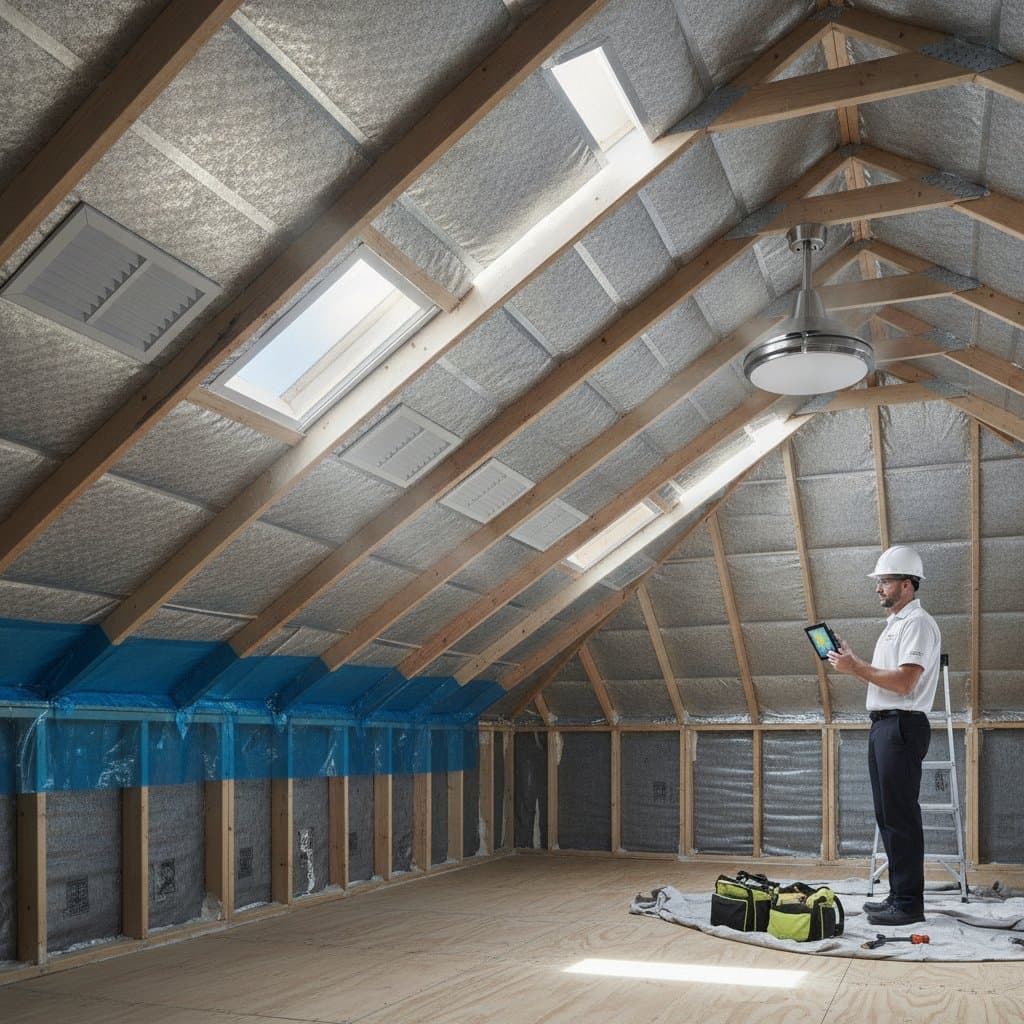
Effective systems maintain equal intake at the eaves and exhaust near the peak. Soffit vents draw cooler air along the eaves when spaced every six feet or installed as continuous strips. Ridge vents release rising heat along the roof peak and perform best when paired with unobstructed soffit vents. Gable vents add cross flow on sidewalls but rarely suffice alone. A standard ratio calls for one square foot of net free ventilation area per 150 square feet of attic floor space.
Clearing Blocked Air Paths
Insulation or debris often covers soffit openings in older homes. Check for daylight visible through the vents from inside the attic. When light is absent, install rafter baffles between each pair of rafters to hold insulation back and maintain open channels. These low cost channels restore consistent intake without repeated adjustments.
Installing Attic Fans for Extra Cooling
Passive vents may fall short in hot climates or oversized attics. Electric fans provide strong exhaust but increase energy use. Solar powered models operate without grid power and can lower attic temperatures by as much as 20 degrees. Thermostatic controls activate fans automatically once temperatures reach approximately 100 degrees. Place any fan near the ridge and verify that intake vents supply adequate replacement air to avoid pulling conditioned air from living areas.
Sealing Leaks Before Ventilation Upgrades
Air sealing must precede fan or vent additions. Gaps around fixtures, pipes, and hatches allow cooled air to escape upward. Apply foam sealant or weatherstripping to close these openings. Use insulation contact rated covers over recessed lights to prevent heat transfer while maintaining safety.
Checking Insulation Levels
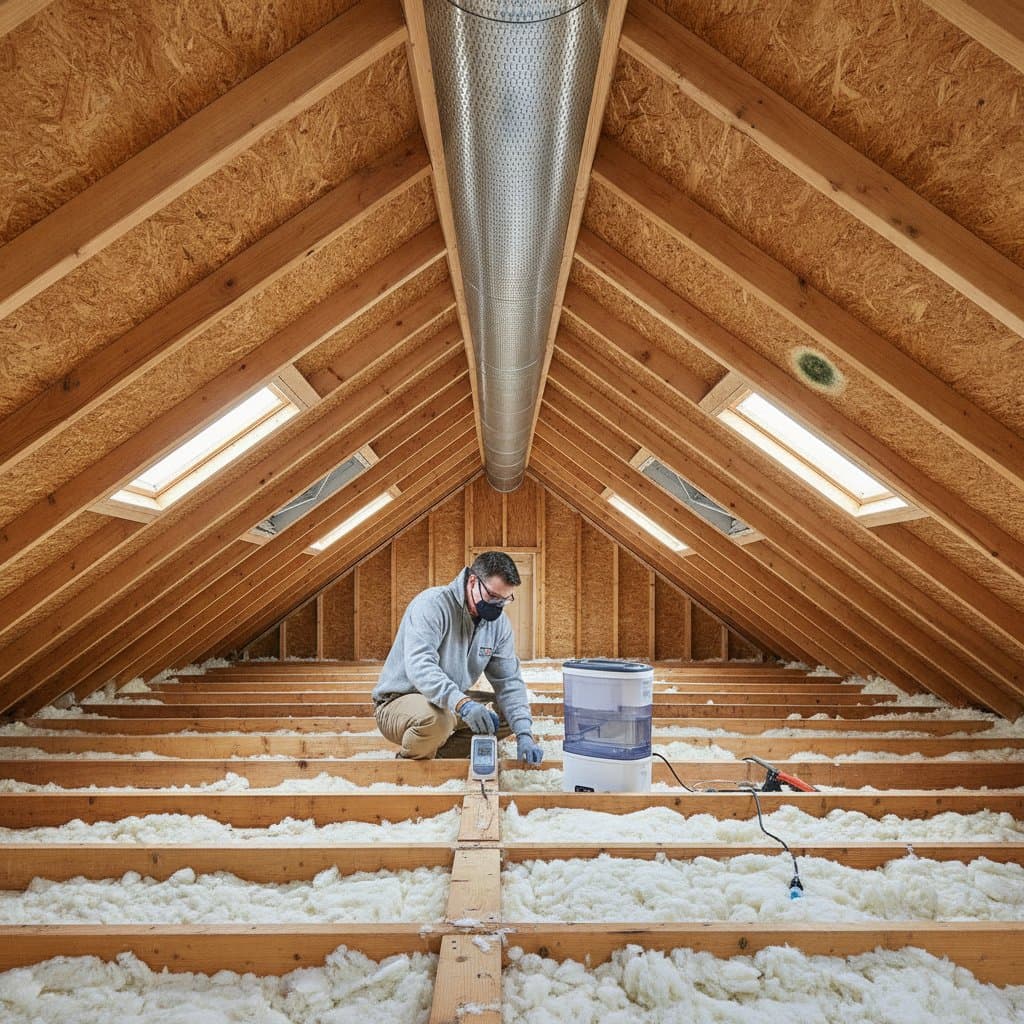
Ventilation moves air while insulation limits heat transfer through the ceiling. Measure depth across the attic floor. Depths of 10 to 14 inches usually provide adequate resistance in most climates. Replace compacted or discolored material and select the appropriate R value for local conditions.
Regular Roof and Vent Inspections
Inspect vents and flashing twice each year and after storms. Clear debris from screens and confirm ridge vents sit flush without gaps. Address moisture stains or mold promptly to prevent further damage before the next heatwave.
Protect Long Term Performance
Once intake, exhaust, and sealing work together, rooms stay cooler and cooling equipment operates less frequently. Routine cleaning of soffit vents and seasonal testing of fans preserve these gains and extend the service life of both the roof and the cooling system.