Why Spring Sump Pump Maintenance Stops Basement Floods
Every spring, melting snow, heavy rain, and thawing ground saturate the soil around your home. For houses with basements, this combination often pushes groundwater toward the foundation. A sump pump serves as the first line of defense against that pressure. If it fails, the result can be a flooded basement, ruined flooring, and expensive repairs. Preventing those problems starts with one simple habit: spring sump pump maintenance.
Keeping your sump pump in working condition is not complicated, but it requires attention, timing, and consistency. Whether you handle it yourself or hire a professional, spring is the critical season to ensure that your pump is ready for the wet months ahead.
Understanding the Role of a Sump Pump
A sump pump collects excess groundwater that seeps into the sump pit, a basin located at the lowest point of your basement or crawl space. As water fills the pit, the pump activates and sends the water away from the house through a discharge pipe. Without it, hydrostatic pressure can push water through foundation cracks, window wells, or floor joints.
Why Spring Is the Perfect Time for Maintenance
Spring brings a combination of conditions that test your sump pump more than any other season. Melting snow increases underground moisture, while seasonal rain fills the soil to capacity. Checking your sump pump before this happens keeps you one step ahead of potential flooding.
During winter, pumps often sit idle for long periods. Freezing temperatures can cause discharge lines to crack or traps to freeze. As temperatures rise, those small issues can turn into major problems when the first heavy rain hits. Spring maintenance ensures that the system activates smoothly after months of inactivity.
Step-by-Step Spring Sump Pump Maintenance
Homeowners can perform most of these steps with basic tools and a careful approach. The key is to follow each one in order and confirm that the system operates correctly before the season first storm.
1. Inspect the Power Source
Start by making sure the sump pump is plugged into a working outlet. If your pump connects to a ground fault circuit interrupter, test the outlet to confirm it is functioning. Many basement floods happen because the power supply is interrupted. Consider adding a battery backup system or a water-powered backup if your area experiences frequent outages.
2. Clean the Sump Pit
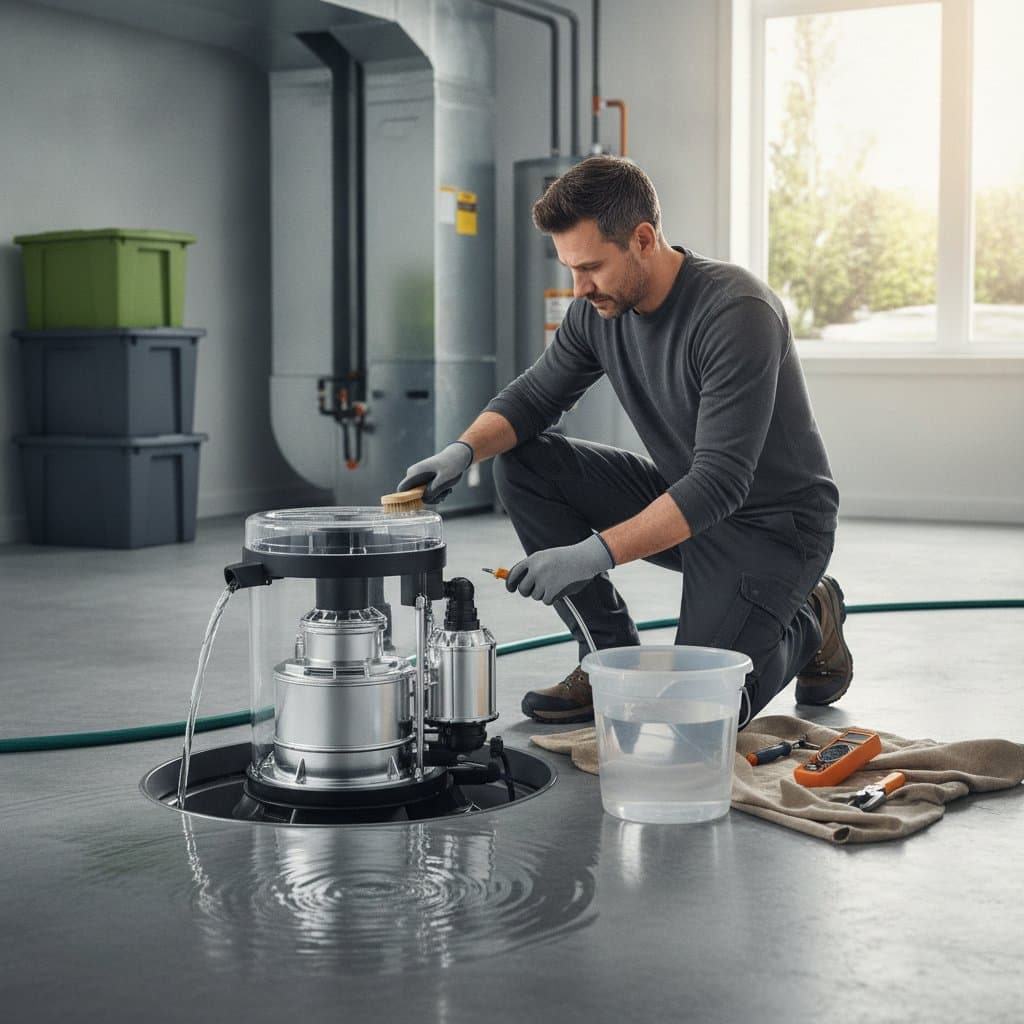
Remove any debris, gravel, or dirt that may have collected in the basin. Sediment can prevent the float switch from moving freely, which stops the pump from turning on. A clean pit ensures accurate activation and smoother pumping.
3. Test the Float Switch
The float switch signals the pump to start when water rises. Pour a bucket of water into the pit until the float lifts. The pump should start quickly and discharge water through the pipe. Watch the process to ensure it stops once the water level drops. If it runs continuously or fails to start, the switch may need adjustment or replacement.
4. Check the Discharge Line
Walk outside and locate the end of the discharge pipe. Make sure it is clear of soil, leaves, or ice. The line should direct water at least ten feet away from the foundation. If it ends too close, water can seep back toward your basement. Some homeowners add an extension or splash block to improve drainage.
5. Examine the Check Valve
The check valve prevents water from flowing back into the pit after the pump stops. Listen for a click as the pump shuts off. If you hear gurgling or see water returning to the pit, the valve may be stuck or worn out. Replacing it is inexpensive and can save your pump from overworking.
6. Clean the Pump Intake
Unplug the pump before handling it. Lift it out of the pit and inspect the intake screen at the bottom. Rinse away any dirt or buildup that can restrict water flow. A clogged intake forces the motor to work harder, which shortens its lifespan.
7. Test Backup Power
If your sump pump includes a battery backup, check the charge and replace batteries that show corrosion or low voltage. Test the secondary pump by unplugging the main unit. The backup should activate immediately.
When to Call a Professional
While most homeowners can handle basic cleaning and testing, professional technicians provide deeper inspection and service. A sump pump specialist can check electrical components, test amperage draw, and identify early signs of motor failure. They can also confirm proper discharge slope and pipe sizing, which are often overlooked in do-it-yourself checks.
Professional maintenance typically costs less than repairing water damage from a single flood. Many plumbing and waterproofing companies offer spring tune-up packages that include cleaning, testing, and performance verification. Hiring an expert once a year can extend the life of your pump and reduce long-term costs.
Common Sump Pump Problems and How to Fix Them
Even a well-maintained pump can develop issues over time. Recognizing the warning signs helps you act quickly before a failure occurs.
Frequent Cycling
If your pump turns on and off repeatedly, it may be undersized for your pit or the check valve may be failing. Adjusting the float height or replacing the valve usually corrects this.
No Power or Silent Pump
A tripped circuit breaker or faulty outlet can prevent activation. Check your power supply first. If power is fine but the motor does not run, the internal switch or wiring may need replacement.
Continuous Running
A pump that never shuts off can overheat and burn out. This often happens when the float is lodged in the on position or the discharge pipe is blocked. Cleaning the pit and freeing the float usually solves the problem.
Strange Noises
Grinding or rattling sounds indicate debris in the impeller or worn bearings. Unplug the unit, remove it, and inspect the impeller for obstructions. If the noise continues, professional service is recommended.
Seasonal Considerations Beyond Spring
While spring is the best time for full maintenance, periodic checks throughout the year keep your system reliable. In summer, test the pump monthly by pouring water into the pit, especially if storms are common in your area. During fall, clear leaves and debris from the discharge area. In winter, make sure the discharge line remains free of ice and snow buildup.
For homes in regions with fluctuating groundwater, a maintenance schedule every three months offers strong protection. This routine approach gives you confidence that the system will activate when you need it most.
Cost-Effective Strategies for Long-Term Reliability
Maintaining a sump pump does not have to be expensive. A few smart strategies can extend its lifespan and prevent costly breakdowns.
- Use a cover for the sump pit. A fitted lid prevents debris from falling in and reduces humidity in your basement.
- Install a high-water alarm. This device alerts you if the water level rises too high, giving you time to respond before flooding occurs.
- Run a vinegar rinse. Pour a mixture of vinegar and water into the pit and let it circulate. It cleans residue from the pump and discharge line naturally.
- Replace the pump on schedule. Most units last between seven and ten years depending on use. Replacing before failure is far cheaper than recovering from a flood.
- Keep spare parts on hand. A backup float switch or check valve can save time if your system fails during a storm.
The Hidden Risks of Neglect
A faulty sump pump can cause more than a wet basement. Prolonged moisture leads to mold, wood rot, and corrosion in structural elements. Even minor seeping can warp flooring and damage drywall. Insurance companies often deny claims related to neglected maintenance, leaving homeowners responsible for full repair costs.
Real estate agents also note that water damage records can lower property value and make sales more difficult. A simple spring inspection prevents these long-term issues and preserves your investment.
Comparing DIY Care and Professional Service
Choosing between do-it-yourself and professional maintenance comes down to time, comfort level, and system complexity.
Do-it-yourself maintenance works well for homeowners who understand basic electrical safety and have access to the sump area. It saves money and allows frequent monitoring. The downside is missing hidden issues like wiring deterioration or pump fatigue that are not visible during a basic check.
Professional service provides detailed inspection and testing that most homeowners cannot perform. Technicians use meters to measure motor current and pressure levels, ensuring the system operates at full efficiency. They also verify that the discharge line meets local codes and slope requirements.
Many homeowners combine both approaches. They perform routine cleaning and testing each month, then schedule a professional inspection every spring. This hybrid approach delivers the best balance of cost and reliability.
Protect Your Basement This Spring
Start by creating a simple checklist and setting a reminder when the weather begins to warm. Check the power, clean the pit, test the float, and confirm water flows away from your home. If anything seems off, call a professional before the next heavy rain.