Fall Preparation Checklist for Chimney Safety
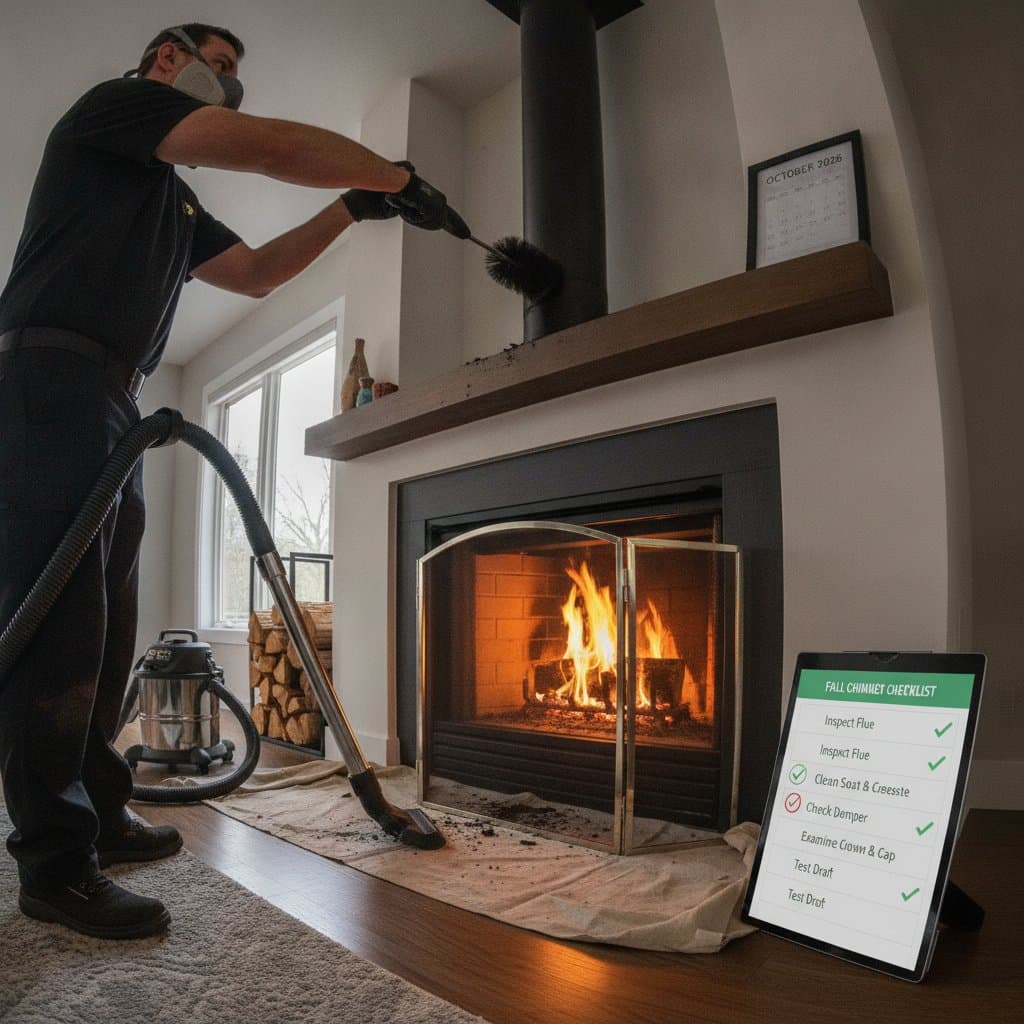
- Schedule a professional inspection before the first fire of the season.
- Arrange for thorough flue cleaning to remove soot and creosote.
- Examine the exterior masonry for cracks, loose bricks, or water stains.
- Verify that the damper opens and closes smoothly.
- Inspect the firebox for damaged bricks or mortar gaps.
- Establish a schedule for mid-season cleanings during heavy use.
- Install and test carbon monoxide detectors near the fireplace.
A warm fire on a chilly evening brings comfort and charm to any home. That comfort depends on a well maintained chimney. Homeowners should prepare their chimneys for heavier use as the season changes. A simple checklist can help prevent smoke buildup, costly repairs, and safety hazards while keeping the fireplace running efficiently through the colder months.
Begin with a Thorough Inspection
Schedule a detailed chimney inspection before lighting the first fire. A certified professional can identify hidden problems such as cracks, loose bricks, or flue obstructions. Even a thin layer of creosote can ignite under the right conditions. This step ranks among the most critical in seasonal fireplace maintenance.
During the inspection, request checks on the chimney cap and flashing. The cap keeps out rain, debris, and small animals. The flashing seals the gap where the chimney meets the roof. Damage to either component allows moisture to enter and weaken the masonry over time.
Clean for Safety and Efficiency
Follow the inspection with a professional cleaning. Soot and creosote often collect deep inside the flue even when the chimney appears clean from the outside. This buildup restricts airflow and raises the risk of a chimney fire. A proper sweep removes these deposits, improves draft performance, and allows fires to burn hotter and cleaner.
Homeowners may handle light tasks themselves, such as clearing ash from the fireplace or cleaning glass doors. These steps maintain efficiency between professional visits. Deep cleaning of the chimney flue requires qualified experts with proper tools and safety gear.
Check the Chimney Structure
The exterior of the chimney faces constant exposure to wind, rain, and temperature changes. Mortar joints can crack, bricks can loosen, and the crown may deteriorate. Walk around the home and inspect the chimney from the ground. Look for signs of leaning, missing mortar, or staining. White streaks often indicate water damage, while dark patches may suggest creosote leaks.
Address visible damage promptly. Small repairs now prevent major structural issues later. A mason can repoint mortar, replace cracked bricks, and apply a waterproof sealant to protect the masonry.
Test the Damper and Smoke Chamber
A properly working damper controls airflow and prevents heat loss when the fireplace is not in use. Move the damper handle to confirm smooth operation. If it sticks or fails to seal tightly, arrange for repair or replacement. A faulty damper allows cold air to enter the home or permits smoke to linger indoors.
Shine a flashlight into the smoke chamber above the damper. This area collects soot and can narrow if left uncleaned. A professional can smooth and shape the chamber to improve draft and efficiency.
Evaluate the Fireplace Interior
Inspect the firebox for cracks, loose panels, or gaps in the mortar. These flaws can expand with heat and allow smoke to enter the room. Replace damaged firebricks and reseal joints with high temperature mortar. Clean the hearth and remove leftover ash, since buildup traps moisture and creates musty odors when heated.
Remove glass doors or screens for cleaning. Use a nonabrasive cleaner to remove soot without scratching the glass. This step improves visibility and enhances the appearance of the living space.
Plan a Regular Cleaning Schedule
Schedule a professional cleaning after every cord of wood burned or at least once during peak use. A written chimney cleaning schedule promotes consistency year after year. Households that rely on fireplaces as a primary heat source benefit from mid season inspections that catch issues early. Some homeowners maintain a digital log with reminders for inspections, cleanings, and repairs.
Maintain Indoor Air Quality
A blocked or dirty chimney can push smoke and carbon monoxide into living spaces. Install a carbon monoxide detector near the fireplace and test it regularly. Open the flue before lighting a fire and keep the area around the hearth clear of papers, decorations, or flammable materials. Crack a nearby window slightly while burning wood to improve draft and combustion efficiency.
Protect Your Home Investment
Consistent chimney care protects safety, comfort, and property value. An efficient system reduces wood consumption, lowers repair costs, and extends fireplace life. The effort of following a seasonal checklist delivers reliability and peace of mind. A clean, inspected, and well sealed chimney supports enjoyable fires throughout the season.