Preventing Basement Mold Through Seasonal Dehumidifier Maintenance
Basements collect moisture more readily than other parts of a home. Small leaks or temperature differences create ideal conditions for mold. A properly maintained dehumidifier provides reliable protection by controlling humidity levels throughout the year.
Importance of Moisture Management
Mold spores remain dormant until moisture activates them. Once active, mold damages building materials and furnishings. It also releases particles that irritate the respiratory system. A dehumidifier removes excess water vapor from the air.
Humidity levels above 60 percent promote rapid mold growth. Maintenance ensures the device maintains humidity between 40 and 50 percent for optimal comfort and safety.
Indicators That Service Is Required
Several symptoms signal the need for attention to the dehumidifier.
- Persistent musty odors despite operation
- Reduced water collection in humid conditions
- Ice formation on coils or restricted airflow
- Dust accumulation on filters
- Leaks near the unit or connections
Address these issues promptly through cleaning.
Seasonal Maintenance Procedure
Follow these steps at the start of each season.
- Disconnect power and empty the collection tank. Clean the tank with warm soapy water and dry it thoroughly.
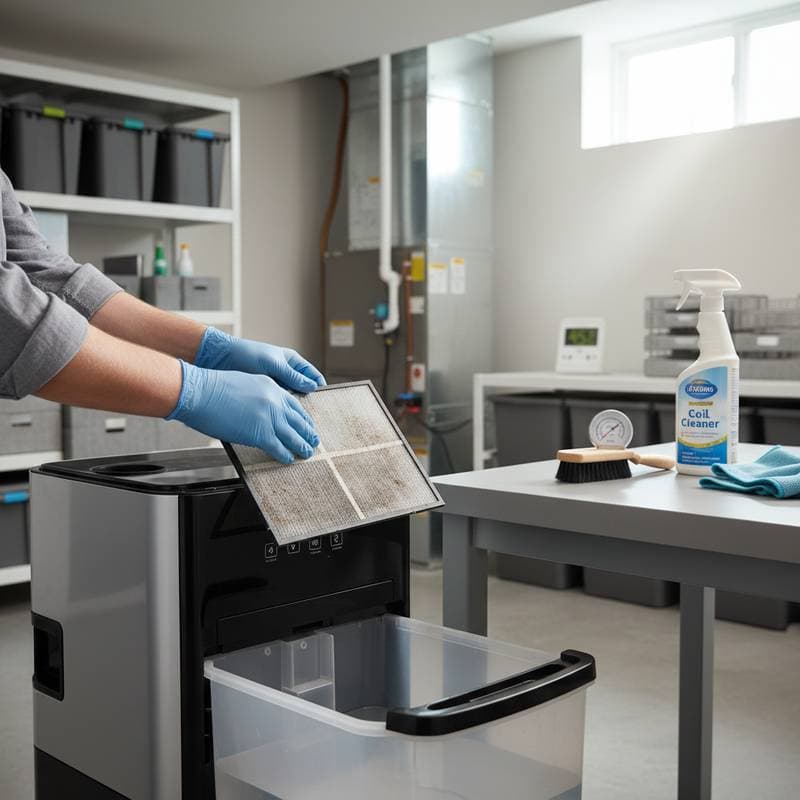
- Remove and wash the air filter with mild detergent. Allow complete drying before replacement. Install a new filter if damage appears.
- Clear dust from coils and vents using a soft brush or vacuum. Prevent coil deformation during this process.
- Examine drainage hoses for obstructions. Clear mineral deposits with a vinegar solution.
- Verify the integrity of seals around the housing.
- Restore power and adjust settings to the target humidity range. Confirm readings with an independent hygrometer.
Efficiency and Cost Benefits
Regular upkeep reduces energy consumption. Minor part replacements cost far less than full unit replacement or mold remediation. The table below outlines typical tasks.
| Task | Time Required | Approximate Cost | Primary Advantage |
|---|---|---|---|
| Filter maintenance | 15 minutes | Minimal | Improved air circulation |
| Coil cleaning | 10 minutes | Minimal | Enhanced moisture extraction |
| Tank sanitation | 5 minutes | None | Elimination of odors |
| Drain line clearing | 10 minutes | Minimal | Avoidance of overflows |
Essential Safety Measures
Disconnect the unit from power before any cleaning. Direct water application to electrical components is prohibited. Use only nonabrasive cleaners to protect internal surfaces. Maintain clear space around the device for ventilation.
Practical Outcomes From Consistent Care
Users report odor reduction after filter cleaning. Neglected units develop internal mildew that requires replacement. Simple drain maintenance prevents leakage problems.
Frequently Asked Questions
How frequently does cleaning occur?
Perform cleaning at the beginning of each season or when dampness persists.
Is bleach suitable for tank cleaning?
Bleach damages plastic components. Mild soap or vinegar serves as a safer alternative.
What causes coil freezing?
Low room temperatures or blocked airflow lead to freezing. Filters and vents require inspection first.
Which humidity setting offers protection?
A target near 45 percent balances mold prevention with comfort.
Complementary Moisture Reduction Strategies
Combine dehumidifier care with foundation inspections. Apply waterproof sealants to walls. Insulate pipes to limit condensation. Ensure unobstructed vents for air circulation.
Maintaining Consistent Basement Conditions
Consistent attention to the dehumidifier supports drier air and fewer moisture related issues over time. Homeowners who follow the outlined steps often notice steadier humidity readings and reduced need for emergency repairs.