Prepare Chimneys Now for Safe Winter Fireplace Use
When cooler weather arrives, many homeowners turn to their fireplaces for comfort and warmth. Yet before lighting that first fire, it is important to make sure the chimney and fireplace are ready. Regular inspection, cleaning, and maintenance prevent smoke buildup, reduce fire risks, and keep heating efficient.
Why Chimney Preparation Matters
A working chimney removes smoke and gases from the home. Over time, soot, creosote, and debris collect inside. These materials restrict airflow and can ignite under high heat. Even a thin layer of buildup can increase the chance of a chimney fire.
Birds, leaves, or small animals can also block vents and send smoke back indoors. A clean, well-kept chimney helps fires burn evenly and keeps indoor air fresh. It also extends the life of the fireplace system.
Signs Your Chimney Needs Attention
Homeowners often notice several clear indicators that maintenance is due. A strong smoky smell in the living room or near the hearth signals potential issues. Soot or dark streaks on the fireplace walls also point to buildup problems.
Difficulty starting or maintaining a steady flame, drafts that push smoke back into the room, and white stains or crumbling mortar on the chimney exterior are additional warnings. If any of these appear, inspection should happen soon. Routine checks each year help catch hidden problems early.
Step-by-Step Chimney Inspection Guide
A careful inspection reveals both visible and hidden issues. Homeowners can perform a basic review before calling a professional.
- Walk around the home and look for cracks, missing bricks, or leaning sections. The chimney cap and crown should be intact and secure.
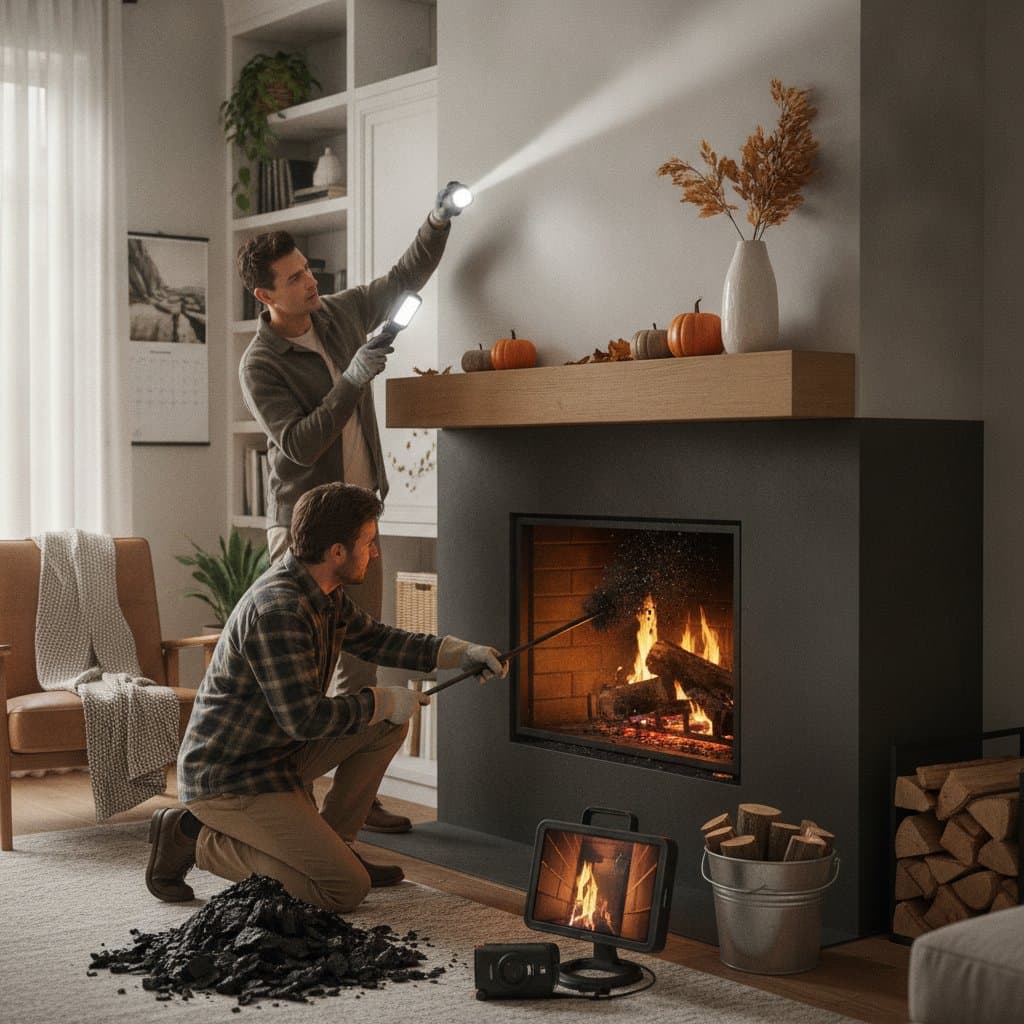
- Shine a flashlight up the flue to look for soot buildup or obstructions. Watch for shiny black layers, which indicate heavy creosote.
- Open and close the damper to ensure smooth movement. A stuck damper can trap dangerous gases indoors.
- Look for gaps, loose bricks, or metal parts showing rust in the firebox. These weaken the structure and can allow heat leaks.
- Light a small piece of rolled newspaper and hold it near the open damper. Smoke should rise smoothly into the chimney.
After this visual inspection, most homeowners contact a certified chimney sweep for a deeper clean and professional review.
Cleaning Methods That Work
Creosote removal is the main goal of chimney cleaning. Professionals use specialized brushes and vacuums to clear soot without spreading dust. A typical cleaning includes scrubbing the flue from top to bottom, removing ash and debris from the firebox, checking and cleaning the cap and spark arrestor, and wiping the damper and smoke shelf.
For those who prefer to handle some cleaning, a stiff wire brush and protective gear are essential. Always wear gloves, goggles, and a dust mask. Spread a tarp around the hearth to catch residue. Never use chemical chimney cleaners unless guided by a professional.
Safety Warnings and Best Practices
Fireplaces produce intense heat, which can expose flaws in older chimneys. Before lighting fires, make sure the flue is dry and free from obstructions. Keep flammable objects like curtains, paper, and rugs several feet away.
Burn only seasoned hardwoods. Fresh or damp wood creates more creosote. Install carbon monoxide detectors near the fireplace area. Use a sturdy screen to block sparks. Avoid burning trash, cardboard, or treated wood. These create dangerous fumes and add residue to the chimney walls.
Always allow ashes to cool completely before disposal. Then place them in a metal container outdoors.
Cost Insights and Maintenance Schedule
Chimney service costs vary by condition and height. A standard cleaning by a professional sweep often costs less than a major repair. When ignored, cracked liners, damaged bricks, or warped dampers can multiply expenses quickly.
Experts recommend a full inspection once each year and cleaning when soot reaches one-eighth of an inch thick. Creating a seasonal checklist helps keep maintenance on track. Early fall calls for inspecting the chimney, cleaning the flue, and testing the damper. Midwinter requires rechecking airflow after heavy use. Spring involves removing ashes, closing the damper, and covering the chimney top.
Expert Tips and Real Experiences
Many homeowners share tips on forums and review sites. One user described how a simple inspection found a bird nest that could have caused smoke damage. Another reported that regular cleanings made fires start faster and burn cleaner. Professionals often say that consistent care prevents around 90 percent of chimney fires.
Experts from home maintenance networks suggest pairing chimney service with other seasonal tasks like checking the furnace filter or sealing window frames. This approach creates a full fall maintenance plan that boosts safety throughout the home.
Adding Visual Tools for Better Planning
Images can clarify each maintenance step. Consider including a photo of a clean chimney flue, a diagram showing creosote layers forming inside the flue, and a side-by-side view of a damaged versus repaired chimney crown. Charts that list inspection frequency, cost ranges, and cleaning tools help readers compare options quickly.
Building Long-Term Confidence
Regular chimney care keeps families safe and warm. It also protects property value by preserving masonry and reducing smoke stains. A clean system saves on heating costs, since fires burn hotter with less fuel. Homeowners who follow a yearly maintenance routine rarely face sudden breakdowns or costly repairs.
Staying proactive builds trust with service professionals too. When a sweep visits regularly, they can record changes and spot structural issues early. This relationship ensures consistent quality and peace of mind through every cold season.