Your Essential Fall Chimney and Fireplace Checklist
When the air turns crisp and the leaves begin to fall, your fireplace becomes the heart of your home. Yet before the first log burns, it is vital to make sure your chimney and fireplace are ready for safe and efficient use. A clean and well maintained system not only keeps your home warm but also prevents hazards like smoke buildup or chimney fires.
This complete fall checklist covers everything homeowners should do to prepare for the season ahead.
Step 1: Inspect the Chimney Exterior
Start by walking around your home and observing the chimney from the ground. Look for cracks in the bricks or mortar. Loose materials can allow moisture inside which weakens the structure.
Check that the chimney cap is secure and free from rust. A missing or damaged cap lets animals, leaves, and rain enter the flue. If you have a metal or prefabricated chimney, look for signs of corrosion or discoloration.
These can indicate moisture leaks or past overheating. Small issues may grow quickly once the fire season begins, so note anything that looks unusual.
Step 2: Examine the Fireplace Interior
Open the damper and shine a light into the firebox. Check for creosote buildup on the walls and any loose bricks or mortar. Remove ashes and debris that accumulated over the summer.
Test the damper operation to confirm it opens and closes smoothly. A stuck damper reduces draft and increases the risk of smoke entering the living space.
Step 3: Schedule a Professional Cleaning
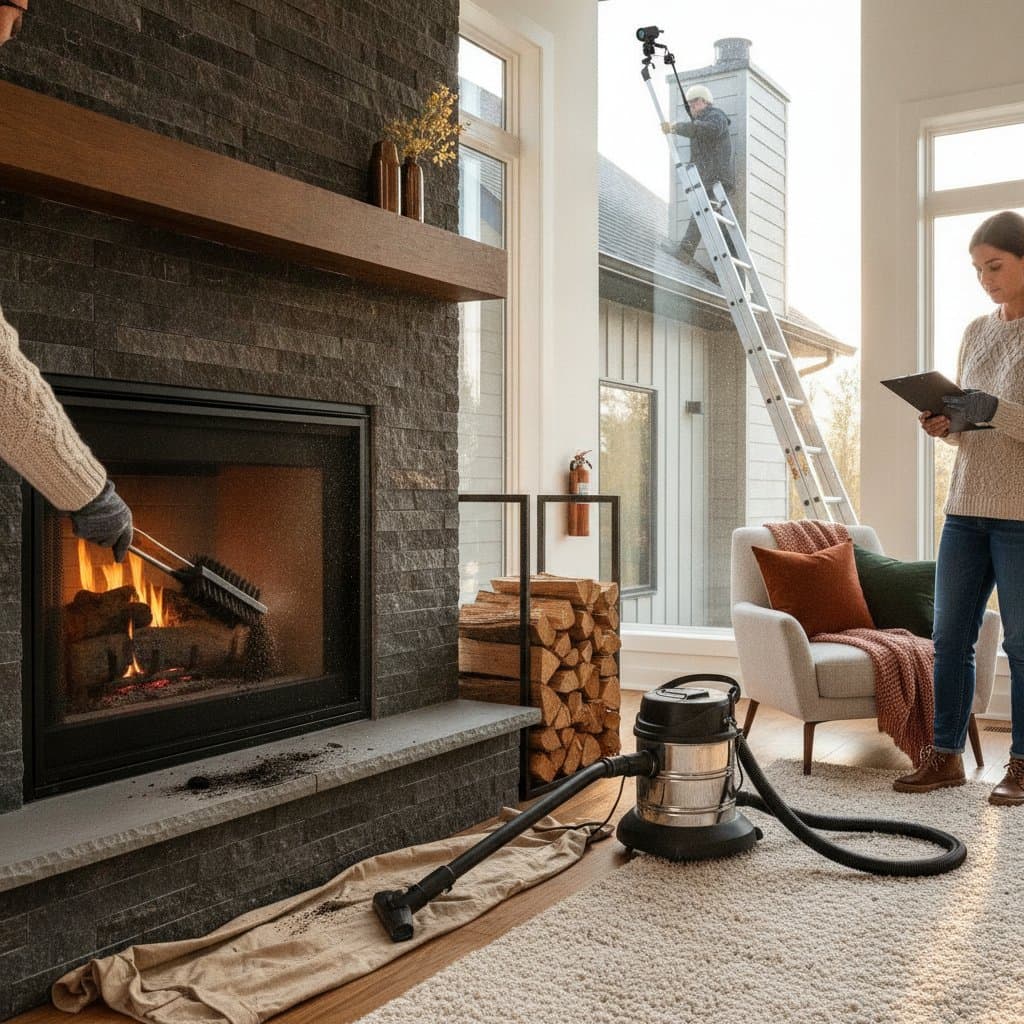
Hiring a professional chimney sweep is one of the smartest fall investments. Certified technicians use specialized brushes and vacuums to remove soot and creosote from the flue and smoke chamber. They also check for hidden cracks, damaged liners, and loose connections that might go unnoticed otherwise.
A professional cleaning usually includes flue brushing and vacuuming, smoke chamber and damper cleaning, inspection of chimney cap and flashing, and removal of animal nests or debris.
Ask for a detailed inspection report. This document helps track the condition of your system over time and makes insurance claims easier if damage occurs.
Step 4: Prepare and Store Firewood Properly
Select seasoned hardwood that has dried for at least six months. Store it off the ground and under a cover to keep it dry. Wet wood produces more smoke and creosote.
Keep a small supply indoors for a few days before burning so the wood reaches room temperature. This practice improves ignition and reduces excess moisture in the flue.
Step 5: Test Smoke and Carbon Monoxide Detectors
Every fireplace system should be paired with working smoke and carbon monoxide detectors. Press the test button on each device and replace batteries if needed. Install detectors near sleeping areas and on every floor of your home.
These alarms are your best defense against invisible hazards that can arise from poor ventilation or flue leaks. Replace detectors that are aged or fail the test.
Step 6: Inspect and Seal Chimney Flashing
Flashing is the metal strip that seals the joint between the chimney and roof. Over time, it can loosen or corrode, leading to leaks. Check for lifted edges or rust stains.
Seal small gaps with roofing cement or high temperature silicone. For large issues, contact a roofer for repairs. Water entering through faulty flashing can damage ceilings, insulation, and framing around the chimney.
Step 7: Plan a Maintenance Schedule
A consistent schedule ensures your fireplace stays reliable year after year. Keep a record of every inspection, cleaning, and repair. Note any changes in smoke color or draft strength.
If you notice your fire struggling to stay lit or smoke entering the room, it may signal a blocked or damaged flue. A good rhythm for most households includes visual inspection at the start of each season, professional cleaning once per year, minor repairs or sealing when cracks appear, and detector checks every few months.
Common Questions About Chimney and Fireplace Maintenance
How often should I have my chimney cleaned?
Experts recommend at least once per year, even if you do not use your fireplace heavily. Creosote and debris can still collect inside from light use.
What causes a smoky fireplace?
Poor draft, blocked flue, or wet firewood can cause smoke to flow backward into the room. Checking airflow and dryness of wood usually solves the problem.
Can I clean my chimney myself?
Basic visual checks and light brushing are fine for minor upkeep. Deep cleaning should be handled by certified professionals who have the right tools and safety gear.
Protect Your Home This Winter
Following these steps turns routine maintenance into reliable performance. Homeowners who complete the checklist each fall enjoy safer fires and fewer unexpected repairs throughout the cold months.