Maintenance Tips to Keep Your Attic Mold-Free
A clean, dry attic supports overall home health. Mold growth can damage insulation, compromise structural elements, and affect indoor air quality. Prevention focuses on ongoing control of moisture, airflow, and insulation rather than reactive cleaning.
Causes of Attic Mold
Mold develops in damp areas with limited airflow. Homeowners often miss the sources until growth appears. Identifying these factors allows targeted prevention.
Common causes include the following:
- Poor ventilation that traps warm, moist air from living spaces.
- Roof leaks from damaged shingles, flashing, or vents.
- Insulation gaps that permit condensation on surfaces.
- Blocked soffit or ridge vents that restrict airflow.
- Exhaust fans from bathrooms or kitchens that vent into the attic instead of outdoors.
Consistent checks reduce the risk when multiple conditions occur together.
Regular Attic Inspections
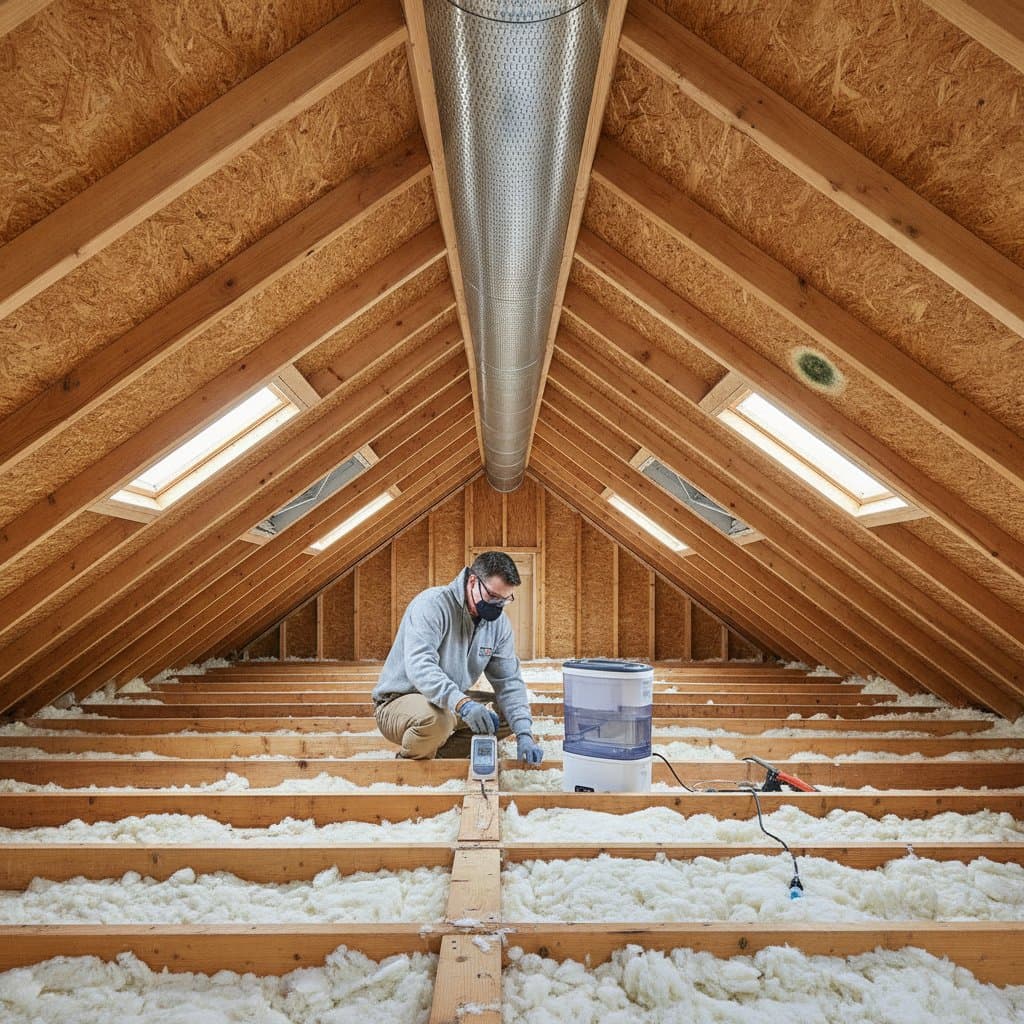
Seasonal inspections identify moisture issues early. Include the attic in routine home maintenance.
Look for these indicators:
- Dark stains or fuzzy growth on rafters, sheathing, or insulation.
- Musty odors that signal hidden mold.
- Water stains, damp insulation, or warped wood from roof leaks.
- Condensation on nails or metal that points to ventilation problems.
- Obstructed or absent vents along soffits and ridges.
Use a flashlight for corners and low-light areas. Address any moisture source before cleaning begins.
Moisture Control Measures
Mold requires moisture to grow. Eliminating water and humidity pathways forms the core of prevention.
Seal Air Leaks
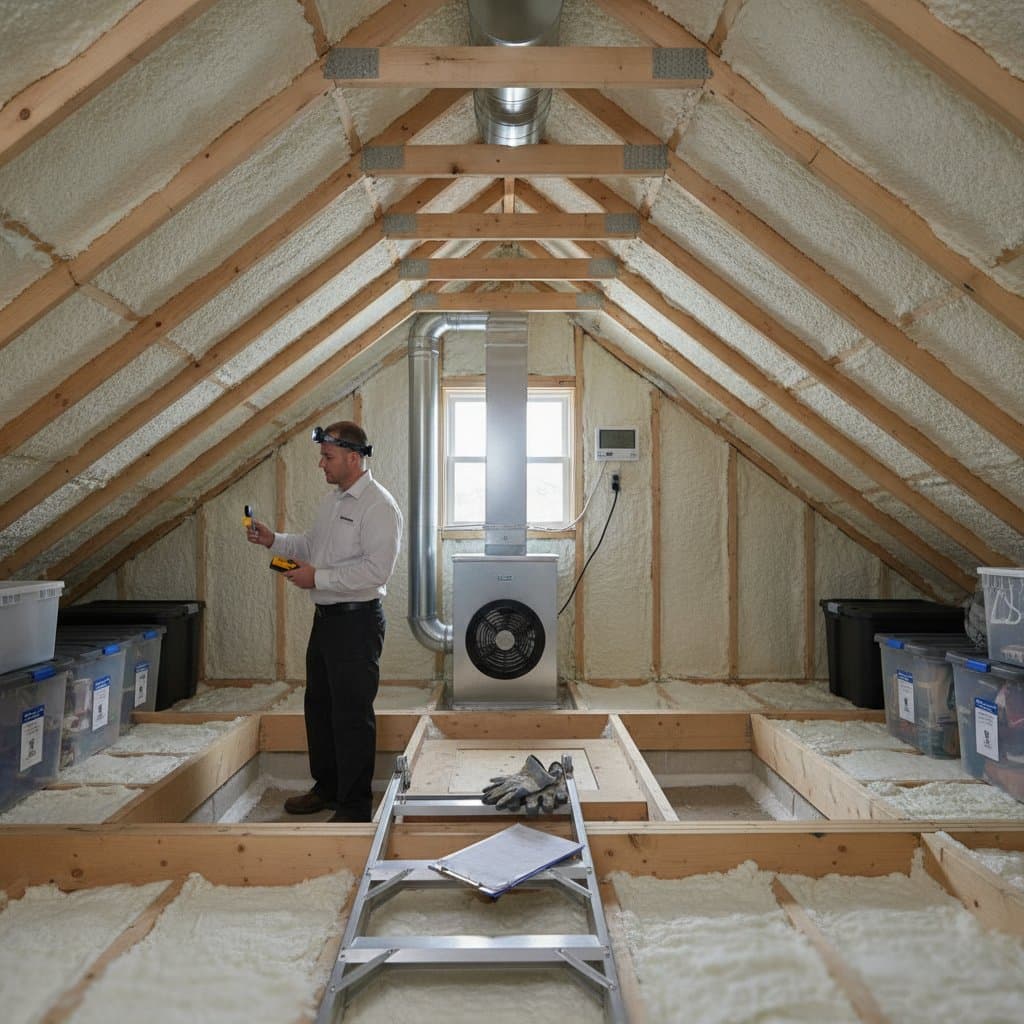
Warm, humid air escapes through gaps around fixtures and openings. Apply foam sealant or weatherstripping around light fixtures, plumbing vents, chimney chases, and attic hatches. This step also improves energy efficiency.
Ensure Balanced Ventilation
Soffit vents draw in fresh air while ridge vents release humid air. Verify that both remain clear. Add gable vents or a powered fan only when the system stays balanced to avoid pulling moist air from below.
Regulate Indoor Humidity
Maintain household humidity between 30 and 50 percent. Use dehumidifiers in damp areas and confirm that kitchen and bathroom fans exhaust outdoors. Run fans during and after moisture-producing activities.
Maintain Roof and Gutters
Inspect shingles, flashing, and seals around vents for damage. Clean gutters regularly to direct water away from the roofline and prevent pooling.
Insulation and Temperature Management
Proper insulation keeps attic surfaces near outdoor temperatures and limits condensation. Cover the entire floor without gaps or compression. Keep material away from soffit vents and install baffles where needed to preserve airflow. Replace any damp or moldy insulation promptly because it loses effectiveness and can retain spores.
Minor Mold Cleaning Steps
Small patches can be addressed after the moisture source is fixed. Wear gloves, goggles, and a mask. Scrub surfaces with a water and detergent solution, rinse lightly, and allow complete drying. Dispose of affected porous materials. Avoid bleach on wood or insulation. Engage professionals for extensive growth or structural concerns.
Seasonal Maintenance Checklist
Spring: Check for storm damage, clear gutters, and inspect after temperature changes.
Summer: Verify fan and vent operation, examine insulation for moisture, and watch for pest activity.
Autumn: Clean gutters, examine flashing and shingles, and remove debris from vents.
Winter: Monitor for frost or ice, confirm no warm air leaks upward, and ventilate after heavy snow.
Common Questions on Attic Mold Prevention
Inspect at least twice yearly, with extra checks after storms. Keep humidity between 30 and 50 percent. Vapor barriers help in humid climates. Spores can travel through HVAC systems, so prompt action limits spread. Properly sized attic fans support humidity control when balanced with intake vents. Fiberglass, cellulose, or spray foam insulation performs well when kept dry. Balanced ventilation shows consistent temperatures without odors or condensation. Fix leaks immediately because even small amounts create growth conditions. Replace moldy insulation rather than attempting full cleaning. Professional testing identifies hidden issues in recurring cases.
Protect Your Home with Consistent Attic Care
Steady attention to moisture, ventilation, and insulation prevents mold and supports structural integrity. Regular inspections combined with prompt repairs maintain air quality and home value over time.