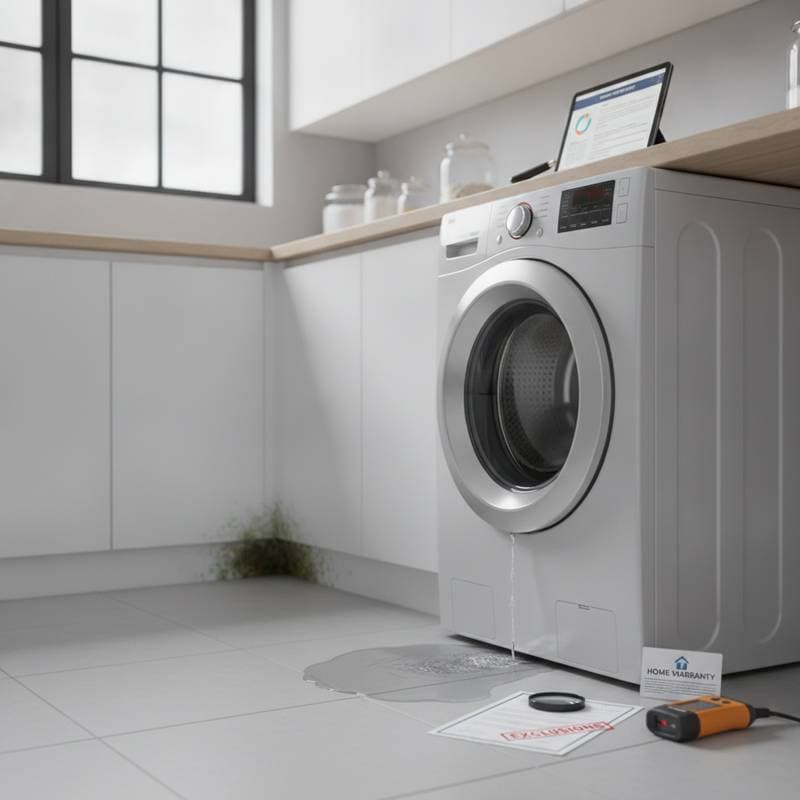
Home Warranty Mold Coverage: What Gets Covered
Mold growth often follows plumbing leaks, roof failures, floods, or undetected water intrusion. Homeowners frequently assume their warranty will cover every expense related to mold, yet most contracts limit coverage significantly. The agreement may pay to repair or replace the appliance or plumbing component that caused the water damage, but it typically excludes mold testing, removal, and replacement of affected building materials.
Reviewing your warranty terms before filing a claim helps prevent surprise remediation expenses.
Covered Components Under Standard Home Warranties
Home warranties generally cover repair or replacement of listed systems and appliances that fail due to normal wear. Common covered items include:
- Interior plumbing lines and certain fixtures
- Water heaters
- Sump pumps, when specifically listed in the contract
- Heating and cooling equipment
- Washing machines and dishwashers
When a covered component fails suddenly and produces water damage, the warranty may pay to repair that specific component. Some plans also provide limited coverage for related damage, such as removing an appliance to reach a failed part.
Mold removal itself is commonly excluded. Policies frequently exclude damage from flooding, pre-existing leaks, poor maintenance, high humidity, or gradual seepage. They may also exclude drywall replacement, structural drying, air testing, and treatment by a remediation company.
Read the exclusions, service limits, and coverage definitions carefully. A warranty provider may classify mold as a secondary condition rather than a covered breakdown.
How Water Damage Influences Claim Outcomes
The water source determines how a claim is handled. A sudden burst pipe often receives different treatment than a slow leak under a sink. If the leak continues because it was ignored, the provider may deny related repairs.
When moisture is discovered:
- Shut off the water supply if it is safe to do so.
- Stop using the affected appliance or fixture.
- Photograph the leak, visible mold, and damaged materials.
- Report the failure promptly.
- Ask whether approval is required before hiring a plumber or remediation company.
Do not disturb extensive mold growth without proper protection. Mold can irritate the eyes, skin, and respiratory system, especially for people with allergies or breathing conditions.
Understanding Mold Remediation Costs
Remediation expenses vary based on the affected area, mold type, moisture source, access difficulty, and materials that require removal. Small surface treatment may cost a few hundred dollars. Larger projects involving drywall, insulation, flooring, containment, drying, and post-treatment testing can reach several thousand dollars.
Homeowners may also pay for:
- Professional inspection or laboratory testing
- Emergency water extraction
- Dehumidification
- Replacement of porous materials
- Temporary relocation
- Repairs excluded from the warranty
Home insurance may address sudden accidental water damage more often than a home warranty, although mold exclusions and policy limits still apply. Contact both providers when the cause may involve a covered appliance, plumbing failure, or sudden leak.
Questions to Ask Before Authorizing Work
Ask direct questions before authorizing work:
- Does my plan cover the failed component?
- Is secondary water damage included?
- Does the contract exclude mold, fungi, or microbial growth?
- Are drying, testing, or remediation services covered?
- Is there a service fee or coverage limit?
- Must I use an approved contractor?
- What records and photographs are required?
Request answers in writing when possible. Keep invoices, inspection reports, claim numbers, and communication records.
Practical Steps for Managing Coverage
A home warranty can help with specific equipment failures, but it should not replace regular leak checks, ventilation, or home insurance. Review your contract before a problem occurs. Look beneath sinks, around toilets, behind appliances, and near heating and cooling equipment. Repair small leaks quickly and use exhaust fans in damp rooms.
If mold covers a large area, returns after cleaning, or follows major water damage, hire a qualified remediation professional. Confirm that the moisture source is repaired first.
Comparing Warranty and Insurance Protection
Home warranties and insurance policies serve different purposes. Warranties focus on mechanical breakdowns of covered systems, while insurance typically addresses sudden and accidental events. Understanding these distinctions helps homeowners select the right protection for their situation.
Review both policy types annually. Update coverage limits as home values and repair costs change. Document all maintenance activities, as providers may request proof of regular upkeep when evaluating claims.
Preventing Future Mold Issues
Regular maintenance reduces the likelihood of water damage and subsequent mold growth. Inspect visible plumbing connections monthly. Ensure proper drainage around the foundation. Maintain adequate ventilation in bathrooms, kitchens, and laundry areas.
Install water detection devices near water heaters, washing machines, and under sinks. These devices provide early warning of leaks before significant damage occurs. Replace washing machine supply hoses every five years, even if they appear undamaged.
When Professional Help Becomes Necessary
Certain situations require immediate professional intervention. Extensive mold growth covering more than ten square feet typically needs specialized equipment and containment procedures. Persistent musty odors after cleaning suggest hidden moisture that requires professional detection.
Structural damage from prolonged water exposure may affect load-bearing elements. In these cases, both remediation specialists and structural engineers may be needed. Coordinate with your warranty provider and insurance company to determine coverage responsibilities before work begins.