Warranty Fundamentals
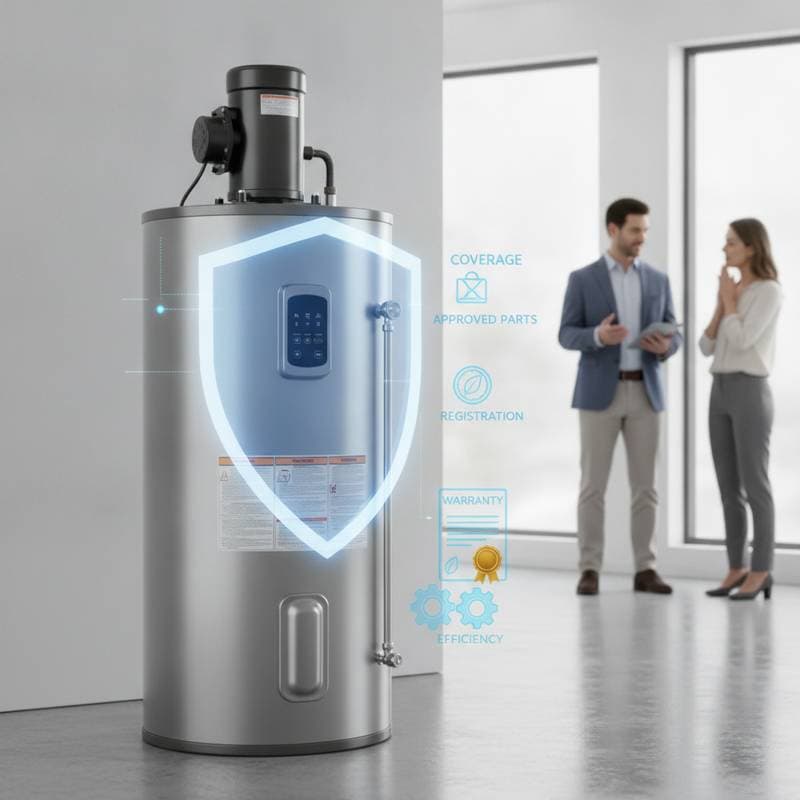
Heat pump water heater warranties protect the major components of your system against defects in materials and workmanship. These agreements vary by manufacturer but generally span five to twelve years depending on the part. Understanding the distinction between parts coverage and labor coverage prevents unexpected expenses during the ownership period.
Registration of the unit with the manufacturer often extends the standard warranty period. Failure to register within the required window can reduce coverage significantly. Always retain the original purchase receipt and installation documentation in a secure location.
Components Under Protection
The compressor receives the longest coverage period in most policies because it represents the highest replacement cost. Tank leaks typically fall under a separate warranty that may run five to ten years. Anode rods, thermostats, and sensors receive shorter protection windows of one to five years.
Labor costs for diagnosis and repair appear in some premium warranties but remain excluded from basic agreements. When labor coverage exists, it usually applies only during the first one or two years after installation. Confirm the exact terms listed in your model specific documentation.
Conditions That Preserve Coverage
Scheduled maintenance performed by qualified technicians maintains warranty eligibility. Manufacturers require annual inspection of the air filter, condensate drain, and electrical connections. Use of non approved replacement parts immediately voids remaining coverage on affected components.
Proper installation according to local codes and manufacturer specifications forms another prerequisite. Units placed in corrosive environments or without adequate airflow often face claim denials. Review the installation manual before any service visit occurs.
Exclusions and Limitations
Damage resulting from improper use, neglect, or acts of nature falls outside standard protection. Coverage does not extend to consequential losses such as water damage to surrounding structures. Some policies limit the number of claims or impose deductible amounts on each service call.
Warranties also exclude normal wear items and cosmetic defects. Noise issues without accompanying mechanical failure rarely qualify for repair authorization. Read the fine print section titled limitations of liability before assuming full protection.
Submitting a Successful Claim
Contact the manufacturer or authorized service provider at the first sign of malfunction. Provide the model number, serial number, and proof of maintenance records during the initial call. Technicians must obtain prior authorization before ordering replacement parts in most cases.
Keep detailed notes of every communication including dates, representative names, and reference numbers. Request written confirmation of coverage decisions before authorizing repairs. Track all expenses in case partial reimbursement becomes available later.
Transferability and Extended Options
Many warranties transfer to subsequent homeowners when the unit remains at the original address. The new owner must notify the manufacturer within thirty days of property transfer to activate continued coverage. Extended service contracts purchased separately can add three to five additional years of protection.
Compare the cost of an extended contract against the expected repair expenses for your specific model. Third party providers sometimes offer broader terms than the original manufacturer. Evaluate cancellation policies before committing to any supplemental agreement.
Maintaining Long Term Performance
Regular filter changes and system inspections extend equipment life beyond the warranty period. Monitor energy consumption patterns to detect declining efficiency early. Address minor issues promptly to prevent escalation into major component failures.