Fall HVAC Filter Maintenance: Understanding New MERV Standards
As cooler weather arrives, homeowners often prepare furnaces, heat pumps, and ventilation systems for heavier use. The HVAC filter deserves equal attention. Updated MERV guidance is drawing attention to filtration performance, indoor air quality, airflow, and equipment protection. Choosing a filter with a higher rating can help capture smaller particles, but the highest available rating is not automatically the best choice for every system.
Your HVAC equipment needs clean air moving through it at the correct rate. A filter that is too restrictive can reduce airflow, raise energy use, increase noise, and place stress on the blower. This guide explains how MERV ratings work, what changing standards may mean for homeowners, and how to maintain filters safely.
Understanding MERV Ratings and New Standards
MERV means Minimum Efficiency Reporting Value. The rating describes how effectively an HVAC filter captures particles across several size ranges. Lower rated filters capture larger dust and debris. Higher rated filters capture finer particles, including some pollen, smoke particles, and other airborne contaminants.
A new MERV standard does not necessarily mean every household must replace its current filter with a higher rated product. Standards help manufacturers test and describe filter performance more consistently. Local building rules, equipment instructions, and indoor air quality needs still matter.
What MERV Ratings Mean
Common residential filters often fall within a moderate rating range. Basic filters protect equipment from larger particles. Midrange filters can improve removal of dust, pollen, and some pet-related particles. Higher efficiency filters can capture finer particles, but they may require a stronger blower and a properly sized filter cabinet.
A filter rating alone does not describe every part of air quality. Odors, gases, humidity, ventilation, and source control require other solutions. For example, a filter may capture particles from cooking but will not remove every odor or chemical vapor.
How Standards Can Affect Homeowners
Updated testing practices may change product labels, efficiency claims, or recommended applications. Retail packaging could look different, and two filters with similar ratings may still have different airflow characteristics.
Before changing products, review:
- The HVAC manufacturer filter recommendations
- The filter size and thickness
- The system airflow capacity
- Household concerns such as allergies, pets, smoke, or dust
- Local requirements for residential ventilation equipment
MERV Rating Comparison
| MERV Rating | Particle Capture | Airflow Impact | Common Household Uses |
|---|---|---|---|
| 1-4 | Large dust, lint, carpet fibers | Minimal restriction | Basic equipment protection |
| 5-8 | Dust mites, mold spores, pollen | Moderate restriction | General household use |
| 9-12 | Pet dander, fine dust, auto emissions | Noticeable restriction | Homes with pets or allergies |
| 13-16 | Bacteria, smoke particles, droplet nuclei | Significant restriction | Sensitive individuals, medical needs |
Choosing the Right HVAC Filter
The best filter balances cleaner air with reliable airflow. A moderate rating may be suitable for many homes, while a higher rating can help households with allergy concerns or frequent fine particle exposure. A professional can measure airflow and static pressure when the correct choice is uncertain.
When a Higher MERV Rating Helps
A higher MERV filter may be useful when your home has:
- Residents with seasonal allergies
- Pets that shed heavily
- Frequent dust problems
- Nearby smoke or poor outdoor air conditions
- A system designed for higher efficiency filtration
The filter must fit tightly without bending or collapsing. Air that slips around the filter reduces performance and allows dust into the equipment.
When a Higher Rating May Cause Problems
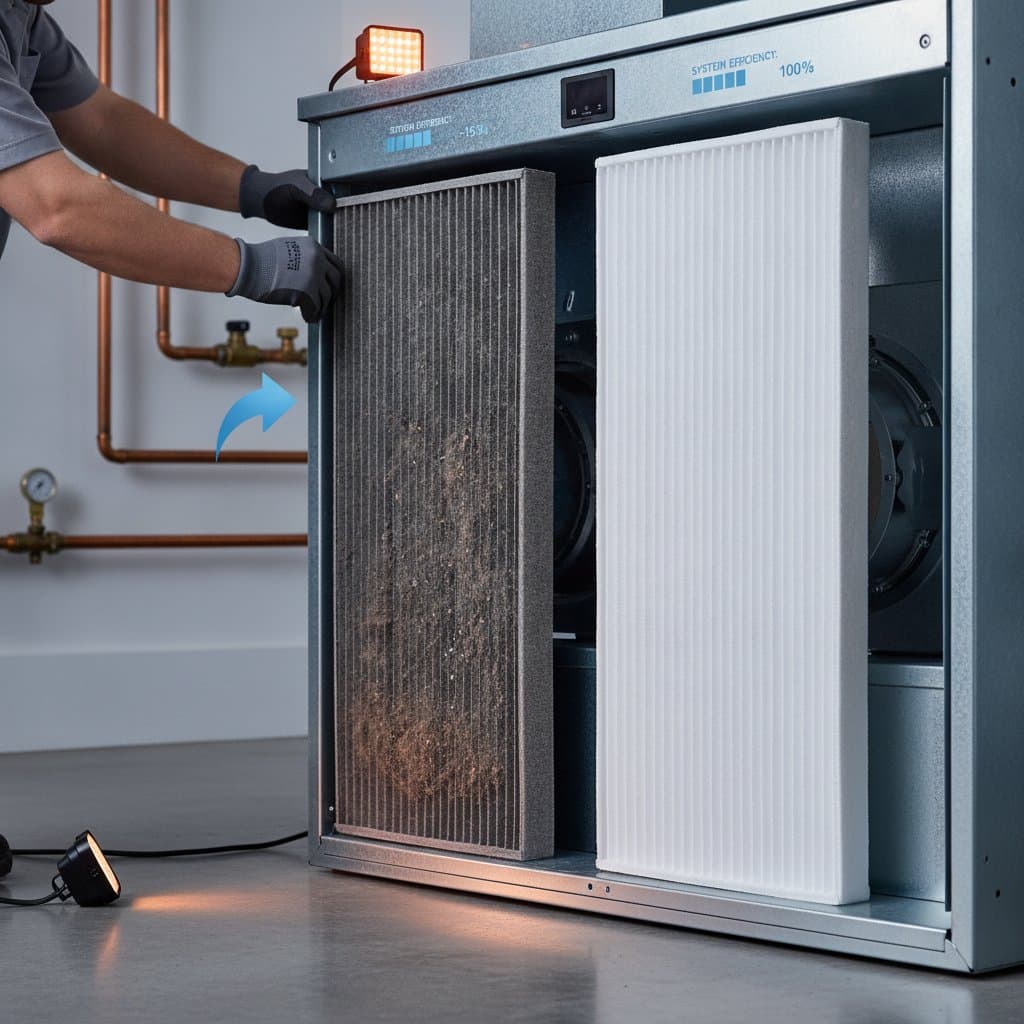
An overly restrictive filter can produce weak airflow from supply vents. You might notice longer heating cycles, uneven temperatures, whistling sounds, or frequent system shutdowns. The furnace or heat pump may work harder, and the blower motor can experience additional strain.
Do not assume a thicker or denser filter is safe simply because it costs more. Ask an HVAC professional to check static pressure if airflow has changed after a filter upgrade.
DIY vs Professional HVAC Filter Maintenance
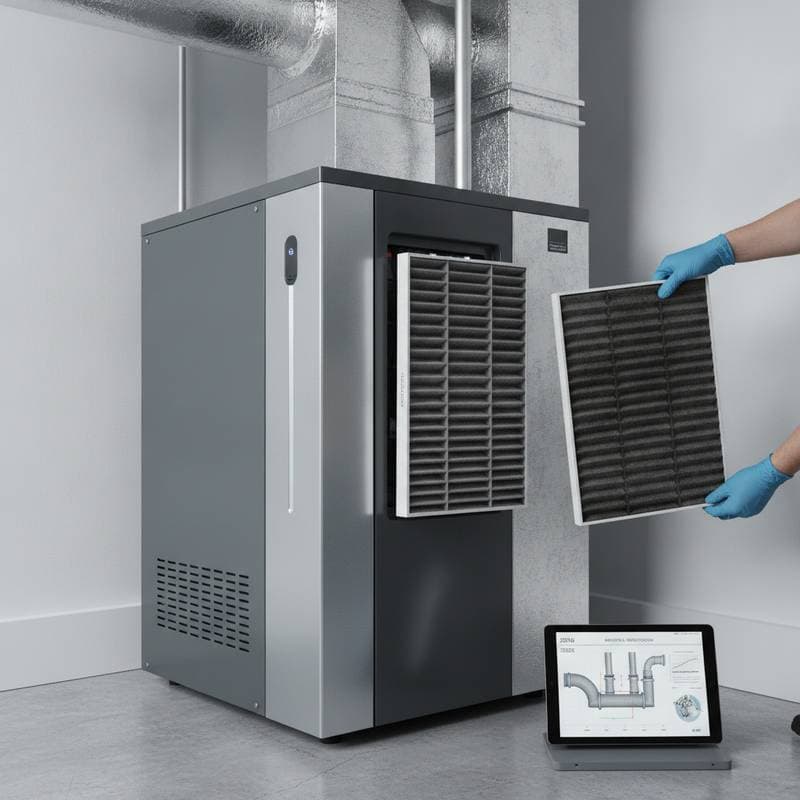
Replacing a filter is often a manageable homeowner task. Turn off the system, locate the filter, remove the old one, and install the replacement in the direction shown by the airflow arrow. The arrow should point toward the furnace, air handler, or return duct.
DIY Filter Replacement Steps
- Switch the HVAC system off.
- Find the filter at the return grille, air handler, or furnace cabinet.
- Confirm the size printed on the existing filter.
- Note the airflow direction.
- Remove the old filter carefully to avoid releasing dust.
- Install the new filter firmly.
- Restore power and listen for unusual sounds.
- Record the replacement date for future maintenance.
Inspect the filter regularly during heavy heating or cooling use. Homes with pets, renovation dust, or several occupants may need more frequent replacement than homes with light use.
When Professional Help Makes Sense
Contact an HVAC professional when the filter is difficult to access, the cabinet is damaged, or airflow problems continue after replacement. Professional service is also useful when you want a MERV recommendation based on measured system performance.
A technician may inspect the blower, evaporator coil, return duct, filter rack, and static pressure. This broader check can reveal problems that a filter change cannot fix.
Your HVAC Filter Questions, Answered
Answers to commonly asked questions from industry experts.
Does a new MERV standard require a new filter?
No. Updated standards may affect testing and labeling, but your system still needs a filter that matches its design and airflow capacity.
Is a higher MERV rating always better?
No. Higher filtration can improve particle capture, but excessive restriction may reduce airflow and stress HVAC components.
How often should I replace an HVAC filter?
Inspect it regularly and replace it when loaded with dust. Many homes need replacement every one to three months, while pets, smoke, and construction can shorten that interval.
Can I wash a disposable filter?
No. Disposable filters are designed for replacement. Washing can damage the media and reduce filtration. Reusable filters must be cleaned according to their instructions.
What happens if the filter is installed backward?
The filter may not perform correctly, and its frame or media could weaken. Follow the airflow arrow printed on the filter.
Should allergy sufferers use the highest available rating?
Not automatically. A properly fitted moderate or high efficiency filter can help, but the system must support it. Consider professional airflow testing.
Can a filter remove viruses and bacteria?
Some filters capture a portion of airborne biological particles, but performance depends on particle size, airflow, installation, and system operation. Filtration is only one part of indoor air quality management.
Do thicker filters work better?
A thicker filter can provide more surface area and may last longer, but it must fit the cabinet correctly. Never force a larger filter into a smaller slot.
Are cheap filters acceptable?
A basic filter can protect equipment, but product quality differs. Select a reputable filter with a clear rating, correct dimensions, and sound construction.
What should I ask an HVAC professional?
Ask which MERV range your system supports, whether airflow testing is needed, how often to replace the filter, and whether the filter cabinet should be upgraded.
How to Decide: Your Step by Step Guide
Start by identifying your filter size, current rating, and replacement schedule. Check the owner manual or equipment label. If you recently changed to a higher MERV product, look for reduced airflow, unusual noise, or longer heating cycles.
Next, assess your household needs. Mild dust concerns may require basic filtration. Allergy symptoms, pets, smoke, or frequent indoor dust may justify a higher rating.
Calculate the full cost. Include filter purchases, possible cabinet modifications, professional testing, and energy use. A cheaper filter that requires frequent replacement may not cost less over its service life.
Assess safety and equipment risk. Stop using the system if you smell burning, hear grinding, or see electrical damage. Do not open sealed equipment panels unless qualified to do so.
Choose the simplest effective option. If the system operates quietly and maintains airflow with the selected filter, continue regular inspections. If problems remain, schedule professional evaluation.
Planning Your Filter Replacement Schedule
Create a maintenance calendar based on your specific household conditions. Mark filter inspection dates every 30 days during peak heating and cooling seasons. Note any changes in system performance, unusual sounds, or visible dust accumulation around vents.
Track energy bills alongside filter changes. A sudden increase in utility costs may indicate restricted airflow from an overloaded filter. Keep replacement filters on hand to avoid delays when inspection reveals the need for immediate change.
Consider seasonal factors that affect filter life. Spring pollen, summer construction dust, fall leaf debris, and winter heating particles each create different loading patterns. Adjust your replacement frequency based on these environmental changes rather than following a rigid calendar schedule.
Final Considerations for System Performance
Monitor your HVAC system performance throughout the heating season. Consistent temperatures, quiet operation, and normal energy consumption indicate proper filter selection. Any deviation from these baseline conditions warrants immediate investigation.
Document your filter choices and their effects on system operation. This record helps identify the optimal balance between air quality improvement and equipment performance for your specific installation. Regular attention to these details protects both your indoor environment and your HVAC investment.