Smart HVAC Filter Schedule for Cleaner Indoor Air
A practical HVAC filter schedule helps keep dust, pollen, pet hair, and other airborne particles under control. It also supports steady airflow and reduces strain on the heating and cooling system. The right replacement interval depends on the filter, the equipment, the home, and the people who live there.
A single calendar rule does not work for every household. Use the filter label, your home conditions, and a simple inspection routine to create a schedule that fits your needs.
Why Filter Changes Matter
The HVAC filter catches particles before air moves through the blower, coils, ducts, and living spaces. As debris collects, the filter becomes harder for air to pass through. Restricted airflow can create several problems.
Rooms may feel unevenly heated or cooled. The system may run longer to reach the thermostat setting. Energy use can rise. Coils can collect dirt and lose efficiency. The blower may face extra wear. Indoor dust and odors may become more noticeable.
A clean filter cannot remove every indoor pollutant. It can still reduce the amount of airborne debris circulating through the home when the filter fits correctly and the system receives regular maintenance.
A Practical Filter Replacement Schedule
Use the following intervals as a starting point, then adjust after inspecting the filter.
- Basic one inch filter: Inspect every month and replace about every one to three months.
- Pleated one inch filter: Inspect monthly and replace about every two to three months.
- Thicker media filter: Inspect at least every three months and follow the manufacturer guidance.
- Homes with pets: Inspect monthly, since fur and dander can load the filter quickly.
- Homes with allergies or asthma: Inspect monthly and consider a filter designed to capture smaller particles, if the HVAC system can handle it.
- Renovation or construction: Check the filter often and replace it after heavy dust exposure.
- Seasonal or occasional use: Inspect before starting the system and during periods of extended operation.
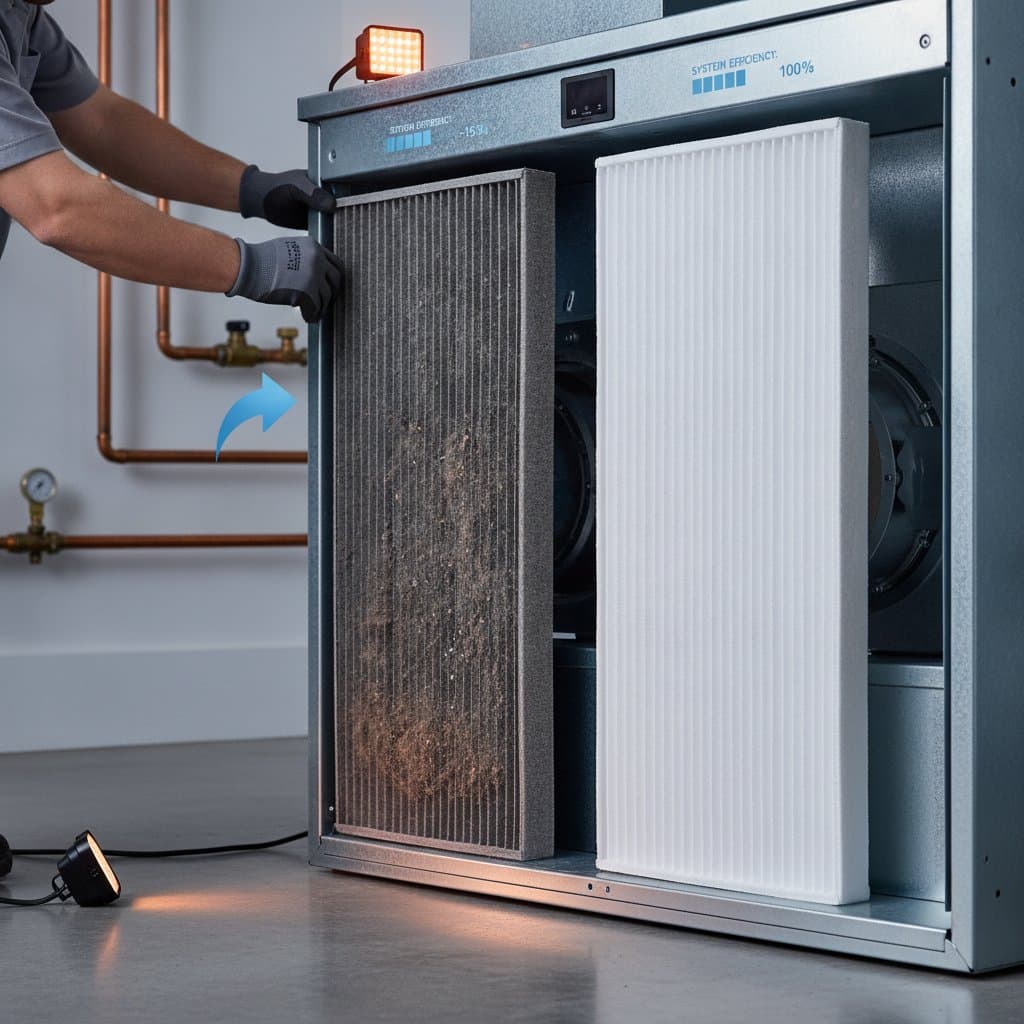
A filter that looks gray, matted, or visibly blocked needs attention even if the planned replacement date has not arrived. Never wait for a scheduled reminder when airflow has already declined.
Choosing the Right HVAC Filter
Filter ratings describe particle capture performance, but a higher rating is not automatically the best choice for every system. A dense filter can restrict airflow if the equipment was not designed to use it.
Check the size printed on the old filter, including its thickness. Measure the opening if the label is missing. A filter should fit securely without bending, gaps, or excessive force. Air can bypass a loose filter, reducing its value.
Look for the manufacturer recommended rating in the HVAC manual or on the equipment label. When the information is unclear, ask a qualified HVAC technician to confirm the suitable filter type. A technician can also check static pressure, which shows how difficult it is for air to move through the system.
For general dust control, a quality pleated filter often provides a useful balance between filtration and airflow. Homes with respiratory concerns may need stronger filtration, but the equipment must support that choice.
How to Build a Reliable Reminder System
Filter maintenance becomes easier when it connects to a routine you already follow. Write the installation date on the filter frame, then set a recurring reminder on a phone or household calendar. Keep replacement filters near the air handler, but store them in a dry, clean location.
Use a small supply checklist:
- Confirm the correct filter size.
- Buy several replacements from a reliable supplier.
- Mark the airflow arrow before installation.
- Record the installation date.
- Inspect the old filter when replacing it.
- Note unusual dust, moisture, odors, or damage.
Smart thermostats and connected HVAC monitors may track runtime or send maintenance alerts. These tools can help, but they do not replace a visual inspection. A home with pets, smoke, or frequent renovation dust may need a shorter interval than an automated estimate suggests.
Safe Filter Replacement Steps
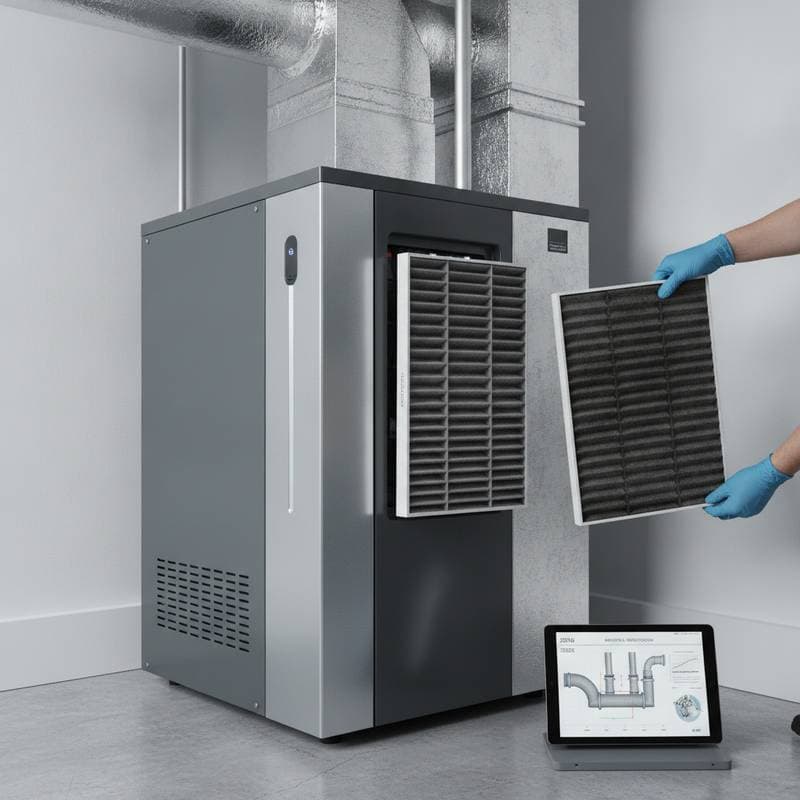
Turn off the HVAC system at the thermostat before removing the filter. Find the return air grille or equipment cabinet, then slide out the used filter carefully to avoid releasing collected dust.
Check the airflow arrow on the new filter. The arrow should point toward the furnace, air handler, or blower. Slide the filter into place without crushing the frame. Close the access panel securely and restore system operation.
Wash your hands after handling the old filter. If dust triggers symptoms, wear a properly fitted mask and avoid shaking or vacuuming the used filter indoors. Disposable filters should not be washed unless the manufacturer specifically identifies them as washable.
DIY Maintenance Versus Professional Service
Most homeowners can inspect and replace a standard filter. The task usually requires no specialized tools, but the filter location may be difficult to access in some systems.
Hire an HVAC professional when:
- The system produces unusual sounds.
- Airflow stays weak after a filter change.
- The filter becomes wet or develops moldlike growth.
- The equipment shuts down repeatedly.
- Ice forms on the refrigerant coil or nearby lines.
- You cannot identify the correct filter size or rating.
- Dust continues entering rooms despite a proper filter fit.
A wet filter can point to a clogged drain, frozen coil, duct leak, or condensate problem. Do not treat it as a simple replacement issue. Continued operation may damage the equipment or spread moisture.
Improving Indoor Air Beyond the Filter
A filter works best as part of a broader indoor air plan. Vacuum floors and upholstery regularly, clean return grilles, and control moisture with ventilation or dehumidification. Seal obvious gaps around filter racks so air cannot bypass the media.
Replace filters more often during wildfire smoke, heavy pollen, or indoor remodeling. Portable air cleaners can supplement central filtration in bedrooms or other occupied spaces, especially when the central system does not run continuously.
Avoid products that promise to solve every air quality concern through fragrance or ionization alone. Ask for clear performance information and consider whether the technology creates unwanted byproducts.
When to Review Your Schedule
Review the schedule when household conditions change. A new pet, allergy symptoms, a home renovation, a move, or a change in HVAC runtime can all affect filter life.
Start with monthly inspections for one full heating or cooling season. If the filter remains clean and airflow stays strong, extend the interval gradually within the manufacturer guidance. If it loads quickly, shorten the interval and investigate the source of excess dust.
A written record helps reveal patterns. Note the filter type, replacement date, visible condition, and any changes in comfort or dust. This information gives an HVAC technician useful details during service.
Next Steps for Better Air Quality
Begin by locating your current filter and noting its size and condition. Set up a monthly inspection reminder and purchase the correct replacements in advance. Track how quickly each filter loads over the next season, then adjust your schedule based on what you observe. This simple routine protects your equipment, improves comfort, and keeps indoor air cleaner throughout the year.