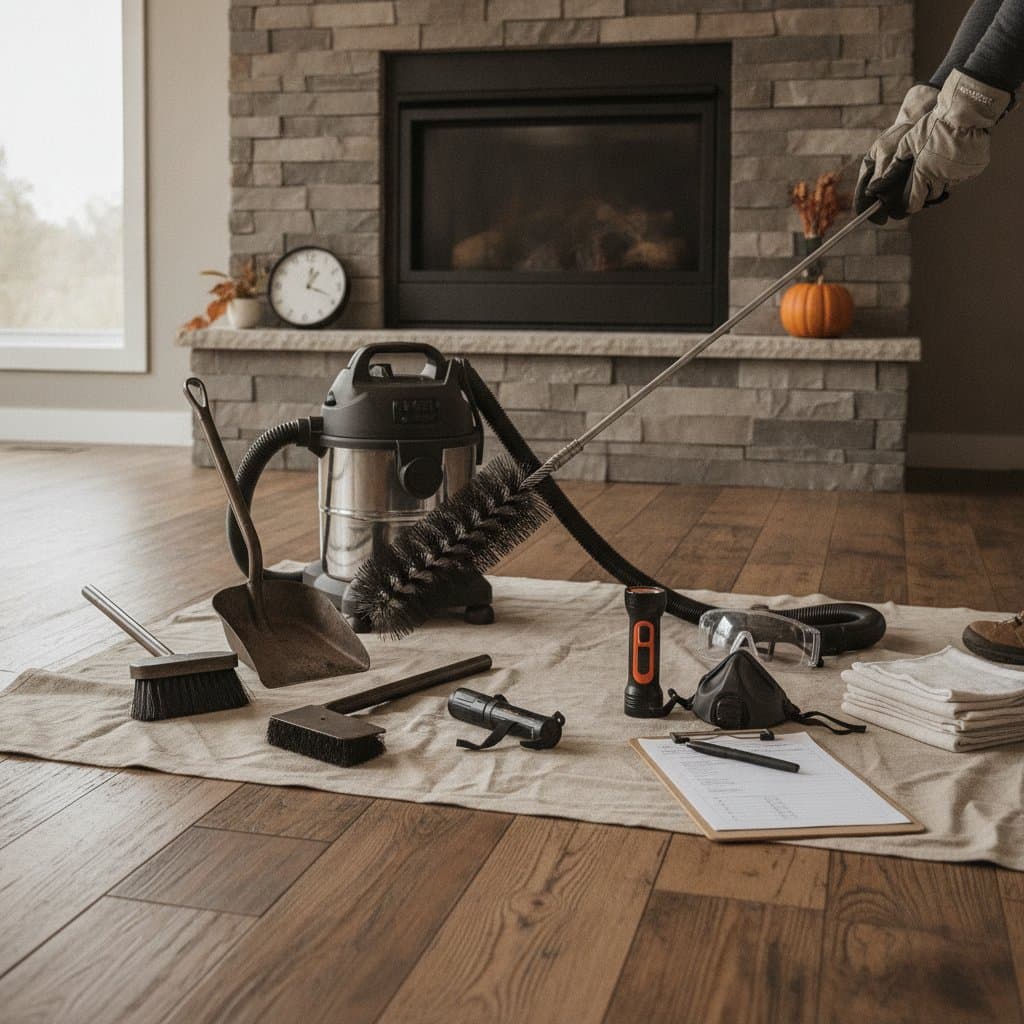
Fall Chimney Prep Prevents Fire Hazards and Costly Damage
A warm fire adds comfort during cool months, but a safe chimney keeps that comfort worry free. Preparing your chimney for fall protects your home from smoke backup, fire hazards, and costly damage. This checklist covers everything needed to inspect, clean, and maintain before lighting the first fire.
Why Chimney Prep Matters
Soot, creosote, and debris collect inside a chimney over time. When left uncleaned, these materials can ignite or block airflow. Birds and small animals often build nests that stop smoke from exiting properly. Regular inspection helps catch small cracks or leaks before they grow into expensive repairs. A clean chimney also burns fuel more efficiently, giving stronger heat from less wood or gas.
Step by Step Chimney Inspection
- Check the exterior. Look for missing bricks, gaps in mortar, or tilted sections. If the chimney leans or shows white staining, moisture may be entering through cracks. Repair these issues early to stop water from damaging the structure.
- Examine the flashing. Flashing seals the space where the chimney meets the roof. If rust, lifted edges, or gaps appear, reseal with roofing cement or call a roofing professional.
- Inspect the chimney cap. The cap keeps rain, leaves, and animals out. Make sure it fits tightly and the mesh screen is clear. Replace a missing or damaged cap before fall weather arrives.
- Look inside with a flashlight. Check for black buildup or shiny creosote glaze. These layers reduce airflow and can catch fire. If buildup is thicker than a coin, schedule a full cleaning.
- Test the damper. Open and close it to confirm smooth movement. A stuck damper traps smoke inside the home, while one that does not shut fully wastes heat.
Cleaning and Maintenance Tips
Professional chimney sweeps recommend cleaning before heavy seasonal use. If wood is burned often, schedule service more than once a year. When cleaning independently, wear a dust mask and goggles to avoid irritation from ash or soot.
Use a chimney brush sized to match the flue. Move it up and down several times to loosen all residue. Vacuum or sweep away fallen debris. Dispose of ashes in a metal container with a lid, and store it outside on a nonflammable surface.
Safety Checks Before the First Fire
- Smoke and carbon monoxide detectors: Test batteries and placement before using the fireplace.
- Fireplace doors and screens: Wipe glass clean and check hinges or latches.
- Firewood: Use seasoned hardwood. Wet or green wood produces more creosote.
- Fire extinguisher: Keep one near the fireplace and ensure it is easy to reach.
Cost and Scheduling Insights
Homeowners often pay less for maintenance when booking early in the season. A basic inspection may cost less than a deep sweep that includes camera scanning. Compare local services and read reviews from trusted homeowner forums before hiring. Mark the calendar now to repeat inspections each fall.
A labeled diagram can show chimney parts including the cap, flue, and damper.
A comparison chart can display average cleaning costs by chimney type for masonry, prefab, and metal chimneys.
Ongoing Fireplace Readiness
Once the chimney passes inspection, plan short checkups every month during heavy use. Clear out ashes, confirm the damper position, and watch for smoke that lingers indoors. These small habits prevent larger problems later.
A reliable chimney supports comfort and peace of mind. Take time now to prepare, and enjoy cozy fires all season without safety worries. Clean, inspect, and maintain the setup to keep the home warm, safe, and ready for every cold evening.