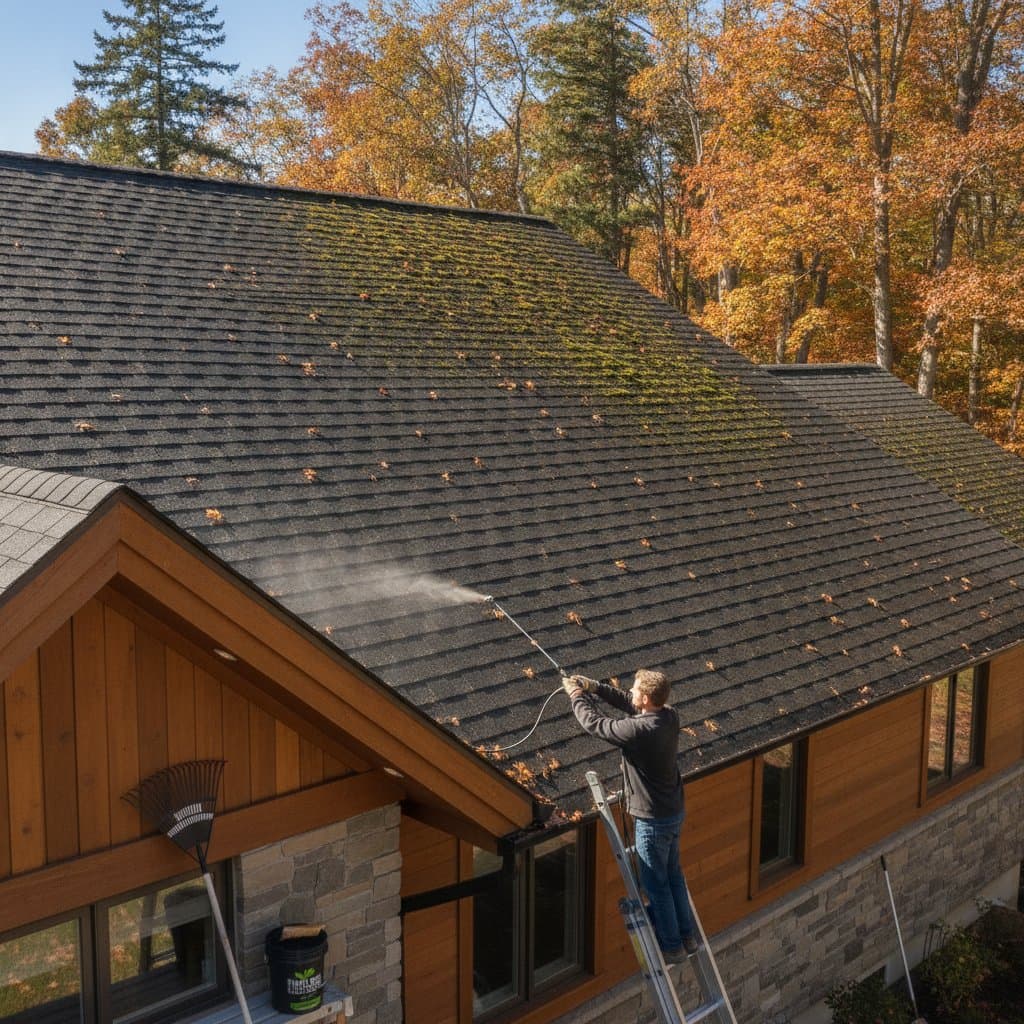
Follow This Fall Roof Moss Treatment Schedule
A clean, moss-free roof lasts longer and protects the home more effectively. Moss traps moisture against shingles, lifts edges, and creates entry points for water. Fall offers cooler temperatures and steady moisture that make treatment timely before winter arrives.
Understanding Roof Moss Growth and Why Fall Matters
Moss grows best in damp, shaded spots such as areas under trees or on north-facing slopes. Fall conditions support spore spread, so treatment now prevents larger colonies from forming under winter snow and ice. A four-step schedule of inspection, cleaning, treatment, and prevention removes current growth and reduces future problems.
Step 1: Early Fall Roof Inspection
Start with a close look at the roof surface. Search for green or brown fuzzy patches, soft spots on shingles, streaking, lifted edges, and debris near valleys or chimneys. Use binoculars from the ground if roof access feels unsafe. Early detection limits the area that needs later cleaning.
Step 2: Mid-Fall Cleaning and Preparation
Remove loose leaves and twigs with a soft brush. Rinse the surface gently with a garden hose on a dry day. Skip power washers because high pressure strips protective granules from shingles. Inspect flashing and vents for leaks before any product is applied. A clean surface helps treatment solutions stay in contact with moss.
Step 3: Late Fall Moss Treatment Application
Select a zinc-based or potassium-salt product labeled for roof use. Mix according to label directions and apply with a garden sprayer. Allow the solution to remain for the stated dwell time, then let rainfall wash away dead moss over following weeks. Avoid application if heavy rain is forecast within a few hours. Wear gloves and eye protection during mixing and spraying.
Step 4: Preventive Maintenance for Long-Term Results
Trim branches that cast shade on the roof. Clean gutters on a regular schedule to reduce standing moisture. Place zinc or copper strips along the ridge to create an environment hostile to regrowth. Plan inspections twice each year to catch new patches while they remain small.
Answers to Common Roof Moss Questions
- Most roofs need one annual treatment in fall. Shaded or humid locations may require a second light application in spring.
- Household bleach harms shingles and plants. Use only products formulated for roofing materials.
- Low-slope roofs allow safe DIY work when proper safety gear is used. Steep or high roofs call for professional crews.
- Moss loosens granules and lifts shingles, which leads to leaks over time.
- Persistent growth usually signals poor drainage or heavy shade. Metal strips and tree trimming address the root causes.
Choosing Between DIY and Professional Help
DIY work lowers cost and allows direct inspection. Professional service supplies proper equipment, safety measures, and often a warranty on results. Large, steep, or difficult roofs justify the added expense of hiring experienced help.
Preparing for Treatment
Check the forecast for several dry days. Assemble a ladder, harness, gloves, and sprayer. Move outdoor furniture and cover nearby plants. Reserve time afterward for surface inspection and debris removal.
Maintaining a Moss-Free Roof Year-Round
Inspect again each spring to confirm no new growth has started. Keep gutters clear and trees trimmed throughout the seasons. Consistent attention reduces the need for repeated chemical treatments and extends shingle life.