Attic Ventilation Maintenance for Efficient Summer Cooling
Poor attic ventilation traps heat and raises indoor temperatures during summer months. Many homeowners overlook this space until discomfort becomes noticeable. Maintaining proper airflow reduces cooling demands and protects roofing materials over time.
Why Attic Ventilation Matters in Hot Weather
Attic ventilation manages airflow through the upper portion of the house. Warm air rises from living areas and collects in the attic. Without adequate exhaust and intake, temperatures climb rapidly and increase cooling loads.
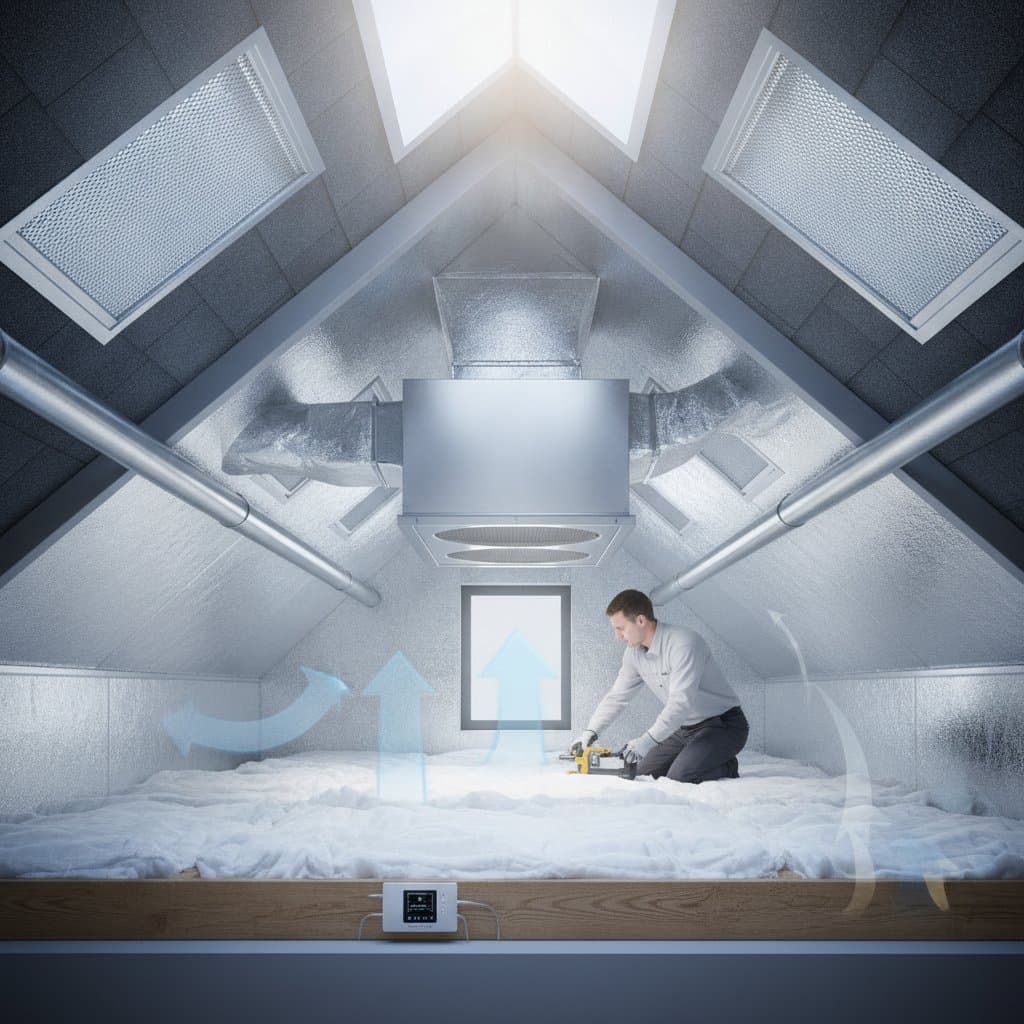
A balanced system allows hot air to exit through ridge or gable vents while cooler air enters through soffit vents. This movement prevents overheating of roof materials and reduces moisture accumulation that leads to mold or rot.
Common Signs of Poor Attic Ventilation
Indirect symptoms often appear before homeowners identify the root cause. Watch for these indicators during routine checks:
- High indoor temperatures despite constant air conditioner operation
- Uneven cooling between upper and lower floors
- Musty odors or condensation on rafters
- Warped shingles or early roof deterioration
- Ice dams forming in winter from trapped heat
An attic inspection confirms whether blocked vents or insulation problems restrict airflow.
Key Components of an Attic Ventilation System
Effective ventilation requires matched intake and exhaust vents. Intake vents along soffits or eaves draw in outdoor air. Exhaust vents such as ridge vents, gable vents, or turbines release hot air outward.
Imbalance between these components often causes heat buildup. Excess exhaust without sufficient intake pulls conditioned air from living spaces. Excess intake without matching exhaust limits the release of hot air.
Step-by-Step Attic Ventilation Maintenance
1. Inspect Vent Openings
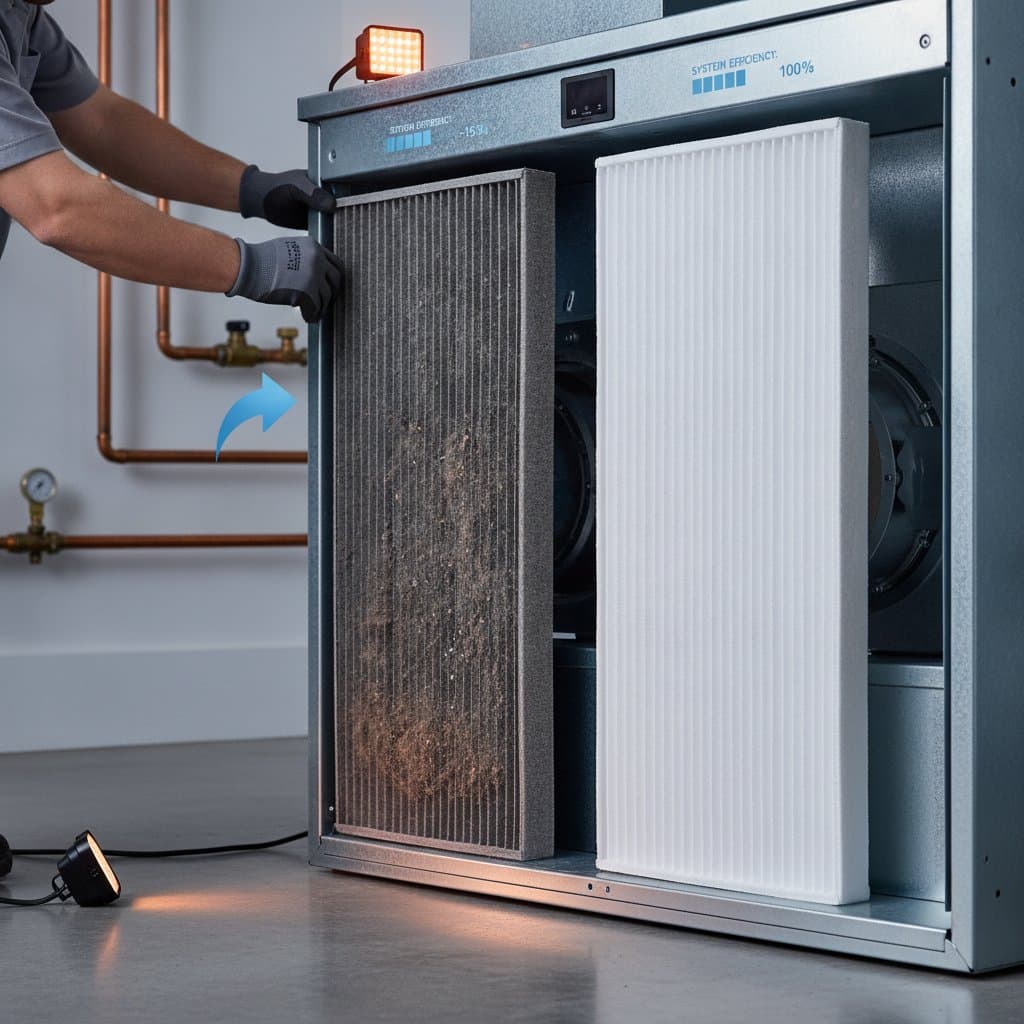
Examine all exterior vents for dust, insulation, paint, or nesting debris. Use a flashlight inside the attic to assess light and air movement. Clean restricted openings with a vacuum brush attachment or compressed air.
2. Clean Soffit Vents
Soffit vents collect pollen, dirt, and insulation over time. Remove covers every few months and vacuum accumulated material. Reposition shifted insulation with baffles to preserve an open air channel.
3. Check Exhaust Vents
Clear ridge and gable vents of leaves, nests, and debris. Spin turbine vents by hand to verify smooth operation. Lubricate or replace rusted units that create noise or resistance.
4. Evaluate Insulation and Air Sealing
Inspect insulation for gaps, compression, or moisture damage. Wet areas indicate possible roof leaks or inadequate exhaust. Seal surrounding air leaks with spray foam before restoring insulation layers.
5. Test Airflow Balance
Enter the attic on a warm day and hold tissue paper near soffit and ridge vents. Slight movement at each location confirms active circulation. Restricted movement on one side signals a blockage requiring attention.
Cost and Difficulty Breakdown
Maintenance remains affordable compared with full system replacement. Basic cleaning requires minimal tools. Professional assessment costs vary by home size. Vent replacement and insulation upgrades represent larger investments but deliver measurable returns.
Homeowners comfortable with ladders can complete most cleaning tasks. Major repairs or fan installations benefit from professional handling.
Energy Efficiency Benefits
Lower attic temperatures reduce heat transfer into living spaces. This decrease eases air conditioner workload and extends equipment life. Roofing materials also last longer when protected from extreme heat and trapped moisture.
When to Hire a Professional
Persistent hot spots, visible mold, water stains on ceilings, or unusual fan noises warrant expert review. Specialists can measure airflow rates and use thermal imaging to locate hidden issues.
Troubleshooting Common Issues
Air conditioner operation remains constant after vent cleaning when insulation gaps allow conditioned air to escape. Mold on roof sheathing typically results from blocked exhaust vents that trap moisture.
Seasonal Inspection Routine
Add attic vent checks to quarterly maintenance lists. Track soffit and ridge locations to ensure consistent clearance. Temperature sensors placed in the attic provide early alerts when readings exceed normal ranges.
Optimizing Long-Term Home Performance
Consistent ventilation maintenance lowers utility costs while protecting structural components. Regular attention converts the attic into an active contributor to overall comfort and efficiency.