
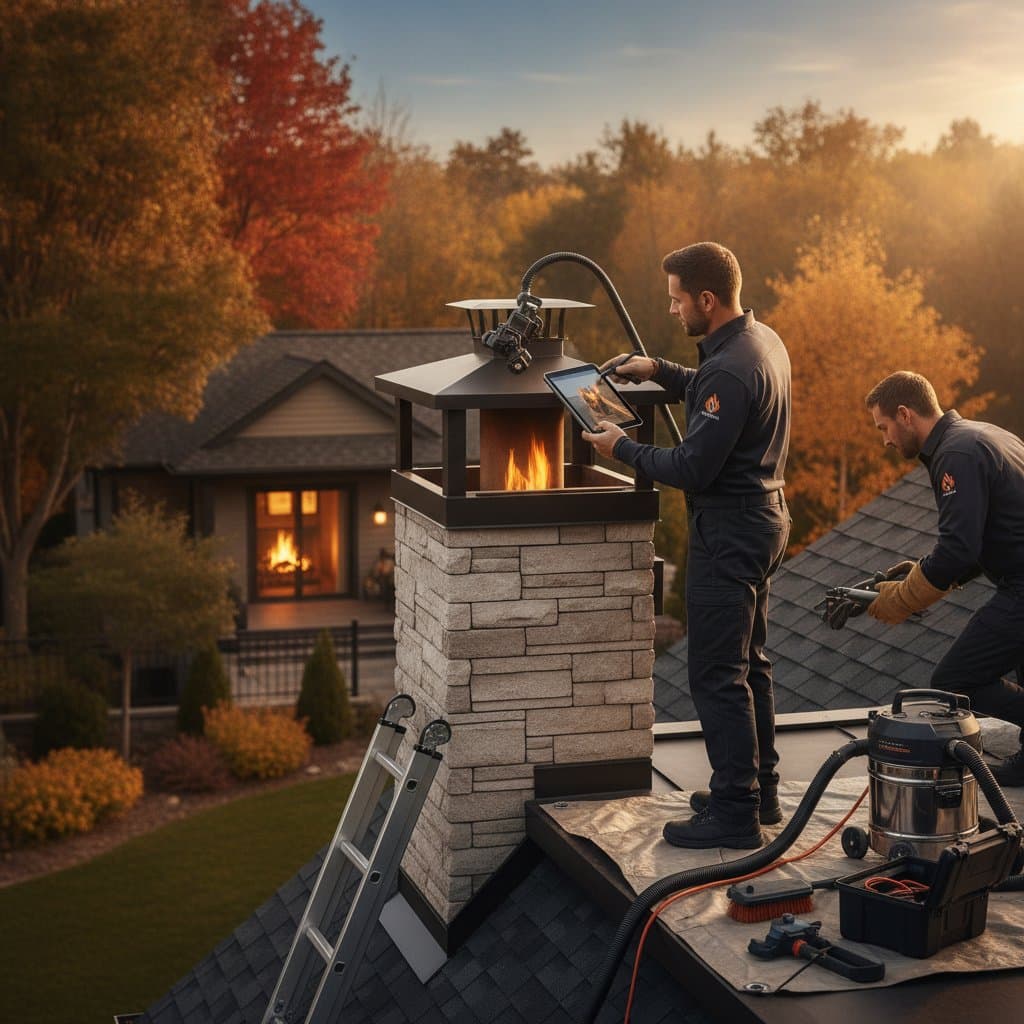
Essential Fall Chimney Maintenance Tasks
As cooler weather arrives, homeowners turn their attention to fireplaces for warmth and comfort. A chimney that receives no attention can lead to smoke backdraft, carbon monoxide exposure, or structural fires. Seasonal upkeep protects residents, raises heating performance, and lengthens equipment life.
Complete the following tasks before the first fire of the year.
Arrange a Certified Chimney Inspection
Internal blockages or cracks remain invisible from ground level. A certified technician performs a Level 1 inspection that examines every accessible component and meets the annual requirement.
Difficulty: Professional service required
Time: 1 to 2 hours
Cost: 150 to 400 dollars, varying by region and height
New homeowners or those who changed fuel sources should request a Level 2 inspection. This procedure uses a camera to detect liner gaps, separations, or water damage. Online videos demonstrate basic exterior checks, yet only a licensed professional can verify interior safety.
Examine and Replace the Chimney Cap
A secure cap blocks rain, debris, and nesting animals. Uncapped flues frequently collect leaves and twigs that restrict airflow and raise fire risk.
Difficulty: Moderate
Time: 1 to 2 hours
Cost: 75 to 200 dollars for full replacement; 25 dollars for small fixes
Inspect the cap only when equipped with proper fall protection. Confirm that mesh remains intact and fasteners hold firmly. Replace rusted screws at once. Moisture stains on exterior masonry indicate leakage around the cap or crown.
Stainless steel and copper models resist corrosion longer than galvanized versions. Quality caps reduce annual service visits for many households.
Review the Firebox and Hearth
Clear ash and debris from the previous season. Check brick joints for missing mortar and replace damaged firebrick with refractory cement rated for high heat.
Difficulty: Easy
Time: About 1 hour
Cost: Under 50 dollars for materials
Clean glass doors with a dedicated fireplace solution rather than household products that leave residue. Test the door gasket for a tight seal that prevents smoke escape. For gas units, clear pilot and burner openings of dust or webs with a soft brush, then verify ignition.
Organize Firewood Storage
Seasoned hardwood such as oak or maple produces less creosote than green or softwood. Store split logs on an elevated rack beneath a ventilated cover positioned away from the house foundation.
Difficulty: Easy
Time: 1 to 2 hours
Cost: 200 to 400 dollars per cord
Smaller pieces dry faster and ignite more readily. A blend of softwood kindling with hardwood logs creates steady, efficient burns.
Test Flue Draft
Roll a sheet of newspaper, place it in the firebox, and light it. Observe whether smoke travels upward without hesitation. Crack a nearby window and repeat the test. Persistent downward flow requires professional diagnosis of ventilation problems.
Establish a Routine Care Schedule
Empty ashes weekly during active use while retaining a thin insulating layer. Keep the damper closed when the fireplace sits idle to limit heat loss. Persistent indoor smoke, musty smells, or white efflorescence on exterior brick signal the need for immediate specialist attention. Consistent attention keeps the fireplace reliable and efficient throughout the heating season.




