
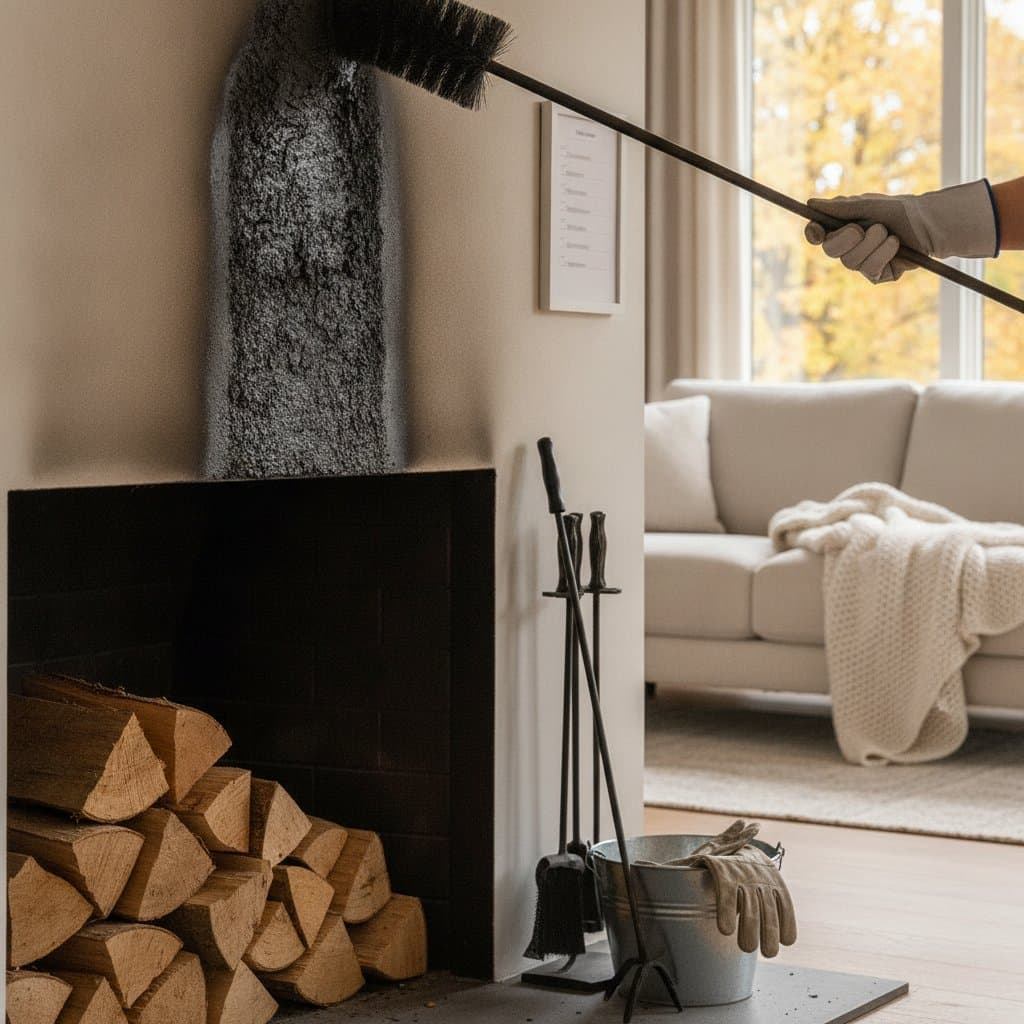
Creosote Buildup: The Hidden Fire Risk in Your Chimney
Get Your Chimney Ready for Fall: Essential Checklist
As the weather cools, fireplaces become central to home comfort. Homeowners must prepare chimneys for safe and efficient operation before the first fire. Proper maintenance prevents hazards, improves performance, and eliminates smoke or odors.
- Inspect the full chimney structure for cracks and damage.
- Remove creosote and soot through cleaning.
- Verify the condition of the cap, crown, and flashing.
- Test damper function and overall airflow.
- Check the firebox, hearth, and safety devices.
- Select appropriate firewood and schedule professional service.
Inspect the Chimney Structure
Start with a close look at the exterior. Search for cracks, missing mortar, loose bricks, or any tilt. Small gaps admit moisture that leads to further deterioration. White salt like stains indicate water absorption that weakens the masonry.
A certified professional should complete a thorough review. Technicians employ cameras to examine the flue liner and crown. Annual inspections before burning season protect against costly failures.
Clean Out Creosote and Soot
Creosote forms when smoke cools inside the flue and creates a flammable residue. Even thin layers can ignite under heat. Consistent removal maintains proper draft and reduces fire risk.
Light buildup allows basic homeowner cleaning. Thicker deposits require a certified sweep with brushes and vacuums. Clean whenever accumulation reaches one eighth of an inch.
Check the Chimney Cap and Crown
The cap blocks rain, debris, and animals from entering the flue. Confirm it remains secure and free of rust. Replace any damaged unit before winter arrives.
The crown shields the top surface from water. Apply a flexible waterproof coating to seal cracks and prevent freeze damage.
Examine the Flashing and Roof Area
Flashing seals the chimney to the roof. Look for rust, lifted edges, or missing sealant during inspection. Interior stains near the chimney often signal leaks.
Seal small gaps with high temperature silicone. Larger issues need professional roof repair to stop rot or mold.
Test the Damper and Airflow
The damper regulates air movement. Confirm it opens and closes without resistance. A poor seal allows heat loss and raises energy costs.
Smoke entering the room points to restricted draft. A technician can measure pressure and suggest corrections such as a top sealing damper.
Inspect the Firebox and Hearth
Examine the interior for cracks or loose mortar. Use only refractory mortar for repairs because standard mixes fail under heat. Remove excess ash while leaving a thin insulating layer.
Clean the hearth surface and secure any loose surrounding materials.
Assess Smoke and Carbon Monoxide Safety
Install working detectors on every level and near sleeping areas. Test units and replace batteries each season. A properly functioning chimney vents gases safely.
New or unused fireplaces benefit from a professional draft test.
Choose the Right Firewood
Seasoned hardwoods such as oak or maple produce less creosote than softwoods. Split and dry wood for six months, then store it off the ground with top cover only. Never burn treated lumber, cardboard, or trash.
When to Call a Professional
Homeowners can handle ash removal and visual checks. Structural concerns, heavy creosote, or venting problems require certified experts.
Schedule Annual Professional Service
Yearly inspections combined with post season cleaning extend system life and lower heating expenses. Address exterior issues after storms to maintain safety throughout the year.




