Fall HVAC Filter Replacement for Cleaner Air All Season
As temperatures drop and homes seal up for cooler months, indoor air quality gains importance. Replacing the HVAC filter in fall improves both comfort and health. A clean filter allows the system to run efficiently while blocking dust, pollen, and other particles from circulating indoors.
Why Fall Is the Ideal Time for an HVAC Filter Change
Fall marks the transition from cooling to heating. This change increases demands on airflow and efficiency. Summer use often leaves filters clogged with dust, pet dander, and debris drawn in by air conditioning.
A new filter prepares the system for heating season. It reduces strain on the blower motor, lowers energy use, and improves air quality during periods when windows stay closed.
Benefits of a Clean Filter
A clean filter supports overall system performance beyond basic dust control. Key advantages include the following.
- Removes allergens, smoke particles, and fine dust that irritate lungs and sinuses.
- Maintains steady airflow so the system avoids unnecessary strain.
- Lowers utility costs through improved operating efficiency.
- Extends equipment life by limiting wear on fans and motors.
- Delivers consistent temperatures in every room.
Steps to Replace the HVAC Filter
Filter replacement requires only a few minutes when performed correctly. Follow these steps for best results.
- Switch off the HVAC system to prevent unfiltered air from moving through the house.
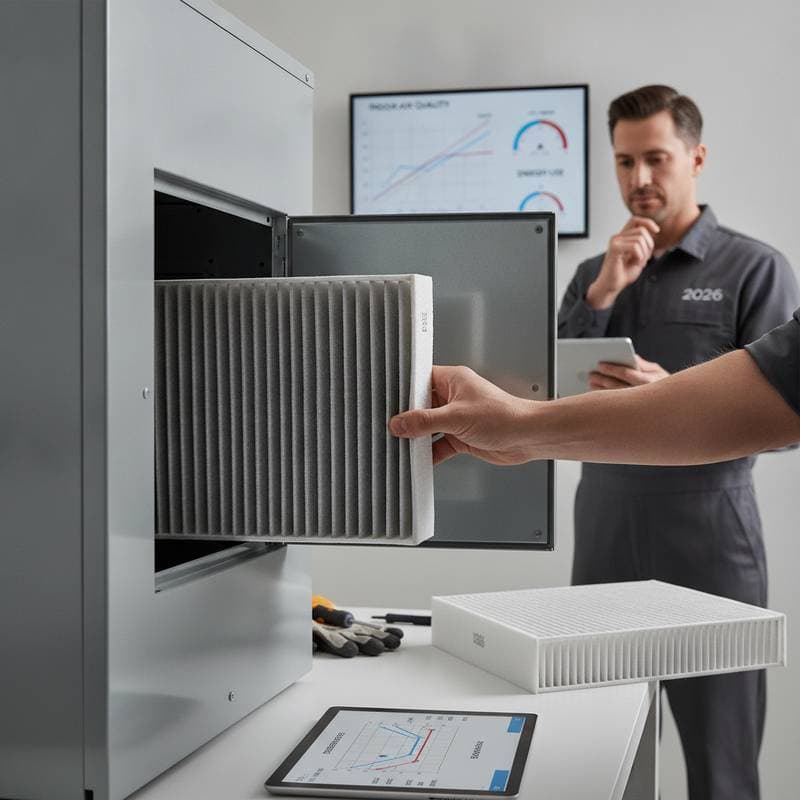
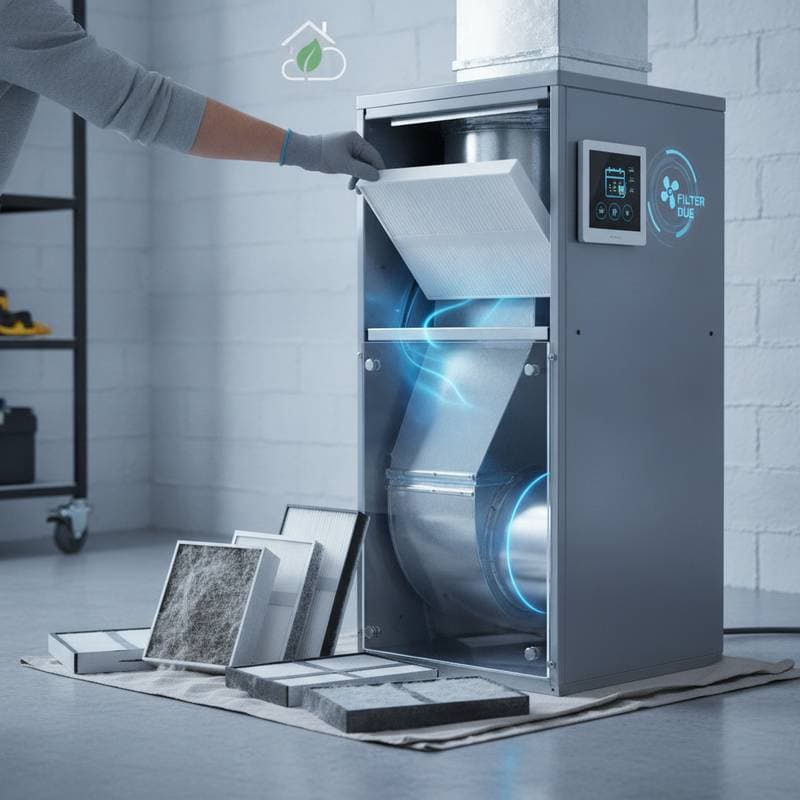
- Open the filter compartment, typically located behind a return vent or inside the ductwork.
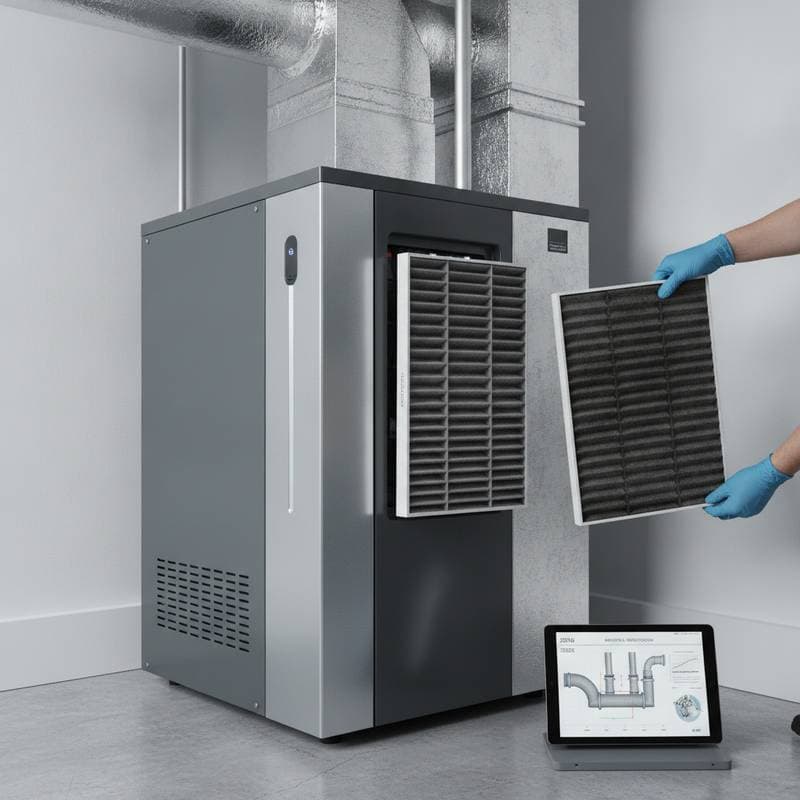
- Slide out the old filter slowly to contain trapped particles.
- Note the dimensions printed on the old frame and select a matching replacement.
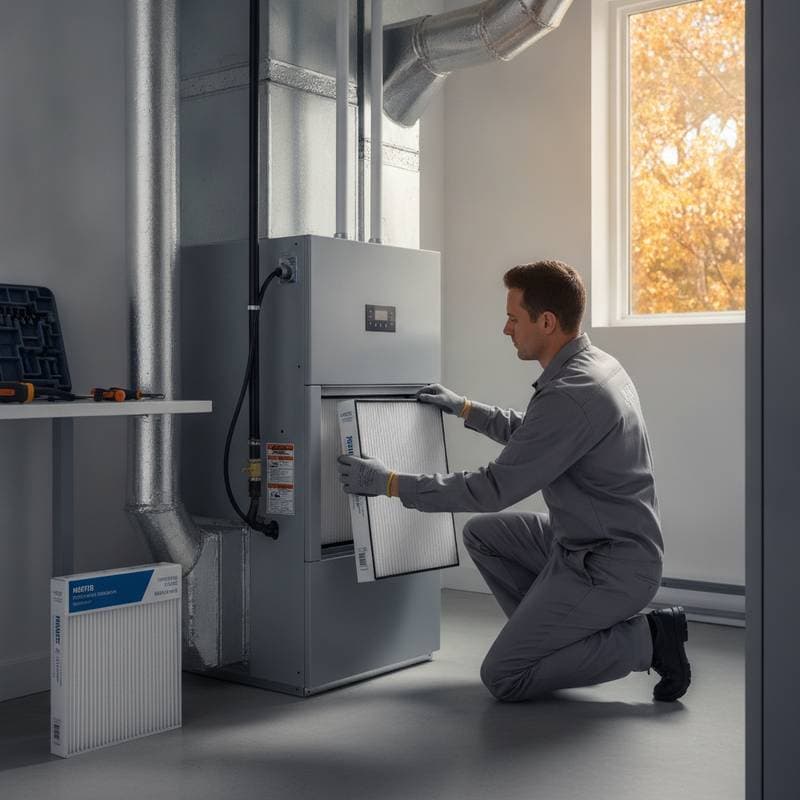
- Position the new filter so the airflow arrow points toward the blower.
- Close the compartment and restore power to the system.
- Record the installation date and schedule the next check for one to three months later.
Filter Upgrade Guidance
Homes with pets, indoor smoking, or high dust levels benefit from a filter with a higher MERV rating. These options capture smaller particles and maintain performance over longer intervals.
Indicators That a Filter Needs Replacement
The HVAC system often signals when airflow becomes restricted. Watch for these conditions.
- Air feels stale or dusty even after routine cleaning.
- Some rooms reach desired temperatures more slowly than others.
- Utility bills increase without changes in thermostat settings or occupancy.
- The system runs for longer cycles or turns on and off more frequently.
Addressing these signs promptly restores proper operation.
Additional Fall HVAC Preparation Tasks
Filter replacement forms one part of seasonal upkeep. Complete these supporting actions as well.
- Vacuum vents and registers to limit debris entry.
- Examine accessible duct joints for gaps or separations.
- Remove leaves and debris from the outdoor cabinet on combined systems.
- Verify thermostat accuracy across heating and cooling modes.
- Stock spare filters to avoid delays during future changes.
Ongoing HVAC Care Practices
After the initial filter swap, continue simple habits that protect air quality and equipment. Note change dates on a calendar, clean vents on a regular schedule, and note any new operating sounds. These actions support cleaner air, reduced operating costs, and reliable performance through winter.