Fall Chimney Maintenance Checklist for Safe Fireplaces
As cooler weather arrives, homeowners prepare for fires and warm evenings. Before the first fire, attention to the chimney and fireplace supports safety, prevents damage, and promotes efficient heating. Proper upkeep also supports better indoor air quality.
This guide provides a complete fall chimney maintenance checklist. It addresses inspection steps, cleaning practices, cost expectations, and safety points for wood burning and gas fireplaces.
Understanding Chimney Maintenance Costs
Maintenance costs vary by location, service type, and system condition. Homeowners typically spend between $150 and $450 for a standard chimney sweep. More extensive repairs may reach $1,000 or higher.
National Average Pricing Benchmarks
Inspection costs average $80 to $150. A full cleaning ranges from $200 to $350. Heavy creosote or obstructions can raise the price due to extra time and equipment.
Regional Price Variations
Urban areas often carry higher rates because of labor and demand. Coastal cities may charge about 20 percent more than smaller towns. Rural pricing tends to be lower, though travel fees can apply.
Seasonal and Economic Factors
Fall brings peak demand for chimney services. Early booking helps avoid rush fees. Material costs for liners or sealants may shift with market conditions.
Pricing Models and Service Structures
Professionals use several pricing approaches. Hourly rates for complex repairs fall between $75 and $120. Flat fees suit routine work. Package options bundle inspection, cleaning, and minor repairs. Annual plans can reduce costs for frequent users.
Service Tiers and Price Points
Basic Chimney Cleaning
A basic sweep removes soot and light creosote. It costs $150 to $250 and takes about an hour. This suits newer or lightly used systems.
Standard or Professional Service
This level adds a visual inspection for cracks, liner damage, and blockages. Expect $250 to $450.
Premium or Comprehensive Service
Premium work includes video inspection, draft testing, and reports. It may cover cap or damper replacement. Prices range from $500 to $900.
Specialized or Bespoke Services
Masonry repairs, waterproofing, or relining cost $1,000 to $3,000. These require certified technicians.
Key Variables That Affect Chimney Maintenance Costs
- Size and height of the chimney.
- Condition of the flue and firebox.
- Type of fuel used.
- Frequency of use.
- Accessibility of the structure.
Certified technician Laura Jennings noted that homeowners often underestimate soot accumulation. Even one season of heavy use can create deposits that reduce airflow.
Essential Add On Services and Supplemental Charges
- Chimney cap installation costs $150 to $350.
- Smoke chamber parging costs $300 to $600.
- Waterproofing treatments cost $200 to $400.
- Expedited service may add $100 to $200.
These options improve protection and extend chimney life.
Step by Step Fall Chimney Maintenance Checklist
A thorough fall inspection prepares the chimney for the heating season.
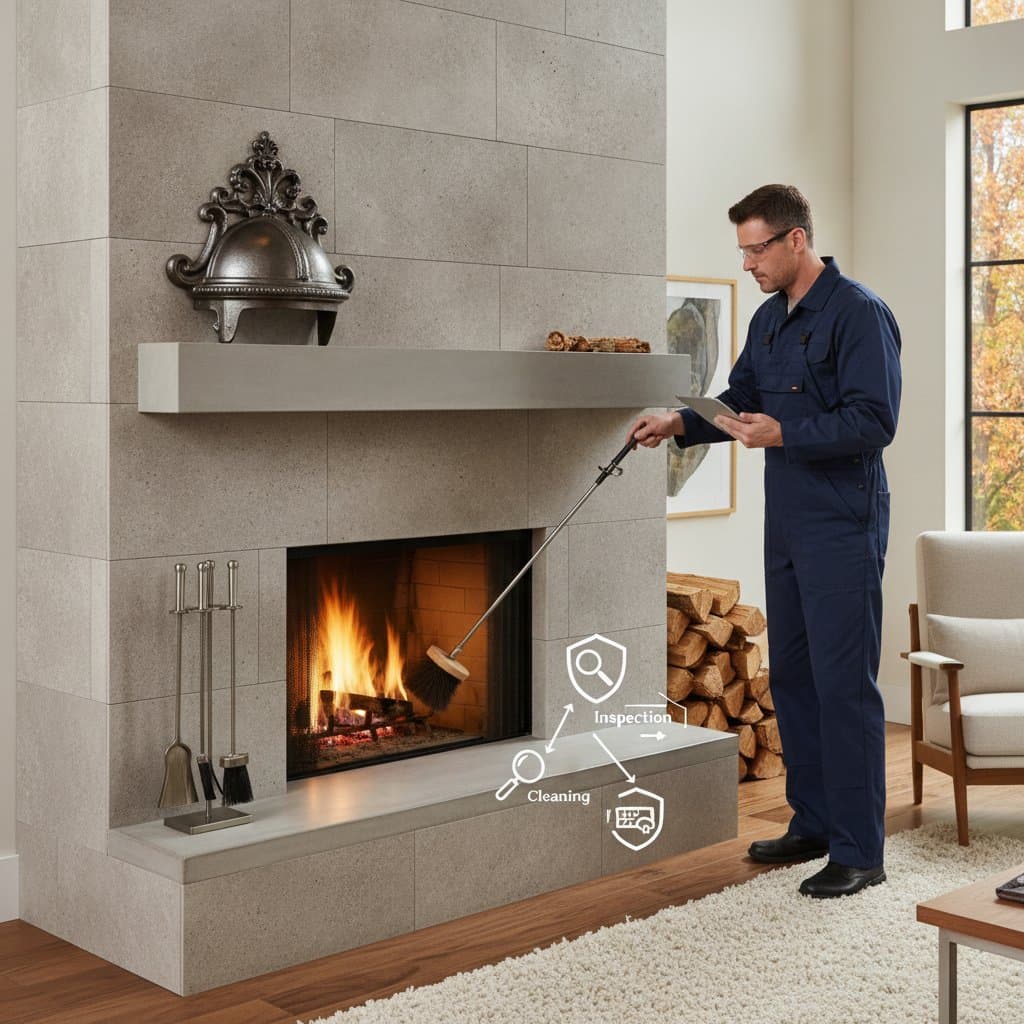
- Inspect the exterior for crumbling mortar, cracked bricks, or leaning sections. Replace a missing or rusted cap at once.
- Examine the fireplace interior for loose bricks, rust, or excessive ash. Confirm the damper opens and closes smoothly.
- Test the draft with a small piece of rolled newspaper. Smoke should rise quickly. Drifting smoke signals a possible blockage.
- Schedule a professional cleaning. Certified sweeps use brushes, vacuums, and cameras to clear creosote safely.
- Check smoke and carbon monoxide detectors. Replace batteries and test each unit.
- Review the chimney liner. Cracked clay or corroded metal liners need prompt attention.
- Prepare firewood storage. Keep seasoned wood dry and avoid burning wet wood.
Safety and Certification Considerations
Certified sweeps follow standards from the Chimney Safety Institute of America. Many insurers prefer certified reports. Certified professionals carry liability insurance and provide guarantees. Surveys indicate that over 70 percent of homeowners who use certified sweeps experience fewer winter issues.
Eco Friendly and Long Term Savings Options
Eco conscious choices include non toxic cleaners and energy efficient inserts. Glass door inserts or improved dampers reduce heat loss and lower energy bills over time.
Maintaining Fireplace Performance
Following this checklist keeps the fireplace safe and efficient. Schedule inspections early, select certified providers, and address issues promptly. These steps protect the home and support reliable use throughout the season.