Creosote Buildup: Your Hidden Fire Risk Before Winter
A clean chimney supports safe and efficient fires. Creosote, a sticky residue from burning wood, builds up inside the flue and ignites easily. Homeowners who inspect and maintain their chimneys before winter reduce the chance of chimney fires and improve heat output.
Safety warning: Never start cleaning while embers are still warm. Wait until the fireplace is completely cold.
Step 1: Inspect for Creosote Accumulation
Open the damper and shine a bright light up the flue. Creosote appears as a dark, flaky, or tar-like layer on the walls. Thin layers require brushing. Thicker deposits, more than one eighth of an inch, call for professional removal.
A chimney sweep uses rotary brushes and vacuums to clear the residue without damaging the liner. Schedule this service if you burn wood several times each week or notice a strong odor when the fireplace is cold.
Step 2: Clean the Flue and Remove Debris
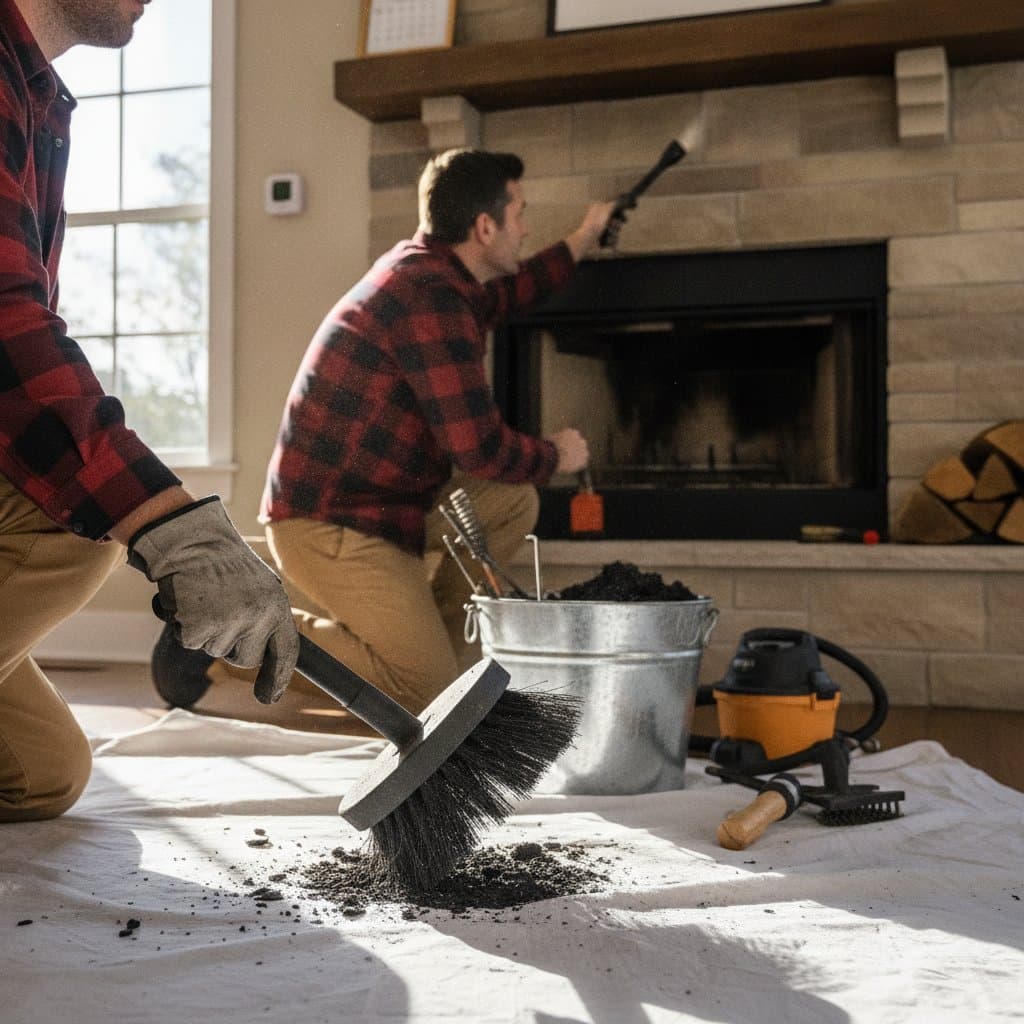
After inspection, remove loose soot and creosote with a chimney brush sized for your flue. Work from the top down when possible, and collect debris with a vacuum designed for fine particles. Wear eye protection and a dust mask during this task.
Clear the smoke shelf and firebox of ash and fallen creosote. Dispose of the material in a metal container outdoors. This step restores proper draft and lowers the risk of blockage.
Step 3: Check the Chimney Cap and Crown
The chimney cap keeps rain, leaves, and animals out. The crown seals the top of the chimney to block water entry. Inspect both parts for cracks, rust, or gaps. Replace missing screens or caps immediately to prevent nesting birds or debris buildup.
If the crown has small cracks, a waterproof sealant can stop further damage. Larger breaks may need professional masonry repair. Keeping water out of the chimney prevents freeze thaw damage and mold growth inside the flue.
Step 4: Examine the Firebox and Damper
The firebox is the chamber where wood burns. Look for loose bricks, cracked mortar, or metal warping. White powder on the walls signals efflorescence, a sign of moisture trouble.
The damper controls airflow and smoke release. Move the handle to make sure it opens and closes smoothly. A stuck or rusted damper wastes heat and lets cold air inside when not in use. Lubricate hinges lightly and clean off soot.
Step 5: Clear the Surrounding Area
Keep all flammable items at least three feet away from the fireplace. This includes rugs, curtains, kindling, and decorations. Store firewood outside rather than next to the hearth. Insects and rodents can travel from logs into your home if kept indoors.
Install a metal or glass screen in front of the fireplace to stop sparks from flying out. When not using the fireplace, close the damper to keep warm indoor air from escaping.
Step 6: Test Smoke and Carbon Monoxide Detectors
Even a clean chimney can release fumes if airflow is poor. Working alarms protect your family from invisible gases. Test both smoke and carbon monoxide detectors, replace batteries, and confirm they sound properly. Install one on every floor and near sleeping areas for full coverage.
Step 7: Inspect Exterior Masonry and Flashing
Look around the chimney from the outside. Check for cracks in bricks, missing mortar, or gaps between flashing and the roof. Damaged flashing can let water seep into ceilings or attic spaces. Seal minor gaps with high temperature caulk. For major cracks or leaning structures, call a professional mason before the next storm.
Typical Maintenance Costs
Inspection fees usually fall in the lower range for most homes. A full cleaning costs more but remains moderate for standard chimneys. Crown repairs or masonry repointing require a larger investment yet prevent water damage that leads to expensive interior fixes. Regular care reduces the likelihood of emergency service calls.
Next Steps for Homeowners
Begin with a visual inspection of the flue and cap. Follow the checklist in order, and address any moisture or structural issues before temperatures drop. Consistent attention keeps the fireplace drawing correctly, limits creosote hazards, and supports steady indoor warmth throughout the season.