
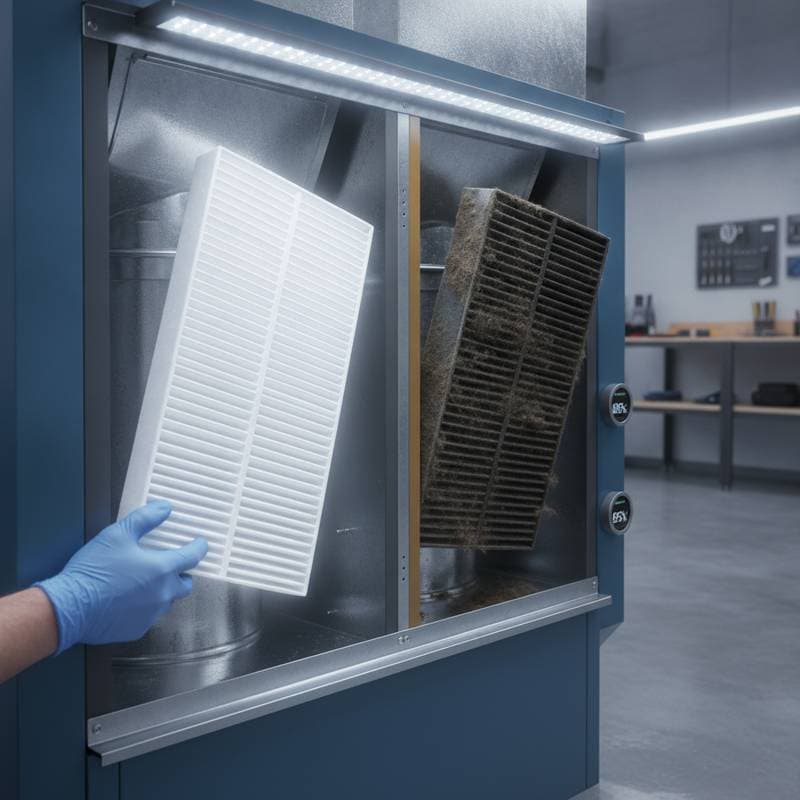
Quarterly HVAC Filter Changes Maintain Peak System Performance
A comfortable home depends on clean, efficient airflow. Many homeowners overlook the simplest HVAC maintenance task. Changing the air filter regularly prevents strain on equipment and supports consistent indoor temperatures.
This guide details how quarterly filter replacements improve performance, enhance air quality, and reduce repair risks. Readers will learn proper filter sizing, maintenance scheduling, and error prevention strategies that keep systems operating effectively throughout the year.
Importance of Regular Filter Replacement
A clogged filter limits airflow and forces the blower motor to operate under increased load. This added effort shortens the lifespan of the motor and compressor while creating uneven heating or cooling. Dust that bypasses the filter frame accumulates in ducts and lowers overall efficiency by up to 15 percent.
Replacing filters four times each year maintains steady airflow and limits dust accumulation. The National Air Filtration Association advises monthly inspections with replacements at least every three months. Households with pets, allergies, or high dust levels often require more frequent changes.
Recommended Quarterly Replacement Schedule
The most straightforward approach involves filter changes once per quarter. This timing aligns with seasonal usage patterns and prevents extended operation with restricted airflow.
- Early spring: Install a fresh filter before cooling begins to handle increased pollen and dust.
- Early summer: Replace ahead of peak cooling loads to support higher system demand.
- Early fall: Change the filter before heating starts to clear summer dust from ducts.
- Early winter: Install a new filter before heavy heating use to ensure maximum airflow.
Calendar reminders or smart thermostat alerts help track these dates automatically based on runtime hours.
Selection of Appropriate Filter Types
Filters vary by efficiency rating, measured through the Minimum Efficiency Reporting Value scale. Selection depends on household needs and equipment specifications.
- Fiberglass filters rated MERV 1 to 4 last about 30 days and provide basic protection.
- Pleated filters rated MERV 6 to 12 last 60 to 90 days and suit most average homes.
- Electrostatic filters rated MERV 8 to 12 last 90 days and benefit homes with pets or allergy concerns.
- HEPA filters rated MERV 13 to 16 last 90 to 120 days and deliver the highest particle capture.
Most residences achieve the best results with pleated filters in the MERV 8 to 12 range. Higher ratings may restrict airflow unless the system is designed for them. Always consult the equipment manual before selecting a higher-efficiency option.
Proper Filter Replacement Procedure
Correct installation preserves airflow and ensures a secure fit.
- Switch off the system at the thermostat to avoid drawing unfiltered air.
- Locate the filter slot, typically behind a return vent grille or inside the duct near the air handler.
- Measure the existing filter and match dimensions exactly, such as 16x20x1 or 20x25x1 inches.
- Insert the new filter so the airflow arrow points toward the blower motor.
- Reattach the cover and restore power to the system.
Writing the installation date on the filter frame with a permanent marker provides a clear record for future reference.
Errors That Reduce System Effectiveness
Simple installation mistakes can undermine performance and increase wear.
- Selecting an incorrect size leaves gaps that allow dust bypass.
- Delaying replacement past the point of visible graying or debris restricts airflow.
- Reversing filter orientation prevents proper direction of air movement.
- Using excessively high MERV ratings without compatible equipment reduces airflow volume.
- Blocking return vents forces air through fewer paths and lowers efficiency.
Attention to these details protects the blower motor and supports steady comfort levels.
Energy Savings and Filter Costs
A clean filter lowers energy consumption by 5 to 15 percent, producing measurable reductions in monthly utility expenses. Filter prices remain low relative to service calls or motor replacements.
- Fiberglass options cost 1 to 4 dollars each.
- Pleated options cost 8 to 20 dollars each.
- Electrostatic options cost 15 to 45 dollars each.
- Reusable washable options cost 25 to 60 dollars initially and require cleaning every 30 days.
A quarterly schedule keeps annual expenses below the cost of a single professional visit for a neglected system.
Situations Requiring Professional Service
Persistent issues after filter replacement indicate the need for further evaluation. Contact a licensed technician when airflow remains weak, unusual noises occur, dust persists, energy use rises without explanation, or mold appears in ductwork.
Adjustments for Specific Property Types
Compact Apartments
Smaller systems often use 1-inch filters that load quickly. Monthly checks and 60-day replacements prevent cooling capacity loss.
Larger Residences
Multiple return points each require a filter. Simultaneous replacement across all locations maintains balanced airflow.
Properties with Pets or Allergies
Dander and hair accelerate filter loading. Electrostatic or pleated filters rated MERV 10 to 12, replaced every 60 days, provide suitable performance.
Seasonal or Vacant Properties
Replace the filter before departure and again upon return to remove accumulated dust.
Limited Mobility Considerations
Professional service or relocation of the filter cabinet to an accessible height supports safe maintenance.
Recommended Maintenance Supplies
- Step ladder for elevated returns.
- Flashlight for vent inspection.
- Measuring tape for size verification.
- Permanent marker and calendar for scheduling.
- Vacuum or brush for grille cleaning.
Practical Implementation Steps
Set recurring alerts through a thermostat application or phone calendar. Purchase filters in bulk to maintain supply. Clean around return vents monthly. Enroll in a maintenance plan that includes seasonal inspections and filter service.
Long-Term Equipment Protection
Consistent filter management preserves system efficiency, lowers operating costs, and extends equipment life while supporting reliable indoor comfort across all seasons.




