Permeable Driveway Costs What Homeowners Pay
A permeable driveway lets rainwater pass through the surface into the ground below. This design reduces runoff and helps prevent flooding around the property. Homeowners select this option to combine practical drainage with an improved appearance.
How Permeable Driveways Work
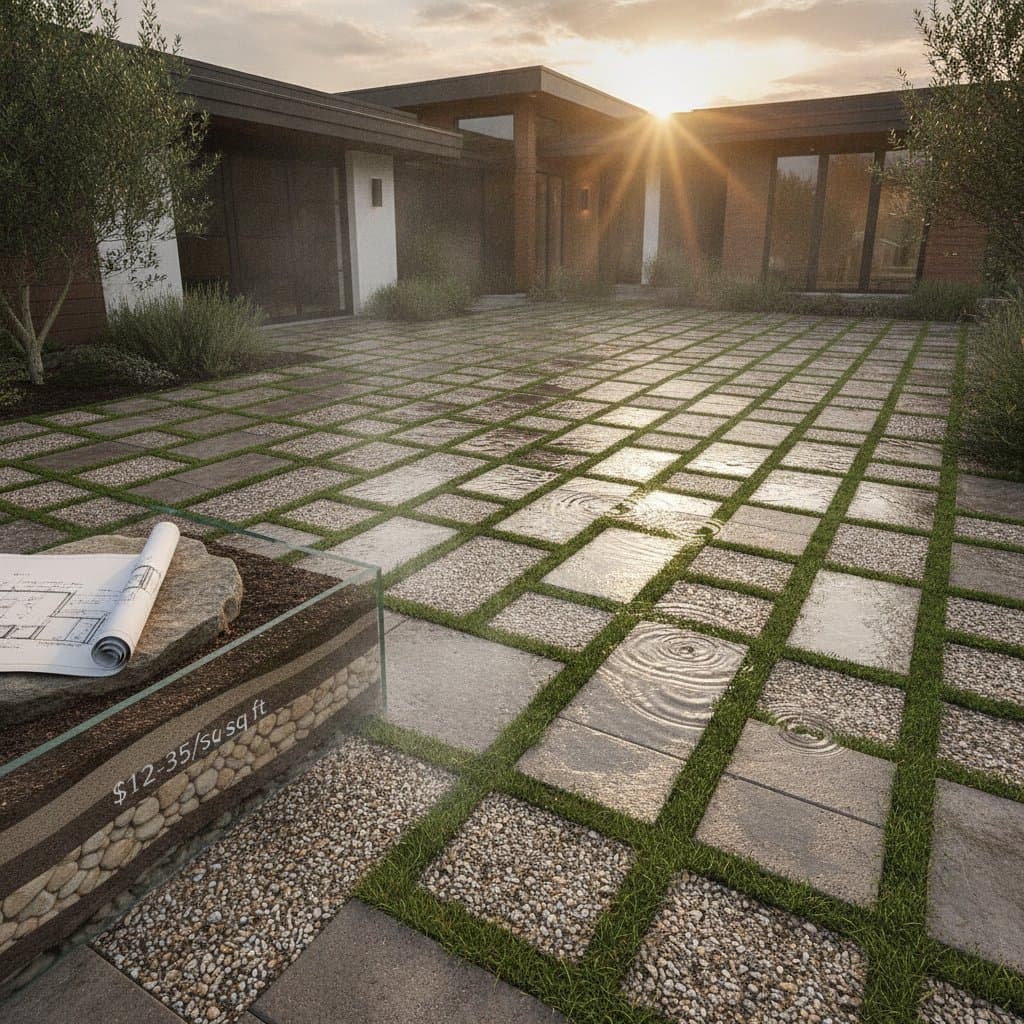
The structure includes a porous top layer, a crushed stone base, and a sub base that manages water flow. Three common types exist.
- Permeable pavers use concrete, brick, or stone units with gravel or grass in the joints.
- Pervious concrete contains fewer fine particles to form voids for water passage.
- Porous asphalt provides similar permeability while maintaining a continuous surface.
Each type requires specific installation steps and ongoing care.
Typical Price Ranges
Complete installation costs fall between 12 and 35 dollars per square foot. The final amount depends on chosen materials, site conditions, and labor choices.
- Permeable pavers range from 15 to 35 dollars per square foot when excavation and base work are included.
- Pervious concrete averages 12 to 25 dollars per square foot based on thickness and regional rates.
- Porous asphalt often costs 10 to 20 dollars per square foot with careful placement.
A 500 square foot driveway may total between 6000 and 17500 dollars. Larger areas can exceed 25000 dollars when drainage preparation is added.
Elements That Affect Total Price
Soil type influences the depth of gravel needed. Clay soils often require extra base layers or drainage pipes. Excavation of existing surfaces adds 2 to 5 dollars per square foot in many cases.
Material choice also matters. Concrete pavers last longer yet cost more than gravel systems. Labor rates rise in urban zones due to permits and demand. Simple layouts reduce waste and time compared with curved or bordered designs.
DIY Versus Professional Work
A skilled homeowner can complete the project for 6 to 12 dollars per square foot in materials alone. Proper compaction and slope remain essential to maintain drainage. Errors at this stage frequently lead to surface pooling.
Professional crews charge more upfront yet supply soil testing, correct base design, and equipment for consistent results. Warranties protect against future settling or failure. One homeowner reported paying 20 dollars per square foot for contractor work that eliminated repeated drainage repairs.
Routine Care Requirements
Surface cleaning once or twice yearly removes sediment that blocks pores. Gravel joints need inspection to prevent weed growth. Calcium magnesium acetate serves as a safer deicer than salt on most permeable surfaces.
These systems can function for 20 to 40 years when maintained. Reduced stormwater fees appear in some areas, and property owners note less erosion near the driveway.
Environmental and Visual Advantages
Water filters through the base layers and returns to local soil. Light colored pavers reflect heat and keep the surface cooler. Recycled aggregates support sustainable building goals while offering varied textures and colors.
Steps to Control Expenses
Source materials from nearby suppliers to lower delivery fees. Avoid intricate patterns that increase waste. Perform initial excavation yourself if experienced, then bring in specialists for the final layers. Obtain three detailed bids that list drainage specifications and warranty terms.
Installation Practices That Prevent Problems
Test soil infiltration before final design. Use clean gravel rather than sand in joints. Verify even slope after each layer is placed. Install edge restraints to keep units stable over time.
Ongoing Value
Regular surface checks and timely debris removal preserve permeability. The result is reliable access during storms and a surface that supports both function and appearance for decades.