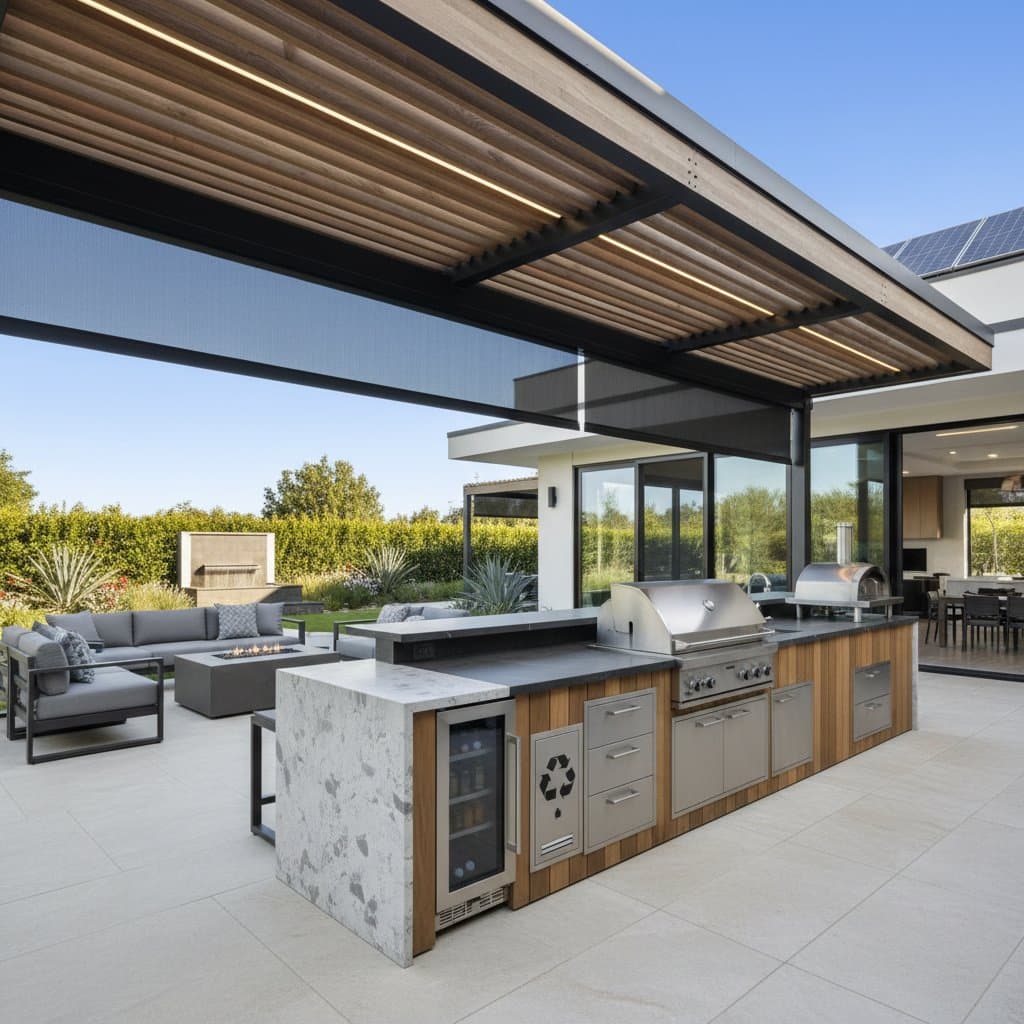
Outdoor Kitchen Costs: Realistic Breakdown
An outdoor kitchen turns a backyard into a hub for cooking and gatherings. Costs vary based on design choices, selected materials, and the project location. Homeowners benefit from understanding these elements before starting.
Core Cost Factors
National averages place basic outdoor kitchens near the lower end of the range while complex builds reach the upper limit. Small grill stations with simple counters begin around three thousand dollars. Full setups with plumbing, refrigeration, and premium finishes often exceed twenty thousand dollars.
Labor rates differ by region. Coastal cities and major metro areas carry higher fees for skilled trades. Suburban and rural sites typically reduce expenses through lower overhead and simpler access.
Timing affects the final price. Peak summer months increase demand and can raise labor charges by fifteen to twenty percent. Scheduling work during off-peak periods often secures better rates and quicker starts.
Common Pricing Approaches
Installers rely on several billing methods.
- Hourly billing covers intricate site work such as custom masonry or utility routing.
- Fixed project fees suit modular units where the scope stays predictable.
- Bundled component pricing combines appliances, counters, and cabinets into one total.
- Design-build packages include planning, materials, and labor under a single agreement.
- Optional maintenance contracts provide annual service visits for cleaning and safety checks.
Service Levels and Typical Investments
Projects fall into four main categories. Basic installations use prefabricated islands with a grill and minimal storage. Standard builds add sinks, burners, and stone surfaces for everyday use. Premium versions incorporate custom stone, pizza ovens, and integrated seating. Luxury designs feature smart controls, specialized ventilation, and full weather protection.
Elements That Shift Total Cost
Size directly influences material quantities and labor hours. Complex shapes or multiple levels extend construction time. Material selection matters as well. Granite and stainless steel exceed the price of composites or tile. Extending gas, water, and power lines adds expense when the utility sources sit far from the build area.
Useful Add-Ons
Many owners include extra features for comfort and function. Overhead structures supply shade and can incorporate fans or lights. Weatherproof refrigeration requires dedicated electrical circuits. Targeted lighting improves safety and atmosphere during evening use. Rush scheduling for events carries an added fee.
Permit fees, debris removal, and drainage upgrades appear as separate line items on most proposals. Reviewing these details before signing prevents surprises.
Evaluating Multiple Bids
Compare proposals on material grades, warranty length, and installer credentials rather than totals alone. Licensed professionals often deliver fewer follow-up issues. Setting aside ten percent of the budget covers unexpected grading or electrical adjustments that surface during construction.
Sustainable Choices
Recycled composites and efficient appliances lower ongoing utility and upkeep costs. Lightweight modular panels cut installation time and can reduce labor expenses by up to thirty percent compared with traditional masonry.
Planning Your Installation
Secure three detailed bids that list every feature and timeline. Lock in material selections early to keep the project on schedule. A well-planned outdoor kitchen adds lasting value and daily enjoyment for years.