Eco Driveway Costs: Permeable Paving Breakdown
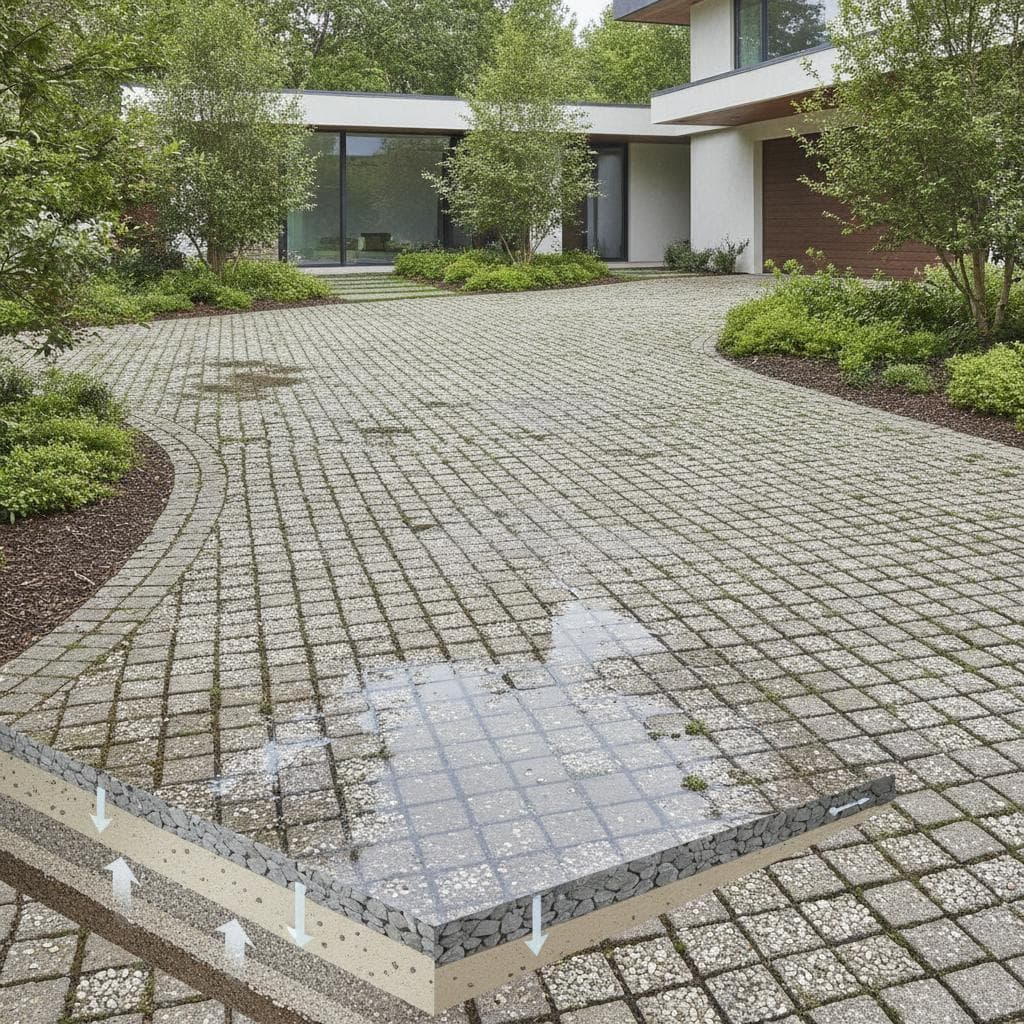
Homeowners seek responsible rainwater management that maintains property appeal and function. Many now choose eco driveways, also called permeable paving systems. These surfaces allow water to pass through rather than flow into streets or storm drains. The approach reduces flooding, controls erosion, and supports natural groundwater recharge.
An eco driveway requires more planning and specialized materials than a standard concrete slab. It delivers measurable environmental and practical benefits in return. Costs depend on design choices, materials, soil conditions, and local labor rates. This guide examines permeable paving options, cost factors, installation steps, and maintenance needs.
Average Cost Range
An eco driveway typically costs between 8 and 25 dollars per square foot. The final price reflects material selection and site conditions. Gravel grid systems represent the lower end, while premium permeable pavers occupy the higher range.
Estimated costs per square foot break down as follows:
- Gravel grid systems: 6 to 10 dollars
- Grass pavers: 8 to 12 dollars
- Porous asphalt: 10 to 15 dollars
- Permeable concrete: 12 to 18 dollars
- Permeable pavers: 15 to 25 dollars
A typical two-car driveway measuring 600 square feet therefore ranges from 4800 to 15000 dollars. Regional differences, base preparation requirements, and professional versus partial DIY installation further influence the total.
Comparing Permeable Paving Materials
Permeable Pavers
Interlocking units produce a finish comparable to brick or stone. Water flows through the joints while the surface remains durable.
- Pros: Extended lifespan, attractive appearance, simple repair of individual sections
- Cons: Higher initial cost, periodic joint cleaning required
- Lifespan: 25 to 40 years
- Difficulty: Moderate to high
Porous Asphalt
This material resembles conventional asphalt yet contains fewer fine particles. The resulting air pockets permit drainage.
- Pros: Smooth driving surface, strong load capacity, lower cost than pavers
- Cons: Installation precision needed to prevent clogging, limited color choices
- Lifespan: 15 to 25 years
- Difficulty: High, professional installation recommended
Permeable Concrete
Tiny voids throughout the mix allow water passage. The surface appears uniform and supports moderate traffic.
- Pros: Consistent look, solid strength, minimal maintenance
- Cons: Risk of cracking without even curing, few decorative options
- Lifespan: 20 to 30 years
- Difficulty: High, professional pour required
Gravel Grid Systems
Plastic or recycled modules secure gravel in place and maintain an even surface.
- Pros: Lower cost, straightforward DIY installation, excellent drainage
- Cons: Possible gravel movement, informal appearance
- Lifespan: 10 to 20 years
- Difficulty: Low to moderate
Grass Pavers
Grids support vehicle weight in low-traffic zones while permitting grass growth.
- Pros: Natural appearance, reduced heat reflection, environmentally compatible
- Cons: Regular watering and mowing required, lower durability under heavy use
- Lifespan: 10 to 15 years
- Difficulty: Moderate
Maintenance and Longevity
Permeable driveways perform for decades when properly maintained. Success depends on keeping pores and joints free of debris. Routine care includes sweeping or vacuuming twice yearly, removing weeds or moss, replacing joint gravel as needed, and inspecting for settling after heavy rain. Never apply sealants or coatings, because these products block permeability.
DIY versus Professional Installation
DIY Approach
Gravel grids and small grass systems suit homeowners with moderate skills and basic tools. Precise grading and compaction remain essential for success. Potential labor savings reach 30 to 50 percent of total cost.
Professional Installation
Porous asphalt, permeable concrete, and large paver projects benefit from certified installers. Professional work ensures correct drainage design, proper base compaction, and regulatory compliance. Warranties and reduced risk of failure often justify the added expense, especially in regions with heavy rainfall or freeze-thaw cycles.
Troubleshooting Common Issues
Poor drainage usually indicates over-compacted base material or clogged pores. Remove debris, vacuum joints, or flush the surface with a pressure washer. Weed growth responds to a permeable joint stabilizer or natural herbicide. Uneven settling can be corrected by lifting affected areas and adding base material or paver sand. Clogged paver joints recover after vacuum sweeping; avoid fine sand that compacts and restricts flow.
Cost-Saving Tips
- Source materials locally to reduce transport expenses.
- Combine materials by installing permeable pavers only in visible zones and gravel grids elsewhere.
- Perform excavation yourself when equipment is available.
- Apply for local rebates or tax incentives that support green infrastructure.
- Schedule work during dry months to avoid weather-related delays.
These measures can reduce overall project costs by 10 to 25 percent while preserving quality.
Seasonal Care Practices
Inspect the surface after major storms for erosion or clogging. Brush away leaves, soil, and debris to preserve drainage. In cold climates, use calcium magnesium acetate instead of salt-based deicers. Professional vacuum sweeping every few years restores infiltration efficiency. At end of life, many pavers and grids can be reused, lowering replacement costs and waste.
Investment Returns
Permeable driveways deliver sustainability and curb appeal together. They manage stormwater effectively while supporting local ecosystems. Proper planning and consistent care produce decades of reliable performance. The result is a drier property, lower long-term maintenance, and measurable environmental gains regardless of installation method.