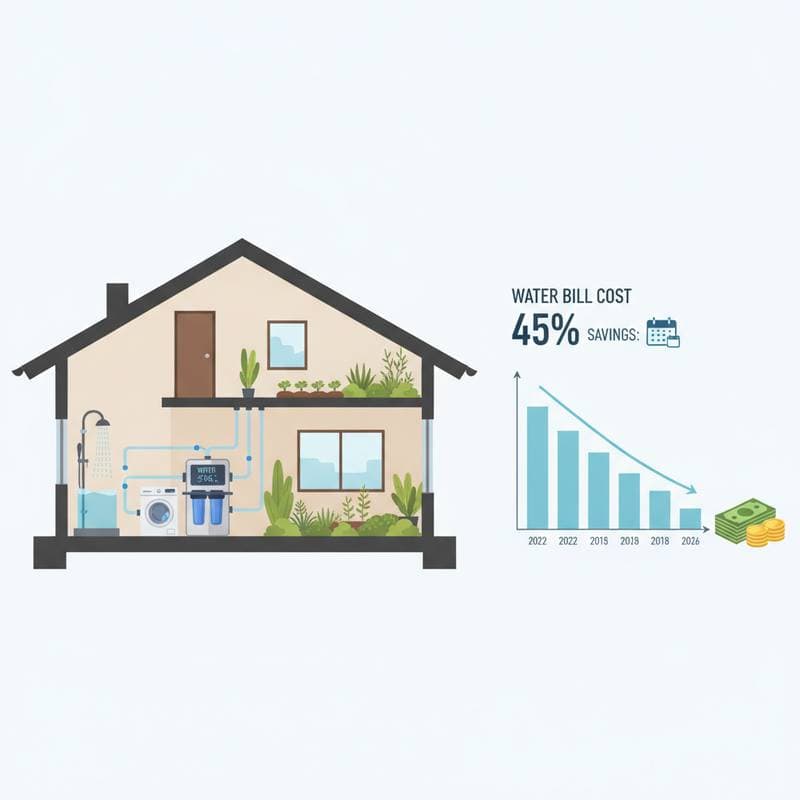
Greywater Recycling Systems Deliver Measurable Savings
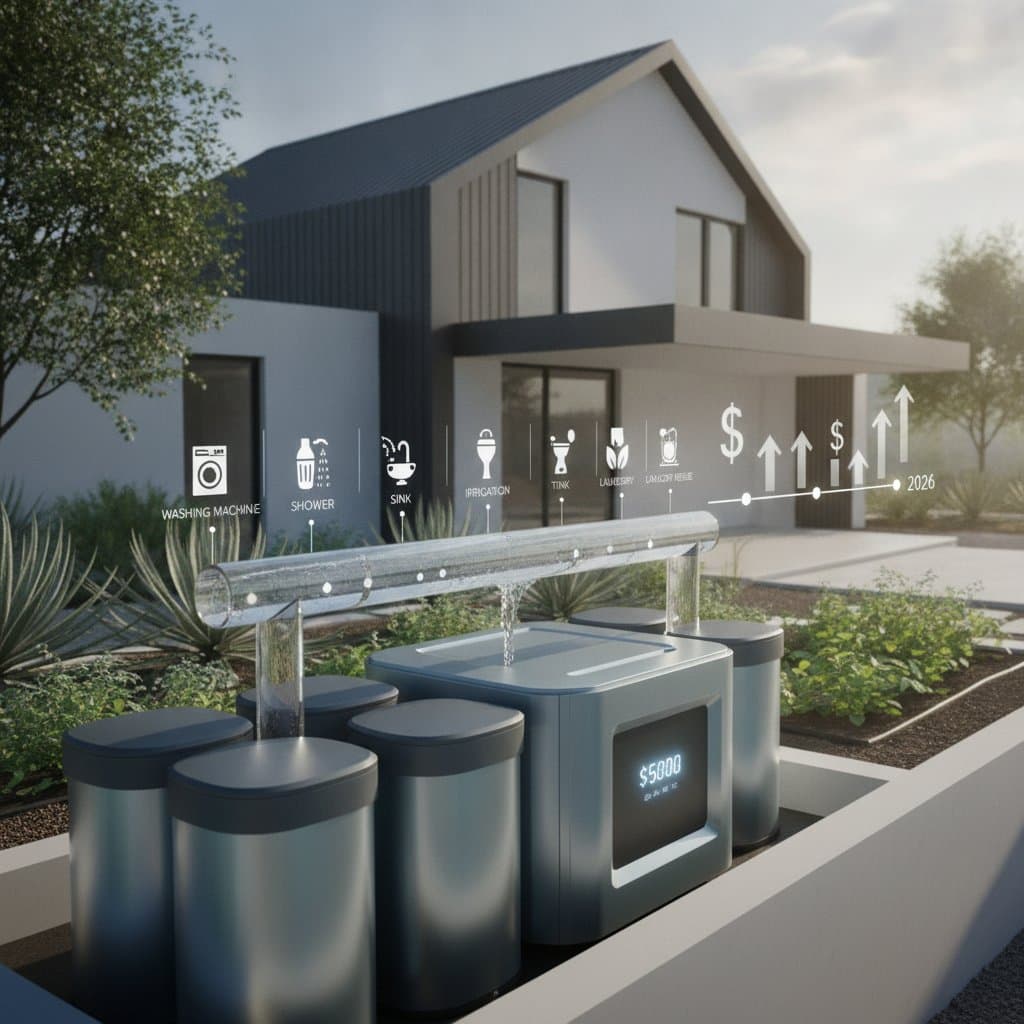
Greywater recycling systems collect water from showers, sinks, and laundry for reuse in irrigation or toilet flushing. Homeowners adopt these setups to reduce utility expenses and meet conservation standards. Proper planning reveals clear costs, savings potential, and maintenance routines.
System Types and Installation Costs
Three main configurations suit different homes and budgets.
Laundry-to-Landscape Systems
These basic setups redirect washing machine water to outdoor irrigation via gravity or a pump.
- Average installed cost ranges from 700 to 2000 dollars.
- Work completes in one or two days.
- Filter cleaning occurs twice each year.
- They suit properties with lawns or gardens.
Each load yields 15 to 25 gallons of reusable water.
Branched Drain Systems
Branched drains gather water from multiple indoor fixtures and route it by gravity to garden zones.
- Average installed cost falls between 2000 and 4500 dollars.
- Installation requires three to five days.
- Annual flushing and filter service maintain flow.
- Sloped yards work best for these gravity designs.
Access to existing plumbing affects labor time in finished spaces.
Treatment and Storage Systems
Advanced units filter, disinfect, and store water for indoor toilet use or subsurface irrigation.
- Average installed cost spans 5000 to 15000 dollars.
- Installation takes five to ten days.
- Quarterly filter changes and yearly inspections keep systems reliable.
- Homes with high indoor demand benefit most.
Routine Operating Expenses
Pumps and sensors draw less than 10 dollars of electricity monthly. Filter replacements and treatment supplies add 50 to 200 dollars each year. Homeowners inspect filters every three months, clean tanks twice annually, and clear irrigation emitters as needed. Professional inspection once a year protects complex units.
Savings Estimates and Payback Periods
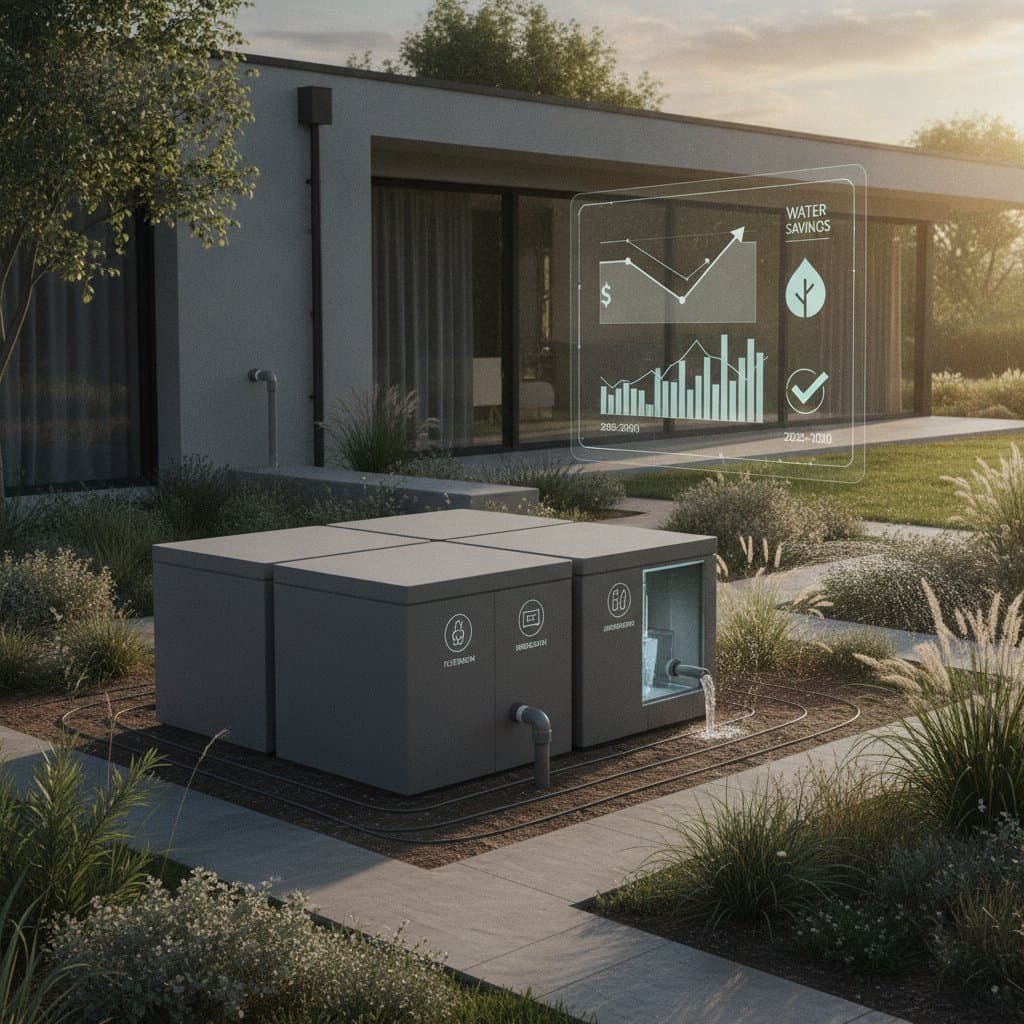
A household of four generates 100 to 150 gallons of greywater daily. At one cent per gallon, daily reuse of 50 gallons produces roughly 15 dollars in monthly savings, or 180 dollars annually. A 1000 dollar laundry system reaches payback in five to six years. Indoor reuse systems that save 300 to 600 dollars yearly recover costs in eight to ten years. Utility rebates of 500 to 2000 dollars shorten these timelines in many regions.
Environmental and Daily Advantages
Greywater reuse lowers demand on municipal supplies and reduces fertilizer runoff from landscape applications. Residents often notice shorter showers and more efficient laundry habits after installation. These changes complement low-flow fixtures and timed irrigation controllers.
Frequent Issues and Fixes
Odors usually trace to clogged filters or stagnant water. Low flow often stems from air in lines or blocked emitters. Discolored water signals saturated filters. Proper check valves prevent backflow during initial installation. Consistent filter service prevents nearly all service calls.
How Greywater Compares with Other Options
Rainwater collection varies with seasonal rainfall, while greywater flows year round. Low-flow fixtures cut use at the source but do not recycle water. Smart controllers still draw from fresh supplies. Many homes combine greywater with rainwater for full coverage of garden and toilet needs.
Practical Examples
One homeowner installed a mid-size treatment unit for 7500 dollars and recorded a 40 percent drop in monthly water use, with payback in eight years after rebates. Another completed a laundry-to-landscape system in a single day for under 1200 dollars and now spends under 30 minutes twice a year on filter cleaning.
Code and Safety Requirements
Local plumbing rules limit surface irrigation with untreated greywater near edible plants. Subsurface delivery meets standards in most areas. Indoor reuse demands disinfection and automatic diversion to sewer lines if contamination appears. Certified installers familiar with regional permits reduce redesign costs.
Property Value and Infrastructure Gains
Approved greywater systems increase buyer interest in homes that feature lower operating costs. They also extend the service life of septic tanks and sewer lines by reducing total flow volume.