Full 2026 Cost Breakdown for Your Outdoor Kitchen
Creating an outdoor kitchen turns a backyard into a year-round living space. It adds value, expands cooking options, and improves entertaining. Many homeowners hesitate due to cost uncertainty. This breakdown details each expense category so you can plan a project that matches both design goals and budget limits.
Core Cost Categories
Every outdoor kitchen covers five main areas: structure, appliances, utilities, finishes, and labor. Each area allows customization. Understanding typical ranges supports realistic planning.
Structure and Foundation
The structure forms the base and includes framing, flooring, and supports.
- Concrete pad or pavers: A basic poured slab starts at several thousand dollars. Decorative stone or stamped concrete raises the price.
- Framing materials: Metal studs cost more than pressure-treated wood yet resist outdoor conditions longer.
- Countertops: Tile, granite, and concrete serve as common options. Granite resists weathering better than most alternatives.
A durable foundation matters because outdoor kitchens face heat, moisture, and heavy use. Cutting corners here leads to later repairs.
Appliances and Cooking Equipment
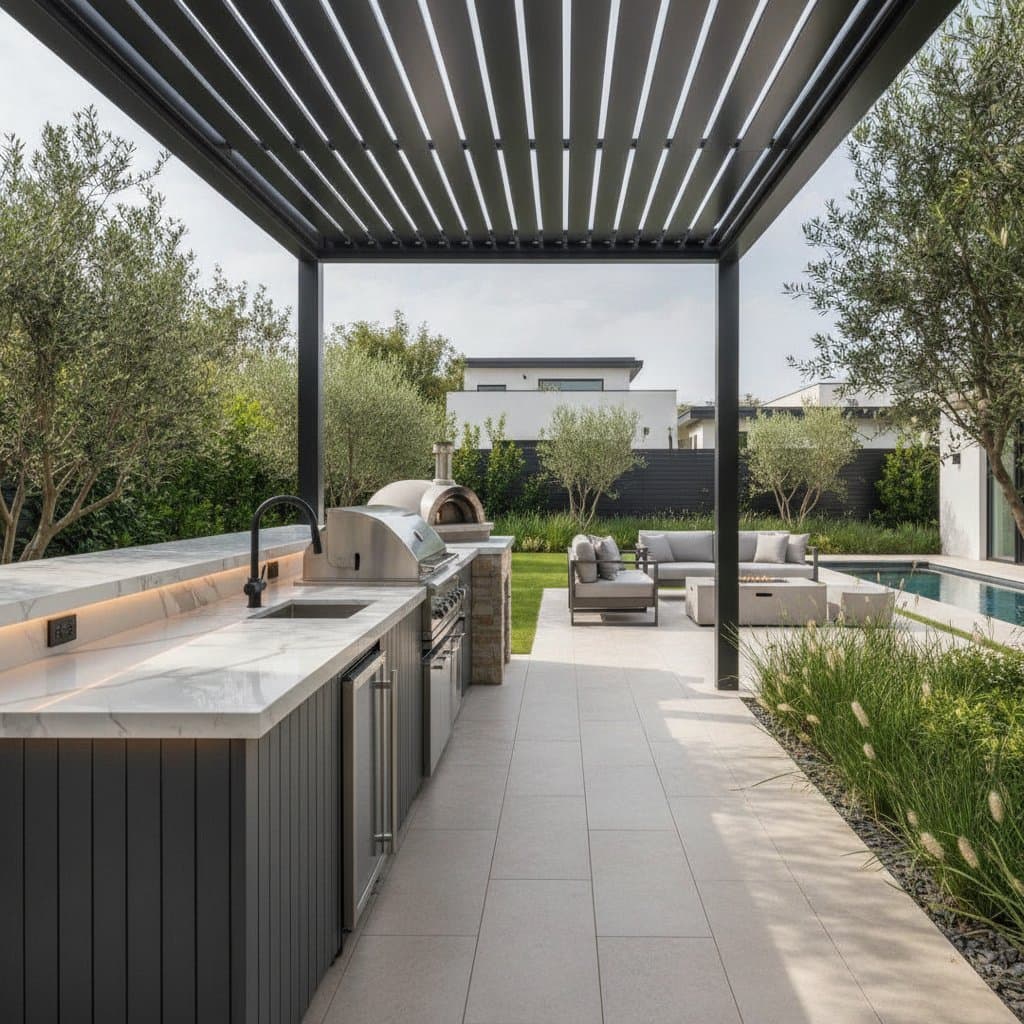
Appliances determine function. The grill usually dominates both design and budget.
- Built-in gas or charcoal grill: Mid-range models begin at several hundred dollars. Professional-grade units reach several thousand.
- Smokers, pizza ovens, or side burners: Each addition increases both cost and cooking options.
- Refrigerator and ice maker: Outdoor-rated units cost more than indoor models due to insulation and weatherproofing.
- Sink and faucet: Stainless steel remains the most popular durable choice.
Many homeowners select modular appliances for later upgrades. This approach controls the initial investment while allowing expansion.
Utility Installation
Utility runs often form a large share of total cost. Gas, electricity, and water lines require licensed professionals for safety and code compliance.
- Gas line installation: Connection to an existing home supply costs less than a new tank.
- Electrical wiring: Lighting, outlets, and appliances need outdoor-rated wiring plus weatherproof covers.
- Plumbing: Drainage and water lines must manage freeze-thaw cycles and prevent contamination.
Kitchens located far from the house require extra trenching and conduit. Sites within twenty feet of existing connections keep utility costs lower.
Finishes and Aesthetic Details
Finishes shape appearance and feel. Homeowners frequently underestimate this budget portion.
- Cabinetry and storage: Stainless steel cabinets outlast wood or polymer options outdoors.
- Flooring: Porcelain tile provides slip resistance and weather durability. Natural stone adds elegance yet needs periodic sealing.
- Lighting: Layered lighting improves both function and atmosphere. Task lighting serves cooking areas while ambient fixtures support dining zones.
Details such as backsplash tiles, pergolas, and seating increase visual impact. Budgeting for these elements early prevents later overspending.
Labor and Professional Services
Labor costs vary by region and project complexity. A typical project involves a general contractor, electrician, plumber, and masonry specialist. Labor usually accounts for one-third to one-half of total cost.
Licensed professionals ensure code compliance and proper function. DIY work can reduce expenses yet often produces delays or rework. Homeowners should assess time, skill level, and warranty implications before choosing self-installation.
Average Cost Ranges
Common scenarios illustrate possible budgets.
- Entry-level setup: A small grill island with countertop and basic storage ranges from several thousand to under ten thousand dollars.
- Mid-range kitchen: Adding a sink, refrigerator, and extended counters raises costs to ten to twenty thousand dollars.
- Premium installation: Custom stonework, high-end appliances, and full utilities can reach thirty thousand dollars or more.
Prices shift with material costs and regional labor rates. These ranges supply a baseline for comparison.
Budget-Friendly Strategies
Several approaches help control costs despite rising material prices.
- Phase the project by starting with a grill island and adding appliances or seating later.
- Position the kitchen near the house to reduce trenching and piping.
- Combine materials by using natural stone only on visible surfaces and concrete block elsewhere.
- Shop seasonal sales when retailers discount outdoor equipment near summer's end.
- Hire professionals for utilities and structure while completing finishing work such as painting or tiling yourself.
These steps lower financial pressure while preserving core function.
Maintenance and Long-Term Costs
Outdoor kitchens require regular care to remain in good condition.
- Clean grills and burners after every few uses to prevent grease buildup.
- Seal stone or concrete surfaces annually to block moisture and staining.
- Check gas connections for leaks and tighten fittings as needed.
- Cover appliances when not in use to protect from rain or debris.
A well-maintained kitchen lasts decades with minimal structural repairs. Neglect produces rust, cracks, and expensive replacements.
Design and Planning Insights
Design experts recommend treating the outdoor kitchen as an extension of the home. Kitchens that connect visually to the house through matching materials or lighting tend to increase property value more effectively.
Contractors note that most homeowners underestimate permit and inspection fees. These administrative costs can add several hundred dollars depending on location. Planning for them avoids surprises.
Next Steps for Your Project
Start by defining intended use of the space. Identify which features matter most and which can wait. Compare prefabricated and custom options before selecting a design. Consult professionals on utilities and structural needs.
Clear planning and realistic budgeting turn an outdoor kitchen into a functional, lasting upgrade. Thoughtful design choices and ongoing maintenance keep performance strong for years.