Weighing Microplastic Filter Costs Against Benefits
Microplastics appear in many home water supplies. These particles originate from synthetic fabrics, packaging breakdown, and daily household activities. They travel through drains into municipal systems or wells. Homeowners now focus on effective removal rather than detection alone.
Whole-house microplastic filters deliver broad protection. They also require upfront spending and ongoing care. The sections below outline how these systems work, what they cost, and when they deliver clear value.
Sources of Microplastic Contamination
Microplastics reach tap water from multiple routes. Laundry cycles release polyester fibers. Dishwashers and cleaning products add polyethylene and polypropylene fragments. Standard municipal treatment rarely captures particles below five microns.
Early research links repeated exposure to chemical additives and particle buildup in tissues. Households seeking long-term water quality therefore consider dedicated filtration.
How Microplastic Filters Operate
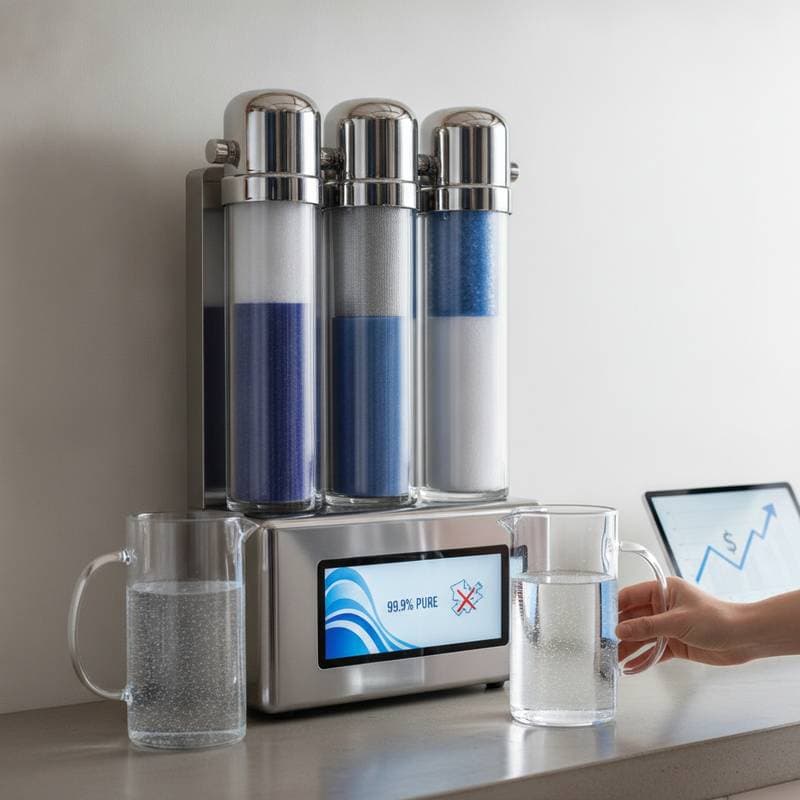
Effective units combine three stages. Sediment pre-filters capture sand and rust. Activated carbon blocks reduce chlorine and improve taste. Ultrafiltration membranes then block particles at 0.5 microns or smaller.
Look for NSF or WQA certification on any system. These marks confirm the unit meets published removal claims under controlled testing.
Cost Components of Whole-House Systems
Prices vary by capacity and installation site. Under-sink units begin around several hundred dollars. Full whole-house setups range from two thousand to four thousand dollars when professional labor is included.
Annual filter replacements typically cost two hundred to four hundred dollars. Cartridge life spans six to twelve months depending on incoming water quality and household volume. Larger homes or those with sediment-heavy sources need more frequent changes.
Performance Differences From Standard Filters
Standard sediment filters stop particles at five microns. Microplastic systems reach sub-micron levels and provide complete removal of tested plastic types.
The following table summarizes key distinctions:
| Feature | Standard Filter | Microplastic Filter |
|---|---|---|
| Particle size removal | 5 microns and above | 0.5 microns or smaller |
| Removes chlorine taste | Yes | Yes |
| Removes microplastics | Partial | Complete |
| Initial cost | Lower | Higher |
| Maintenance frequency | Moderate | Slightly higher |
Installation and Routine Care
Place whole-house units near the main water entry, often in a basement or utility room. Licensed plumbers verify pressure settings and prevent leaks. Homeowners comfortable with basic plumbing can attempt DIY installation, yet professional work preserves most manufacturer warranties.
Track replacement dates in a simple log. Pressure gauges or indicator lights on newer models signal when cartridges need attention. Keep one spare set on site to avoid service interruptions.
Practical Benefits for Daily Use
Filtered water reaches every tap and appliance. Drinking water tastes cleaner. Showers and laundry cycles carry fewer fibers. Appliances experience less internal buildup, which can extend service life.
Primary gains include reduced particle ingestion, clearer water appearance, and lower risk of microplastic re-entry into wastewater. Families with young children or older residents often notice the difference first.
Situations Where These Systems Justify Expense
Well-water homes and properties near industrial zones face higher particle loads. Municipal supplies still benefit from the added micron-level barrier. Households that already limit plastic use elsewhere find whole-house filtration completes their approach.
Smaller point-of-use units suffice when budget or space limits full coverage. Test source water first to confirm actual particle counts before deciding on system size.
Long-Term Ownership Economics
Calculate total expense over five to ten years. Initial outlay plus annual maintenance yields a low cost per gallon once spread across daily consumption. Many owners offset part of the investment by reducing bottled water purchases and appliance repairs.
Maintaining Reliable Performance
Inspect fittings quarterly for moisture. Replace cartridges on schedule rather than waiting for taste changes. Flush the system after any extended shutdown to restore full flow.
Spare filters and a written maintenance record prevent most service calls. Consistent care keeps water quality stable and protects the equipment investment.