
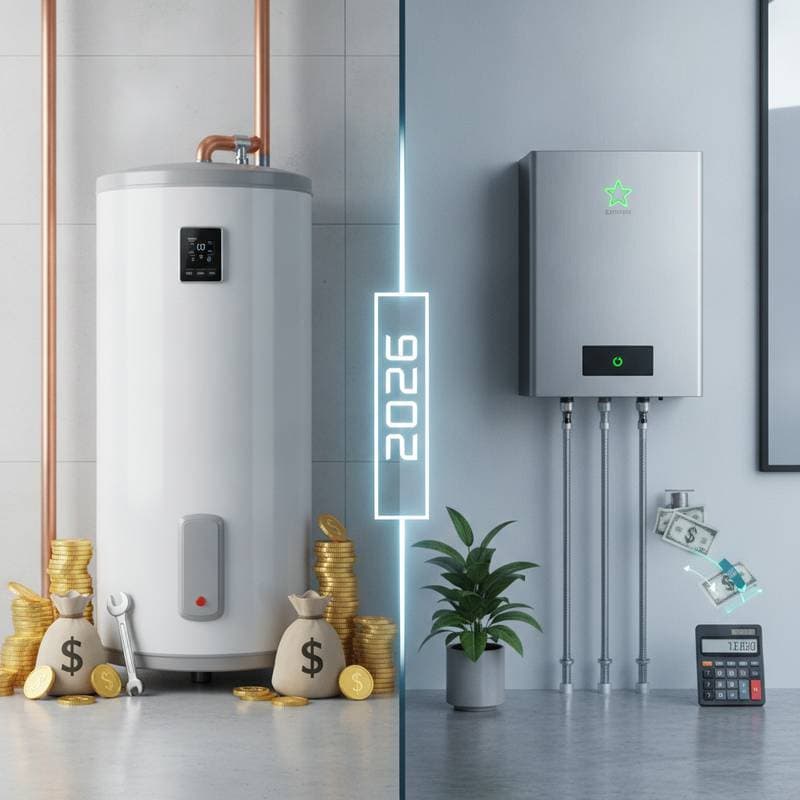
2026 Tank vs Tankless Water Heater Cost Comparison
Replacing a water heater often occurs when the current unit stops working. Homeowners must then decide between a traditional tank model and a tankless system. Each option carries different expenses for installation, daily operation, maintenance, and eventual replacement. This comparison examines those factors to show which choice delivers lower total costs over time.
Upfront Equipment and Installation Expenses
A standard 40 to 50 gallon tank water heater unit costs between 600 and 1000 dollars. Professional installation adds another 500 to 1000 dollars. The complete installed price usually ranges from 1100 to 2000 dollars.
Tankless units cost more at the start. The equipment itself runs from 1000 to 2500 dollars. Installation frequently requires gas line upgrades or new electrical circuits and adds 1000 to 2500 dollars. Total project costs therefore fall between 2500 and 5000 dollars in many homes.
Tank systems connect to existing plumbing in most replacement situations. A licensed plumber finishes the work in a few hours. Tankless models demand careful planning for venting and fuel supply. These steps increase both labor time and overall expense.
Lifespan, Maintenance, and Repair Costs
A properly maintained tank water heater lasts 8 to 12 years. A tankless unit commonly operates for 15 to 20 years. Owners may therefore purchase two tank units during the service life of one tankless model.
Annual flushing removes sediment from tank units and costs 100 to 200 dollars when performed by a professional. Tankless systems require descaling every one to two years at a cost of 150 to 300 dollars. Homeowners with hard water benefit from a whole house softener that reduces scaling on either type of equipment.
Typical tank repairs involve thermostats or valves and range from 150 to 400 dollars. Tankless repairs often address sensors or circuit boards and cost 200 to 600 dollars. Longer warranties on tankless models, frequently 10 to 15 years, help offset these higher repair amounts.
Incentives and Household Decision Factors
Many utilities provide rebates of 100 to 500 dollars for high efficiency tankless units. Tank models qualify for smaller incentives in some regions. These programs lower the net purchase price when energy savings and reduced emissions matter to the household.
Small households gain steady energy savings and endless hot water from tankless systems. Larger families with simultaneous high demand may find a tank unit more practical. Limited utility space favors the compact tankless design when upgrades are not required.
Steps to Protect Your Purchase
- Test water hardness and install a softener if needed to extend equipment life.
- Review warranty length and coverage before purchase.
- Select licensed installers who follow local codes.
- Schedule professional service at the recommended intervals.
- Track utility bills after installation to confirm expected performance.
Selecting the Right System for Your Home
Evaluate daily hot water use, available space, and budget for any required upgrades. A tank water heater offers lower initial spending and straightforward replacement. A tankless system provides longer service life and operating savings when household needs align with its strengths. Weigh these elements carefully to secure reliable hot water and controlled expenses for years ahead.




