Microcement Flooring Costs: Complete Breakdown
A smooth modern floor transforms how a home feels. Few materials achieve that effect as cleanly as microcement. It delivers the look of polished concrete without heavy structure or thickness. Homeowners value its seamless finish and durability, yet pricing often seems unclear at first. Understanding cost components allows confident planning and prevents costly surprises.
What Professional Installation Typically Costs
Microcement flooring costs 8 to 16 dollars per square foot when installed by professionals. Smaller spaces or complex layouts reach the higher end of the range. Large open areas trend toward the lower end. A complete project that includes surface preparation and sealing usually totals 3,000 to 6,000 dollars for an average room.
The quoted price covers primer, base coat, finish layers, and protective sealer. Labor accounts for 60 to 70 percent of the total because application requires precision and skill. A correctly installed surface lasts many years with minimal maintenance.
How Microcement Is Applied
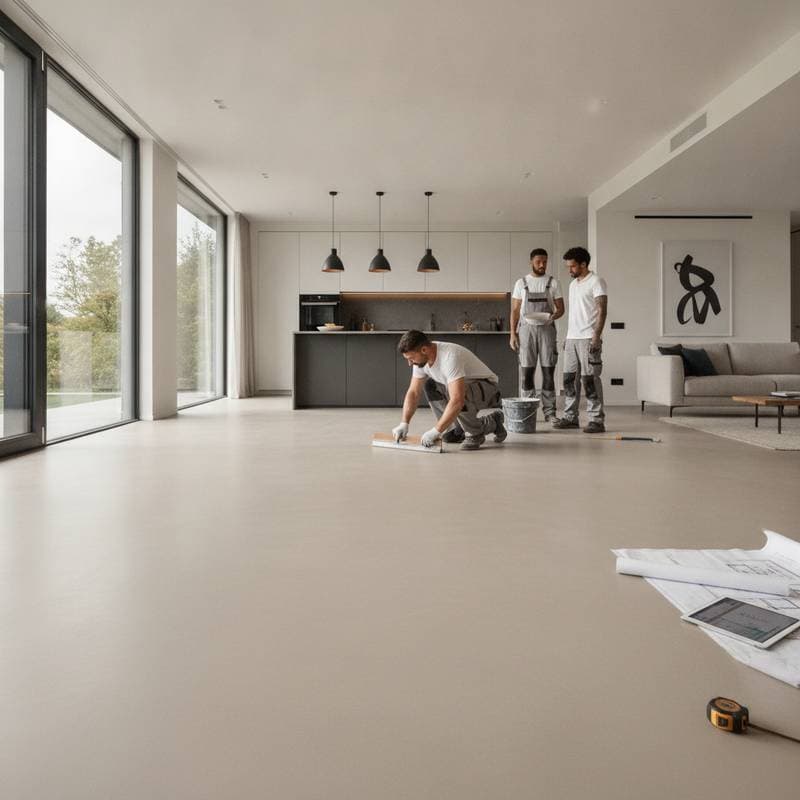
Microcement is a thin decorative coating rather than poured concrete. It measures 2 to 3 millimeters thick and is applied over a stable substrate. Each layer is mixed and troweled by hand, which adds time and expertise to the price.
Steps Included in Professional Work
- Surface preparation through grinding, cleaning, and repair.
- Primer application to promote adhesion.
- Base microcement layer for structure.
- Finish microcement layer for color and texture.
- Two coats of polyurethane sealer for protection.
Each step requires drying time. Skipping stages shortens service life, so installers spread work across several days.
Cost Breakdown by Component
| Component | Cost per sq. ft. | Description |
|---|---|---|
| Surface prep | 1 to 3 | Grinding, patching, cleaning |
| Primer | 0.50 to 1 | Adhesion layer |
| Base coat | 1.50 to 3 | Structural layer |
| Finish coat | 2 to 4 | Decorative color and texture |
| Sealer | 1 to 2 | Protective coating |
| Labor | 2 to 4 | Skilled application |
Values shift with substrate condition, total area, and finish type.
Comparison With Alternative Flooring
Microcement competes with polished concrete, epoxy resin, and tile. Each option offers a distinct appearance and price point.
| Material | Average Cost per sq. ft. | Thickness | Maintenance | Appearance |
|---|---|---|---|---|
| Microcement | 8 to 16 | 2 to 3 mm | Easy | Matte or satin seamless |
| Polished concrete | 6 to 12 | 2 to 4 in | Moderate | Glossy industrial |
| Epoxy resin | 5 to 10 | 2 to 5 mm | Moderate | High-gloss modern |
| Porcelain tile | 8 to 20 | 6 to 12 mm | Easy | Patterned or stone-look |
Microcement falls between epoxy and polished concrete on cost while providing greater design flexibility.
Suitable Applications by Room
Microcement performs well in most rooms, though setting affects both performance and price.
Kitchens and Living Areas
Large open spaces suit microcement because fewer seams speed installation. Expect 8 to 13 dollars per square foot. Durability and easy cleaning suit high-traffic zones.
Bathrooms
Bathrooms need waterproof sealing and anti-slip texture. Plan for 10 to 16 dollars per square foot. Installers often use fine-grain microcement on walls and floors to create seamless wet zones.
Outdoor Areas
Terraces require extra UV and weather protection. Outdoor-grade sealers add about 1 dollar per square foot. A stable substrate and proper drainage slope remain essential.
Stairs and Vertical Surfaces
Stairs and walls involve more handwork and edge detailing. Expect 15 to 20 dollars per square foot for these labor-intensive surfaces.
Key Factors That Affect Price
Substrate condition, room size, design choices, application complexity, and contractor experience all influence the final bill. Poor surfaces may require an extra 1 to 2 dollars per square foot. Areas over 300 square feet often cost less per foot. Custom colors or metallic additives raise costs by 10 to 20 percent. Experienced installers charge slightly more yet deliver smoother, longer-lasting results.
DIY Kits Versus Professional Work
Material kits cost 3 to 5 dollars per square foot. Floors leave little room for error, and uneven troweling or incorrect mixing leads to flaking or color variation. Professional installation remains the safer choice for full floors.
Maintenance Requirements
Microcement floors need pH-neutral cleaners and felt pads under furniture. A new sealer coat every five to seven years maintains protection. With proper care the surface lasts 20 years or more.
Planning Your Project
Measure the space accurately and request quotes that list every layer and material. Schedule around required drying times between coats. Focus on installer experience and references rather than the lowest price. A well-installed microcement floor provides a continuous, durable surface that performs reliably for years.