Permeable Driveway Costs for Rain Management: DIY Versus Professional Installation
A permeable driveway manages rainwater effectively while providing a stable surface for vehicles. It reduces runoff that strains drainage systems and supports groundwater recharge. Homeowners select this option to control flooding and limit erosion on their properties.
Core Cost Components
Material selection, site conditions, and installation approach determine overall expenses. Homeowners benefit from breaking down these elements before budgeting.
DIY Expenses
- Paving materials such as permeable pavers, porous concrete, or gravel grids typically range from $3 to $12 per square foot.
- Base layers of crushed stone and sand add $2 to $5 per square foot for drainage and stability.
- Tool rentals for compactors and saws cost $50 to $150 per day when equipment is unavailable.
- Drainage fabrics, edging, and joint fillers require an additional $1 to $3 per square foot.
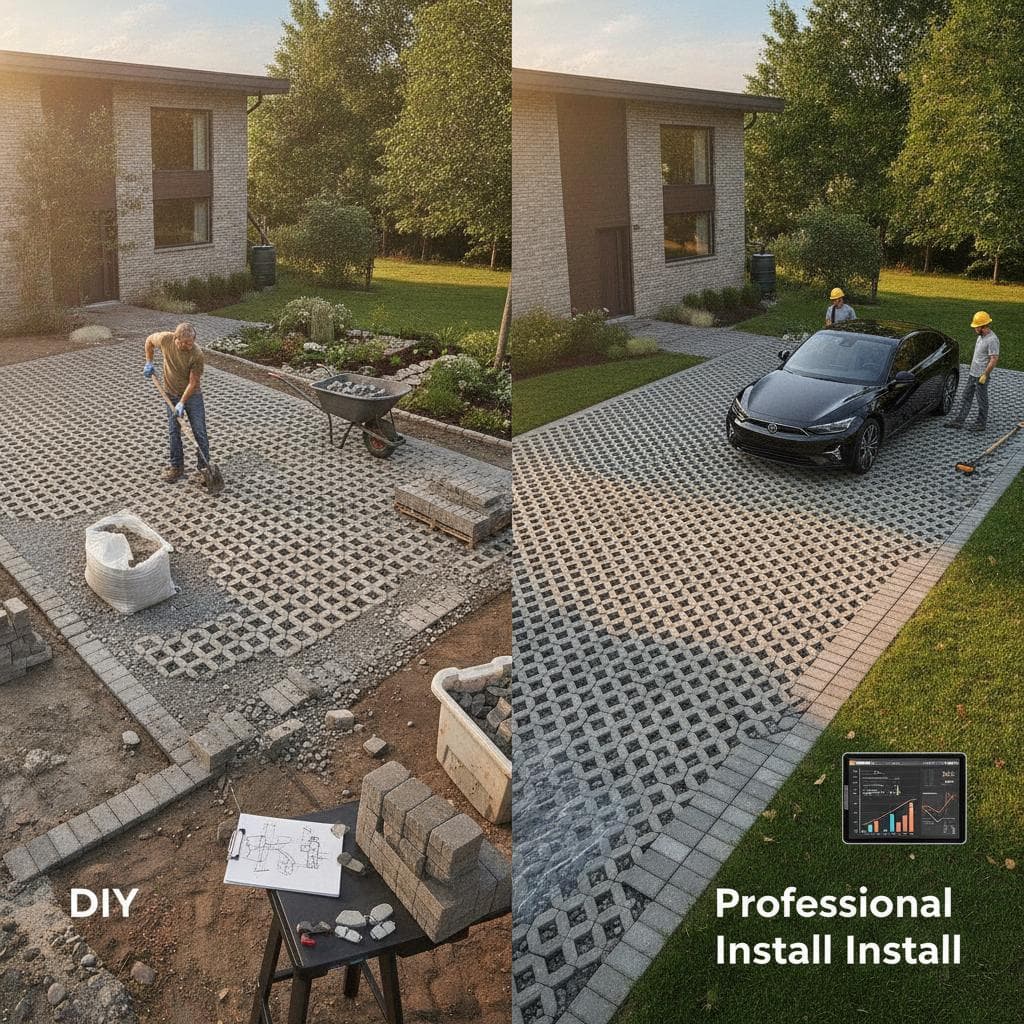
DIY work eliminates labor fees yet demands several days for excavation, grading, and layering. Proper execution prevents future drainage failures.
Professional Service Expenses
Contractors handle site preparation, base compaction, and paver alignment with specialized equipment. They integrate extra drainage features such as trenches when rainfall volumes are high. Finishing steps include joint filling and final compaction for lasting performance.
Labor and overhead raise initial outlays, yet expert methods reduce the likelihood of costly corrections later.
Pricing Influences
- Total square footage directly scales material and labor needs.
- Clay soils require deeper base layers to maintain water flow.
- Steep grades call for added stabilization to prevent shifting.
- High-rainfall regions often need supplemental collection systems.
- Material type affects both upfront price and routine upkeep frequency.
DIY Versus Professional Comparison
Skill level, available time, and site complexity guide the decision between approaches.
Advantages of DIY Work
- Labor savings lower the total project cost.
- Owners gain satisfaction from completing the improvement independently.
- Scheduling remains flexible without external timelines.
Limitations of DIY Work
- Physical demands of excavation and compaction require strength and proper tools.
- Errors in layering or grading can impair permeability and lead to repairs.
- No professional warranty covers defects or performance issues.
Advantages of Professional Installation
- Experts evaluate soil, slope, and rainfall data before design.
- Access to premium materials and equipment improves durability.
- Warranties cover both workmanship and product longevity.
Limitations of Professional Installation
- Added labor fees increase the budget.
- Peak season demand may delay start dates.
Professional installation delivers stronger long-term results in regions with heavy rain or challenging terrain.
Common Questions
Which materials suit permeable driveways?
Permeable concrete, porous asphalt, gravel grids, and interlocking pavers allow water to pass through joints or pores.
How does rainwater move through the surface?
Water infiltrates the paving layer, travels through the stone base, and recharges the soil below.
What maintenance keeps the system functional?
Periodic sweeping combined with vacuuming or pressure washing removes debris that could clog pores.
Are permits required?
Local codes may mandate permits when drainage patterns change. Verify requirements with municipal offices prior to work.
How long do these driveways last?
Quality installations endure 20 to 30 years with consistent care.
Can they support heavy vehicles?
Adequate base depth and load-rated materials allow trucks and large SUVs to pass safely.
Is extra drainage infrastructure necessary?
A properly sized crushed-stone reservoir handles most residential needs. Heavy rainfall zones may benefit from added collection elements.
How do costs compare with conventional driveways?
Initial prices run higher, yet reduced runoff damage and lower upkeep produce savings over time.
Can installation occur over an existing driveway?
Removal of the old surface is usually required to achieve correct base depth and drainage.
What environmental gains result?
Reduced stormwater runoff protects local waterways and replenishes aquifers.
Decision Steps
- Inspect soil composition, slope, and current drainage patterns.
- Match personal skills against the physical requirements of excavation.
- Itemize all costs, including tool rentals and material disposal.
- Collect detailed bids from at least three licensed contractors.
- Weigh upfront expense against expected durability and performance.
Project Preparation
- Compare permeable systems for strength, appearance, and upkeep demands.
- Measure the area precisely and select a layout pattern.
- Build a budget that includes a contingency for site surprises.
- Clear vegetation and old pavement before work begins.
- Schedule during dry weather to simplify handling and compaction.
Ongoing Value
Properly installed permeable driveways maintain drainage performance for decades. Regular care preserves permeability and protects the initial investment. Owners who select professional installation in demanding conditions typically realize the strongest return through fewer repairs and consistent function.