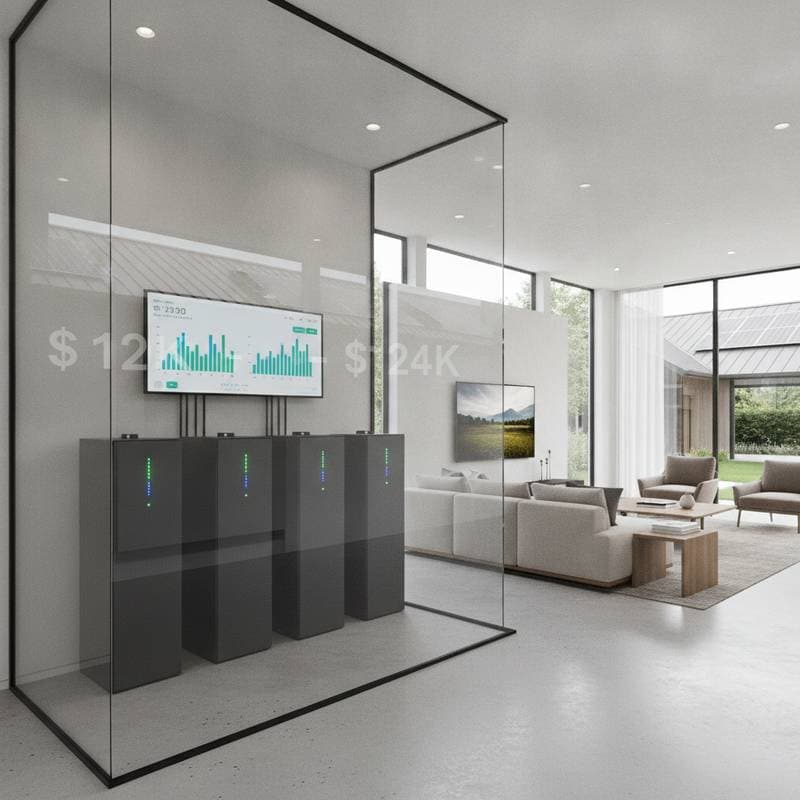
Whole Home Battery Backup Costs Range From $12,000 to $24,000
Whole Home Battery Backup System Costs and Considerations
Reliable power matters more than ever. Homeowners now face frequent outages along with higher energy needs. Whole home battery backup systems store electricity from the grid or solar panels and deliver it automatically during outages. Clear information on costs, pricing models, and key factors supports better planning.
Cost Fundamentals
National Average Pricing Benchmarks
A typical whole home battery backup system costs between $12,000 and $24,000 installed. This range covers equipment and professional labor. Smaller lithium ion units start near $8,000. Larger systems with solar integration often exceed $30,000.
Data from industry sources indicate that a 15 kilowatt hour setup for a mid size home runs about $1,200 to $1,600 per kilowatt hour. The price includes hardware, wiring, and commissioning.
Regional Price Variations
Costs differ by location. Coastal cities and major metros carry higher labor and permit fees. Homeowners in California and New York commonly pay 10 to 25 percent more because of stricter codes. States with solar incentives or rebates can lower the net cost.
Rural areas sometimes show lower labor rates yet add delivery fees when local suppliers are limited. Utility programs that reward load balancing or renewable use also shift final prices.
Seasonal Pricing Trends
Battery prices move with global demand for lithium, cobalt, and nickel. Costs rise ahead of storm season when homeowners seek protection. Buying during slower months or after new model releases often reduces expense.
Economic Influences on Pricing
Material shortages, energy prices, and shipping costs affect quotes. Electric vehicle growth has raised demand for battery materials and occasionally lifted prices. Advances in chemistry and supply chains continue to lower the cost per kilowatt hour over time.
Pricing Models
Flat Fees Versus Hourly Labor
Many installers offer a single project price when the work scope is clear. Hourly rates of $75 to $150 apply to custom retrofits that require extra electrical changes.
Per Unit Quotes
Some companies price by battery module. A 10 kilowatt hour unit runs $7,000 to $10,000 before installation. Larger homes often need two or more modules, which raises both equipment and labor totals.
Package and Subscription Options
National providers bundle hardware, installation, monitoring, and warranties into one contract. Basic packages begin near $12,000. Full solar integrated bundles reach $25,000 or higher.
A few companies now offer subscriptions. Monthly fees of $150 to $300 cover equipment, service, and updates. Lifetime cost may exceed outright purchase, yet the model lowers initial outlay.
Service Tiers
Basic Systems
Entry level setups power critical loads such as refrigerators, lights, and chargers. They provide 5 to 10 kilowatt hours and cost $8,000 to $12,000. These units suit smaller homes or short outages.
Mid Tier Configurations
Standard systems deliver 10 to 20 kilowatt hours and support several rooms at once. Prices fall between $13,000 and $20,000. Most include app based monitoring and represent the most common choice.
Premium and Custom Builds
High capacity systems store 20 to 40 kilowatt hours or more and can run an entire house for days. They range from $22,000 to $35,000 and often pair with solar or generators. Custom estates or off grid properties may exceed $40,000 after engineering and upgrades.
Factors That Affect Final Price
Property size and number of backed up circuits set the baseline. Older wiring or multi phase panels increase planning time and labor by 20 to 40 percent. A standard job takes one to three days. Complex work can stretch to a week.
Supporting parts such as inverters, cables, and safety switches add cost. Lithium iron phosphate batteries cost more yet offer longer life and better safety.
Useful Add Ons
Real time monitoring and smart controls add $500 to $1,500. Solar integration costs $3,000 to $7,000 depending on compatibility. Extended warranties run $800 to $2,000 beyond the standard 10 year coverage. Expedited installation during peak season adds $500 to $1,000.
Practical Advice From Experts
Energy consultant Laura McKinney notes that homeowners often overlook lifestyle when sizing a system. She states, "Capacity should match daily appliance use as much as square footage." Oversized units waste money while undersized ones fall short during outages.
Survey data show that 82 percent of buyers cite peace of mind as their main reason for purchase. Satisfaction rises further when batteries pair with solar panels.
Safety and Certification Notes
Lithium iron phosphate batteries cost 10 to 15 percent more than standard lithium ion yet provide stronger thermal stability. Certified installers who hold credentials from recognized boards help ensure code compliance and may qualify for insurance discounts.
Next Steps for Homeowners
Start by listing essential circuits and estimating daily usage. Obtain quotes from several licensed installers to compare capacity, warranties, and service terms. Thoughtful selection delivers reliable backup and greater control over household energy for years ahead.