Attic Insulation Costs Vary by Material Choice
Attic insulation remains one of the most effective ways to cut energy costs and improve comfort throughout the home. The type of insulation material you choose has a direct effect on both the installation cost and long-term performance. Homeowners comparing fiberglass, cellulose, spray foam, and mineral wool will find that each option fits a different budget, skill level, and energy goal.
Factors That Influence Pricing
Several factors influence attic insulation pricing. Material type is the most visible, but labor, accessibility, and desired R-value also matter. A typical attic needs an R-value between R-38 and R-60, depending on the region and the existing insulation depth. Achieving that target can require multiple layers or a specific product thickness, which changes overall cost.
Professional installers often charge per square foot, with rates varying by the difficulty of the job. A tight attic or one with obstacles like ductwork and trusses may increase labor time. Homeowners who prepare the space by sealing air leaks and clearing debris often reduce both cost and project duration.
Fiberglass Batt and Blown Options
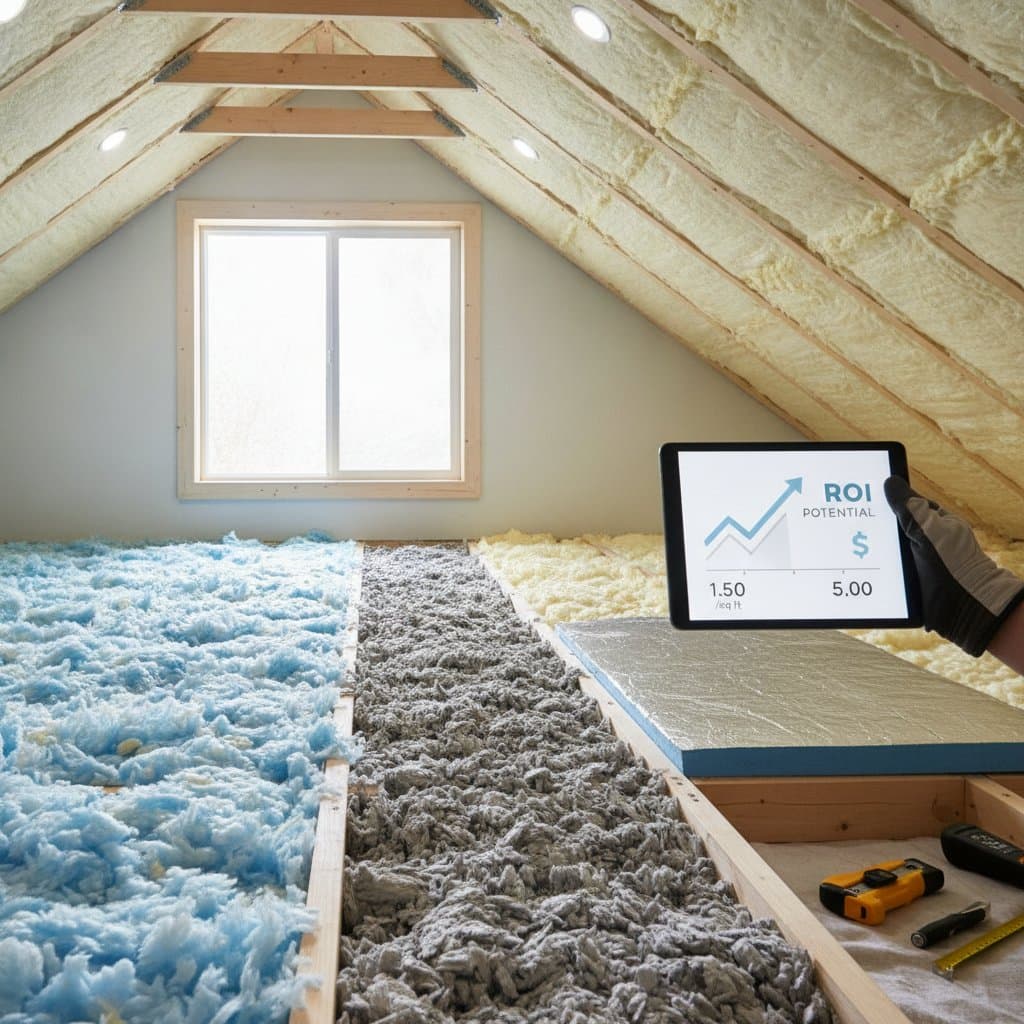
Fiberglass remains the most common choice because it is affordable and widely available. Fiberglass batts typically cost between one and two dollars per square foot installed, while blown-in fiberglass usually falls slightly higher due to equipment and labor. Batts work well for open attic floors with few obstructions, but blown-in insulation fills gaps more evenly.
Fiberglass is noncombustible, resists moisture when properly installed, and lasts for decades with minimal maintenance. Homeowners who prefer do-it-yourself projects often select fiberglass batts since they can be cut to fit with a utility knife and placed between joists.
Cellulose for Eco-Friendly Performance
Cellulose insulation is made from recycled paper treated with fire-resistant chemicals. It provides an environmentally conscious alternative to fiberglass and offers strong air sealing performance. Installed costs range from one and a half to three dollars per square foot. Blown-in cellulose conforms to irregular shapes, reducing air leaks around framing and wiring.
One drawback is that cellulose can settle over time, lowering its R-value slightly. Checking insulation depth every few years helps maintain proper coverage. Many professionals recommend a vapor barrier in humid climates to prevent moisture buildup.
Spray Foam for Maximum Efficiency
Spray foam insulation costs more upfront but delivers the highest energy savings. Closed-cell foam averages between three and six dollars per square foot, while open-cell foam tends to be a bit less. This material expands on contact, sealing cracks and acting as both insulation and air barrier. Homeowners often see energy bills drop quickly after installation.
Because spray foam requires specialized equipment, professional installation is essential. The product durability and air-tight seal make it ideal for homes where energy efficiency is a top priority.
Mineral Wool for Fire and Sound Resistance
Mineral wool, also known as rock wool, provides excellent resistance to fire, pests, and moisture. It typically costs between two and four dollars per square foot installed. Many homeowners choose it for attics above living spaces because it also reduces noise transmission. The material is dense, easy to cut, and holds shape well inside framing cavities.
Selecting Insulation for Specific Needs
Selecting attic insulation is a balance of cost, efficiency, and maintenance. Fiberglass suits budget-conscious homeowners, cellulose appeals to those seeking sustainability, spray foam fits high-performance goals, and mineral wool meets durability and safety needs. Comparing quotes from licensed contractors helps clarify installation costs and potential energy savings.
Protecting Your Energy Investment Over Time
After installation, inspect your attic every few seasons. Look for signs of compression, settling, or moisture. Keep ventilation clear to prevent condensation and preserve insulation value. Regular attention ensures that your investment continues to deliver comfort and energy efficiency for many years.