Eco Driveway Costs: Permeable Options Compared
Homeowners upgrade driveways with solutions that manage stormwater and limit environmental impact. A permeable driveway lets rainwater filter through the surface to reduce runoff and protect waterways. Selecting among permeable pavers, porous asphalt, and permeable concrete requires clear data on costs, durability, and upkeep.
Understanding Eco Driveway Costs
Prices vary with material choice, site conditions, and installation approach. The gap between DIY and professional work affects both budget and results.
DIY Costs
Homeowners with construction experience can handle small sections. Even basic projects require more than surface placement.
Typical expenses cover:
- Materials such as pavers, gravel, sand, and geotextile fabric.
- Tool rentals including a plate compactor, level, and saw.
- Base layers of crushed stone and coarse gravel for drainage.
- Time for excavation and leveling.
Small projects may reduce labor fees, yet poor base preparation often leads to drainage failure and higher repair costs later.
Professional Installation Costs
Contractors charge by the square foot and include materials, labor, site work, and removal of old surfaces. Site grading, quality permeable materials, and precise compaction raise the initial price. Proper installation yields longer service life and fewer drainage problems.
Factors That Affect Pricing
- Driveway size and shape determine material volume and labor hours.
- Clay soils require deeper gravel bases.
- Steep slopes increase excavation needs.
- Porous asphalt costs less than pavers but lasts fewer years.
- Limited site access raises equipment expenses.
- Freeze-thaw regions need thicker bases.
When DIY Makes Sense
DIY suits simple, small driveways when the owner has proper tools and grading skills. Larger or complex sites benefit from professional work that avoids future failures.
DIY Versus Professional Installation
The choice depends on skill level, equipment access, and project scale.
DIY Advantages and Drawbacks
Advantages include lower labor costs, design control, and personal satisfaction. Drawbacks include heavy labor demands, risk of drainage errors, lack of warranty, and possible code violations.
Professional Advantages and Drawbacks
Advantages include correct layering, commercial materials, warranties, and code compliance. Drawbacks include higher upfront cost and the need to coordinate schedules.
Required Skills and Tools
DIY work needs knowledge of grading and water flow. Essential tools are a compactor, level, tamper, and paver saw. Lack of experience often results in rework.
Safety and Time Factors
Excavation requires gloves, boots, and eye protection. Professionals finish an average driveway in several days. DIY projects frequently extend across multiple weekends.
Common Questions About Permeable Driveways
How long does a permeable driveway last?
Properly installed systems last decades. Pavers generally outlast porous concrete or asphalt with routine care.
Which materials are available?
Options include interlocking pavers, porous asphalt, permeable concrete, and gravel systems for rural sites.
What does professional installation include?
Services cover excavation, base preparation, drainage layers, compaction, and debris removal.
Do permits apply?
Many areas require permits when drainage changes. Check local rules before work begins.
How much maintenance is needed?
Vacuum or pressure wash the surface once or twice yearly. Inspect joints annually.
Can installation occur over existing concrete?
No. Impermeable bases must be removed to allow infiltration.
Are these driveways suitable for cold climates?
Yes. Adequate base depth prevents frost heave when materials rated for freeze-thaw cycles are used.
What indicates poor installation?
Standing water, shifting surfaces, or clogged pores signal grading or compaction problems.
How do these systems handle stormwater?
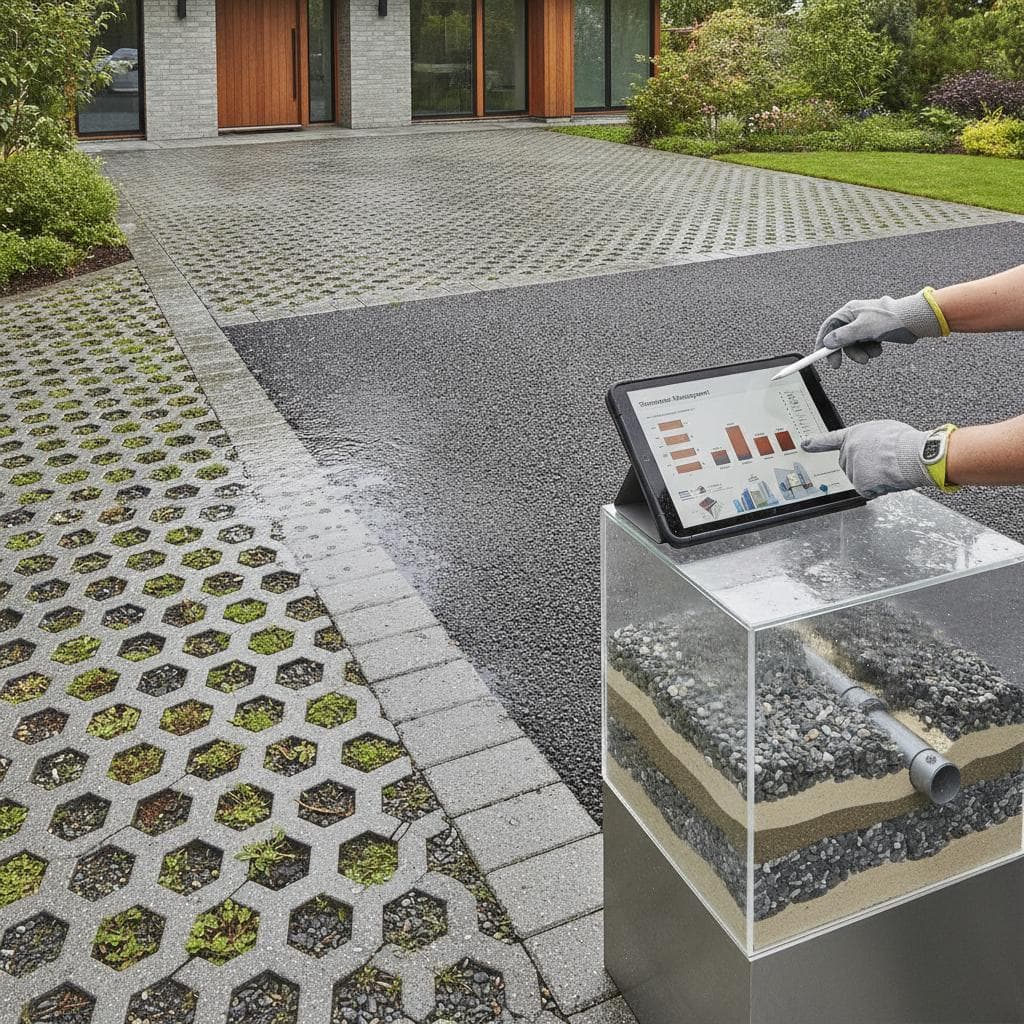
Water passes through the surface into gravel layers that filter and release it into the soil.
Are eco driveways more expensive than traditional ones?
Initial costs are often higher, yet reduced drainage fees and longer life produce savings over time.
Can materials be combined?
Yes. Pavers with gravel or grass strips create custom permeable designs.
How often should cleaning occur?
Sweep lightly every few weeks and perform deep cleaning once or twice per year.
What questions should contractors answer?
Ask about experience, warranties, drainage design, and maintenance plans.
What signs point to an unreliable installer?
Vague pricing, skipped site visits, and missing insurance are warning signs.
Step-by-Step Decision Guide
Step 1: Assess the Site
Check soil type, slope, and current drainage patterns.
Step 2: Evaluate Skills
Match project size to personal ability or professional help.
Step 3: Calculate Full Costs
Include equipment rental, waste removal, and contingency funds.
Step 4: Weigh Long-Term Value
Durable construction improves property value and supports sustainability goals.
Step 5: Finalize Plans
Compare quotes and confirm material specifications before signing.
Preparing for Installation
Research materials and contractors. Set a budget with contingency funds. Plan layout for function and appearance. Schedule work during dry weather. Clear the site and mark boundaries in advance.
Ongoing Care for Best Performance
Regular surface cleaning and annual inspections keep drainage effective. Address minor issues promptly to protect the full system investment.