Tank vs Tankless Water Heater Replacement Costs in 2026
Replacing a water heater often occurs without much warning. Cold showers or unexpected leaks force quick decisions. Homeowners must compare tank and tankless options based on real installation expenses, ongoing efficiency, and home compatibility.
This overview examines price factors, labor requirements, and long-term performance. It highlights expenses that frequently surprise property owners, such as electrical upgrades or venting changes.
Upfront Cost Breakdown
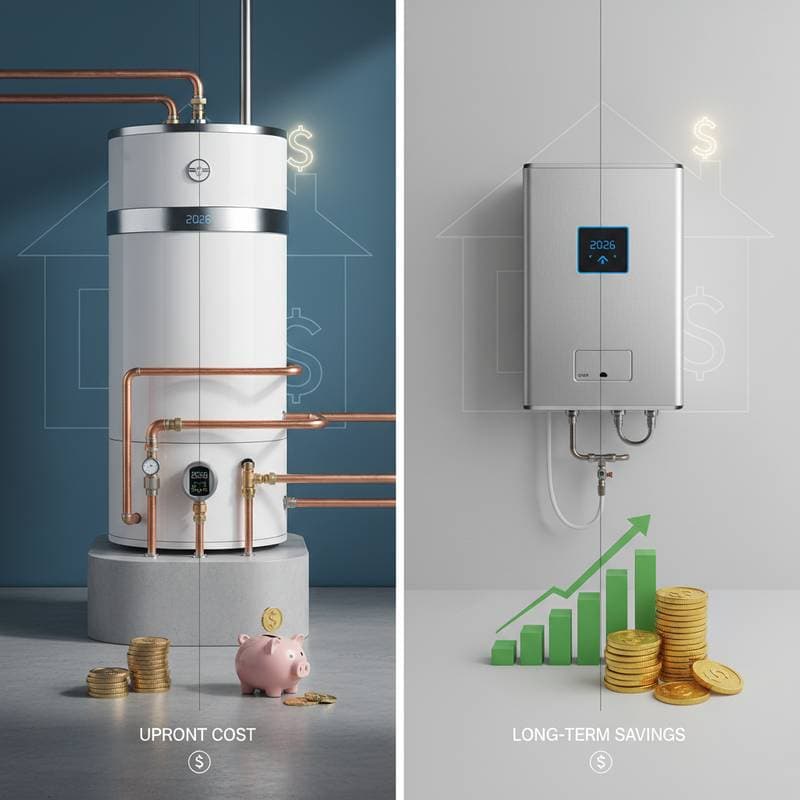
Tank systems carry moderate equipment prices. Labor stays straightforward because most units fit existing connections. Total installed costs remain lower in typical scenarios.
Tankless systems demand higher equipment investment, particularly for whole-house capacity. Labor increases when gas lines, electrical service, or venting need expansion. Overall installed prices often reach twice the tank alternative.
| Type | Unit Cost Range | Labor Cost Range | Total Installed Estimate | Average Lifespan | Annual Energy Impact |
|---|---|---|---|---|---|
| Tank | $800 to $1,600 | $600 to $1,200 | $1,500 to $2,800 | 10 to 12 years | Higher standby loss |
| Tankless | $1,500 to $3,200 | $1,200 to $2,500 | $3,000 to $5,500 | 20 years or more | Reduced consumption |
Regional and Project Variables
Prices shift with location and home details. Urban markets with elevated labor rates add several hundred dollars. Rural sites may incur travel fees from limited technicians. Fuel type matters as well. Natural gas tankless units cost less to operate than electric models in most climates.
Homes with multiple bathrooms benefit from larger tankless units or multiple point-of-use devices. Smaller households often achieve sufficient supply from a single compact unit.
Efficiency and Operating Savings
Tankless units heat water only during demand. This design eliminates constant tank reheating. Households that use moderate daily volumes can reduce water heating expenses by 20 to 30 percent annually.
Tank models suit properties where immediate lower purchase price takes priority. They require less complex service calls and remain widely stocked at supply houses.
Owners who expect to remain in the residence beyond eight years typically recover the premium through reduced utility bills and fewer replacements.
Advantages and Limitations
Tank Water Heater Advantages
- Reduced initial outlay
- Straightforward swap with existing plumbing
- Parts available at most hardware retailers
Tank Water Heater Limitations
- Continuous energy draw even without use
- Finite hot water volume during peak demand
- Earlier replacement cycle
Tankless Water Heater Advantages
- Unlimited hot water flow when sized correctly
- Lower monthly energy costs
- Wall-mounted design frees floor space
Tankless Water Heater Limitations
- Greater upfront and installation expense
- Potential need for utility upgrades
- Annual descaling required in hard water areas
Frequent Homeowner Questions
What replacement interval applies to each type?
Tank units typically reach replacement after 10 to 12 years. Tankless models often operate reliably for 20 years when flushed yearly.
What maintenance do tankless units require?
Annual flushing removes scale. Many newer models include automated cycles that reduce manual effort.
Can homeowners perform their own installation?
Local codes require licensed professionals for gas and electrical work. Permits protect against safety issues and insurance complications.
Do incentive programs offset costs?
Utility providers frequently issue rebates for high-efficiency models. Contact the local energy office to identify current offers before purchase.
Selecting the Appropriate System
Assess household size, available fuel source, and planned duration of ownership. Obtain itemized quotes that list equipment, labor, and any required upgrades. Compare projected energy savings against the difference in initial investment to determine the stronger financial fit for the property.