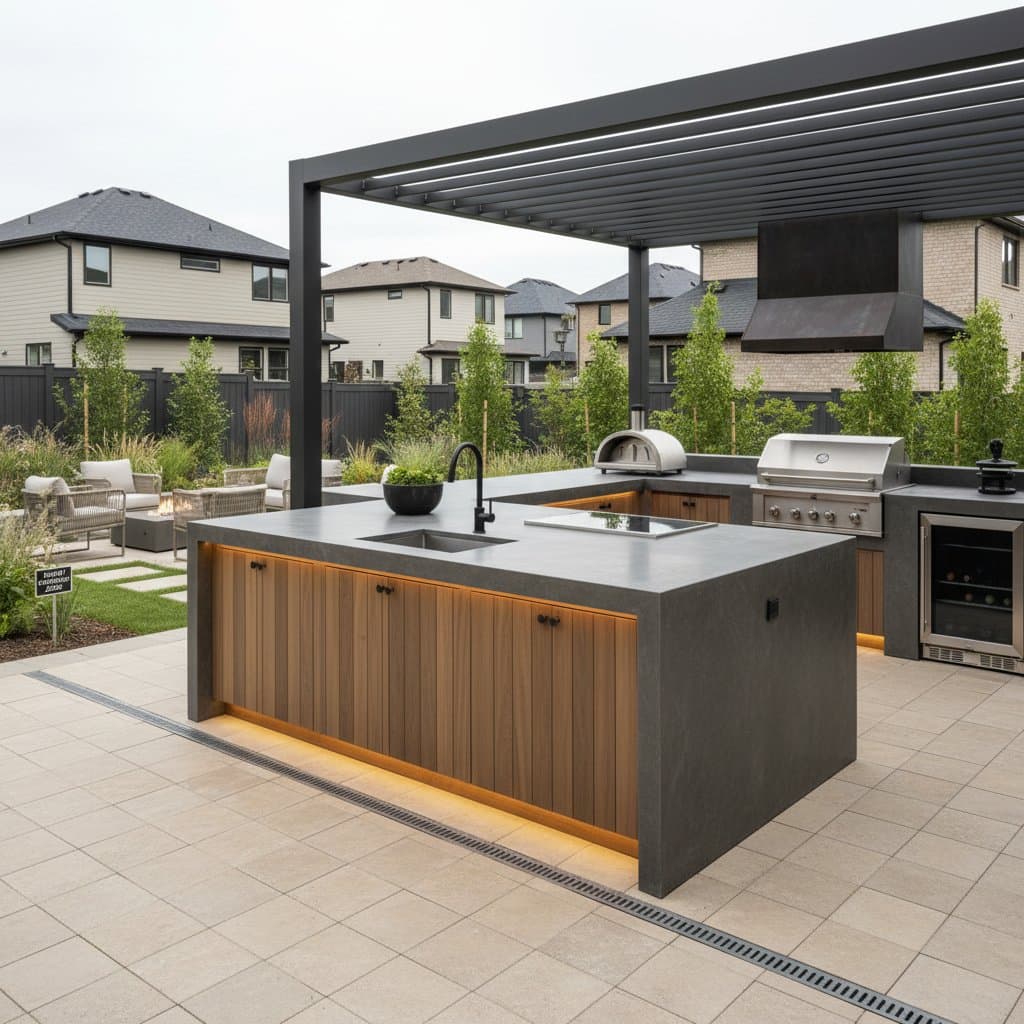
2026 Backyard Kitchen Costs: What You Will Really Pay
A backyard kitchen transforms outdoor areas into functional spaces for daily meals and social gatherings. Homeowners often seek precise cost figures before starting such projects. Pricing varies based on design complexity, selected materials, and required infrastructure. A complete outdoor kitchen functions as an integrated system rather than a simple grill addition.
Average Price Ranges
Basic setups that include a grill, simple counter, and sink typically range from 5000 to 15000 dollars. Mid-range projects with stone surfaces, refrigeration, and dedicated prep zones often total between 20000 and 50000 dollars. Luxury builds featuring custom cabinetry, pizza ovens, integrated lighting, and full plumbing frequently exceed 60000 dollars. Labor, materials, and permits commonly account for 50 percent of overall expenses.
| Build Level | Key Features | Sample Total Cost |
|---|---|---|
| Basic | Grill, basic counter, sink | 5000-15000 dollars |
| Mid-range | Stone counters, refrigerator, prep area | 20000-50000 dollars |
| Luxury | Custom cabinets, pizza oven, full utilities | 60000 dollars and up |
Key Factors That Shape the Cost
Several project elements determine final pricing. Understanding these components supports accurate budget development from the outset.
-
Layout and Size
Larger footprints require additional materials and extended labor hours. Straight configurations cost less than L-shaped or U-shaped designs because they reduce countertop runs and utility routing. -
Appliances and Features
Built-in grills, side burners, sinks, and refrigerators increase expenses quickly. Specialty equipment such as smokers or ice makers adds both purchase cost and electrical demands. -
Materials
Stone, tile, and stainless steel provide reliable outdoor durability. Lower-cost options like concrete block require more frequent maintenance. Select materials rated for local climate conditions. -
Utilities
Gas, water, and electrical connections add complexity. Extending lines across a yard often doubles installation expenses when trenching becomes necessary. -
Labor and Permits
Licensed installers, plumbers, and electricians bill hourly rates. Local regulations mandate inspections that introduce additional fees.
Real Examples from Homeowners
Homeowners report that prefabricated frame systems cut professional installation costs by more than half. One owner completed stone veneer application over several weekends and reduced total spending by several thousand dollars. Another homeowner noted that early designer involvement eliminated later corrective work that would have increased expenses.
Cost-Saving Steps That Work
- Select modular systems over full custom masonry construction.
- Connect to an existing natural gas line when available instead of relying on propane.
- Defer nonessential items such as warming drawers for future phases.
- Purchase appliances during off-season manufacturer promotions.
- Establish drainage and lighting plans before construction begins to prevent rework.
These measures reduce overall spending by hundreds of dollars while preserving project quality.
Long-Term Value and Maintenance
Finished outdoor kitchens improve property comfort and market appeal. Properties with complete outdoor cooking areas often sell more quickly and at higher prices. Regular care protects this investment. Apply sealant to counters each year, clean grills after every use, and protect appliances with covers during inactive periods. A consistent maintenance routine minimizes repair needs and extends service life.
Planning Your Project
Begin with a defined budget and a prioritized list of required features. Obtain multiple detailed quotes from licensed contractors. Confirm local regulations regarding gas and water installations prior to any work. Thoughtful decisions at each stage produce a durable outdoor kitchen suited to your available resources.