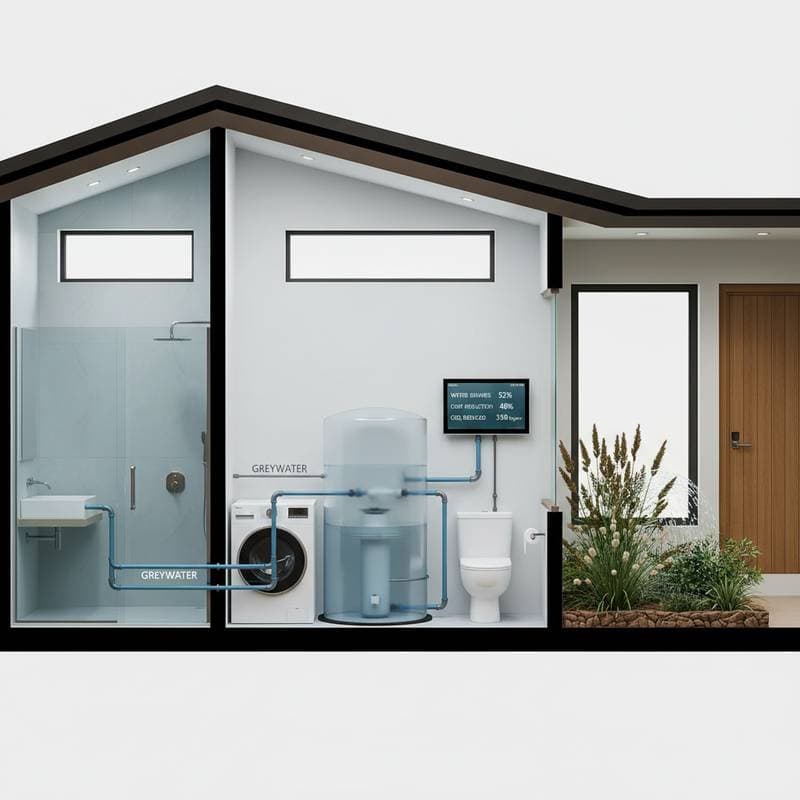
Greywater Systems Cut Household Water Use by Half
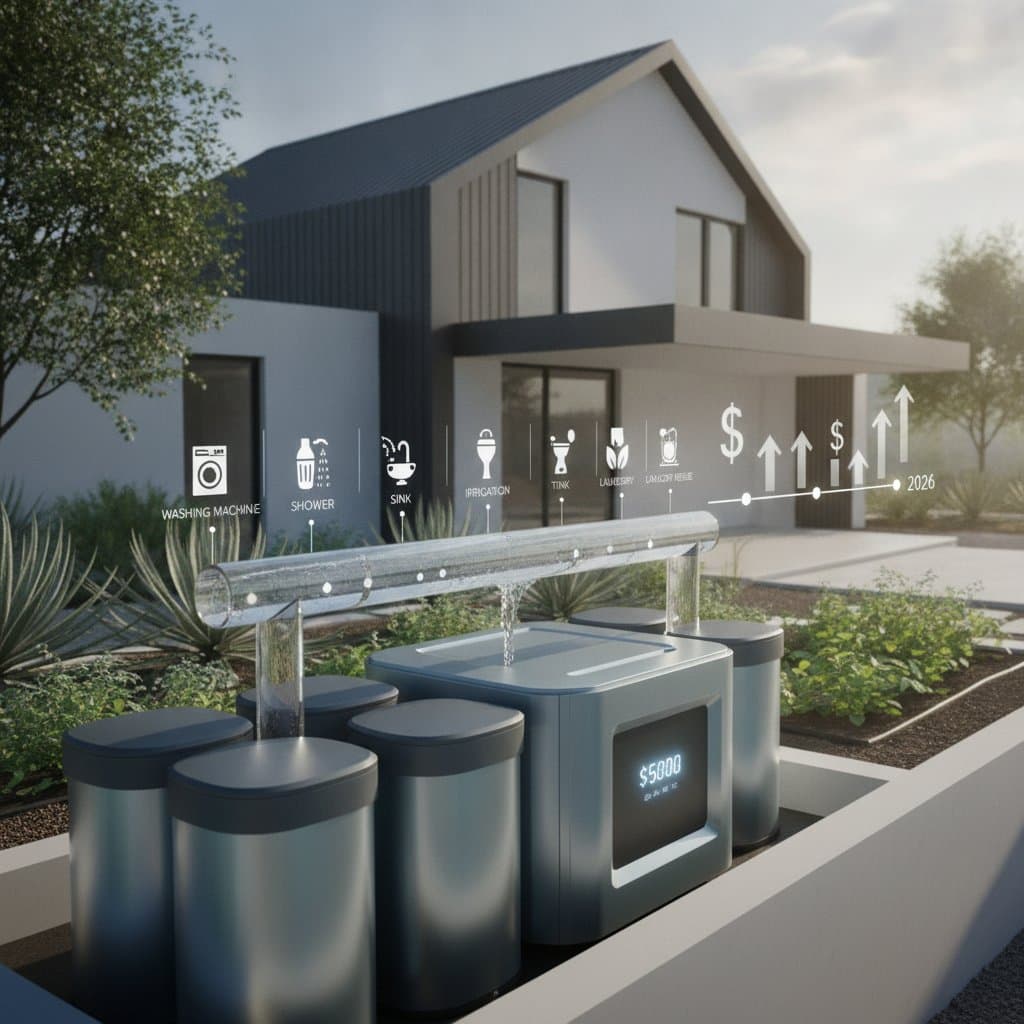
Greywater systems capture and treat water from sinks, showers, and laundry for reuse in irrigation and toilet flushing. Homeowners who install these setups often reduce municipal water consumption by 40 to 50 percent. The approach supports both lower utility bills and reduced strain on local water supplies.
Core Components of a Residential Greywater Setup
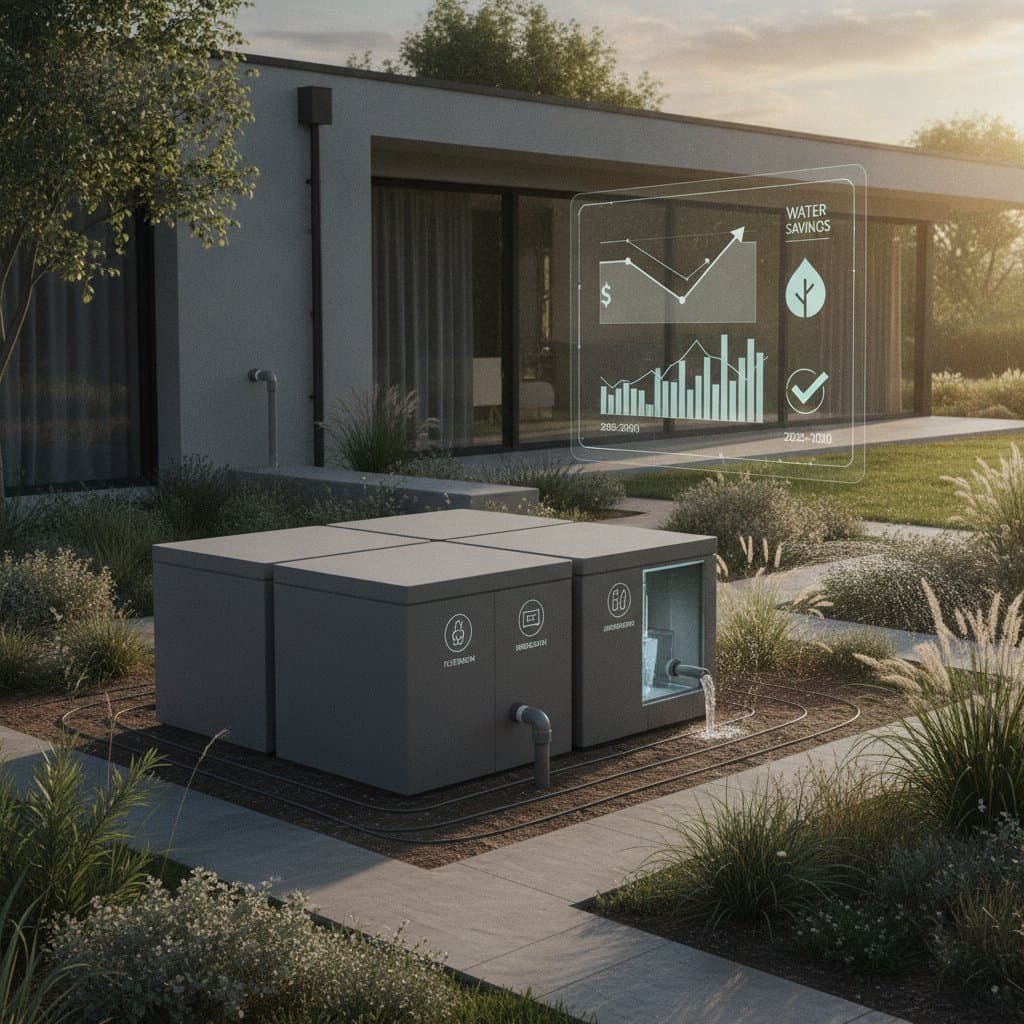
A basic system routes pipes from indoor fixtures to a filtration unit. Common filters include sand, mulch basins, or simple settling tanks. Treated water then flows to subsurface irrigation lines or dedicated toilet tanks. Each layout requires a separate plumbing branch to avoid cross connections with potable lines.
- Select fixtures that produce lightly soiled water only.
- Install a three-way diverter valve at the main drain line.
- Add a pump when the reuse point sits higher than the collection point.
- Include a backflow preventer to meet code requirements.
Quantified Savings and 2026 Cost Ranges
Average households generate 15,000 to 25,000 gallons of reusable greywater each year. In regions with tiered pricing, this volume translates to annual savings between 300 and 800 dollars on water and sewer charges. System prices vary by scale. A simple laundry-to-landscape kit costs 1,200 to 2,500 dollars. Full-home systems with automated controls range from 6,000 to 15,000 dollars installed.
Rebates from water districts frequently cover 500 to 2,000 dollars of the upfront expense. Payback periods fall between three and seven years when local incentives apply. Property appraisers increasingly assign added value to homes with documented water recycling infrastructure.
Planning Steps Before Installation
Measure daily greywater volume by tracking fixture use over two weeks. Map the yard to locate irrigation zones that sit at least five feet from property lines. Check local building codes for permit thresholds and required setbacks. Consult a licensed plumber to confirm pipe sizing and pump specifications.
Choose plants that tolerate occasional soap residues when the system supplies garden beds. Avoid edible crops under drip lines unless advanced disinfection is added. Schedule the work during dry months to simplify trenching.
Routine Maintenance Requirements
Inspect filters monthly and remove accumulated lint or hair. Flush the lines twice a year with clean water to prevent biofilm buildup. Replace pump seals every three to five years. Keep a log of service dates to support warranty claims and future home sales.
Monitor plant health near irrigation outlets. Adjust soap choices to low-sodium, biodegradable formulas if leaf burn appears. Winterize outdoor components in cold climates by draining lines and insulating valves.
Long-Term Environmental and Financial Returns
Consistent greywater reuse lowers demand on aquifers and wastewater treatment plants. Reduced pumping and heating of fresh water also cuts household energy use. Over a twenty-year horizon, the combined utility savings and added property value frequently exceed the original investment by a factor of three.
Homeowners who combine greywater systems with rainwater collection and efficient fixtures achieve the largest reductions in overall resource consumption. Proper design and steady upkeep turn these installations into reliable assets rather than one-time projects.