Tank or Tankless? 2026 Water Heater Replacement Costs
Replacing a water heater often catches homeowners off guard when hot water suddenly stops. Planning ahead requires clear information on purchase prices, installation requirements, and long-term performance differences between tank and tankless systems.
This guide outlines expected expenses for 2026, key differences in operation, and practical steps for selecting the right unit.
Purchase Prices in 2026
Tank Water Heaters
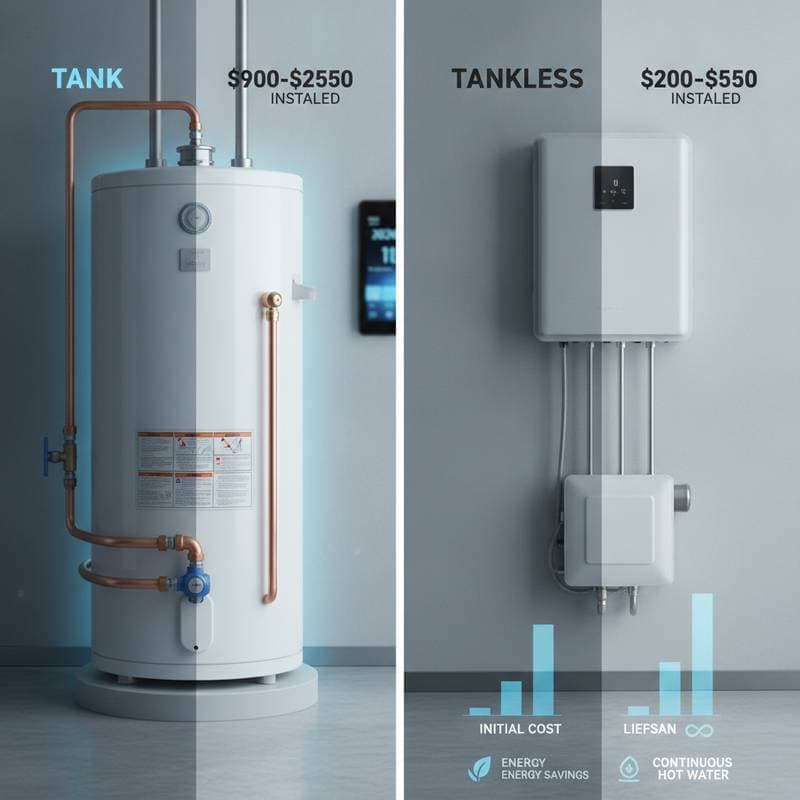
Basic electric or gas models range from 600 to 1500 dollars. High-efficiency or hybrid models cost between 1500 and 2800 dollars.
Tankless Water Heaters
Standard gas or electric models fall between 1000 and 2800 dollars. High-efficiency condensing models range from 2800 to 4500 dollars.
Tankless units carry higher initial prices. They often deliver energy savings of 15 to 25 percent compared with tank models, according to reports from plumbing professionals.
Installation Costs
Tank Heater Installation
Labor and materials typically run from 700 to 1500 dollars. Total installed cost lands between 1300 and 3500 dollars.
Tankless Heater Installation
Labor and materials range from 1500 to 3000 dollars. Total installed cost reaches 2800 to 6500 dollars.
Converting from a tank system to tankless frequently requires gas line upgrades, new venting, or added electrical capacity. These additions account for most of the higher installation expense.
Gas Versus Electric Options
Gas models heat water faster and continue operating during power outages. They need proper venting and gas connections, which raise installation costs but lower operating expenses in areas with affordable gas rates.
Electric models install more easily because they require no venting. They suit smaller households or homes without gas service, though operating costs rise when local electricity rates are high.
Homeowners often select gas tankless units for higher flow rates. Electric tankless models work best for single-bathroom setups or point-of-use applications.
Environmental and Property Benefits
High-efficiency units lower household energy use and emissions. Updated tankless systems can increase buyer interest because they offer continuous hot water and reduced maintenance.
Local utilities sometimes provide rebates between 200 and 800 dollars for qualifying high-efficiency installations. These incentives offset part of the upfront expense.
Common Installation Challenges
- Gas line upgrades may add 300 to 800 dollars when switching to tankless.
- Condensing units require specific venting materials that older homes may lack.
- Electrical connections for controls and ignition sometimes need updates in older properties.
- Hard water treatment protects the new unit and extends service life.
Obtain multiple quotes from licensed plumbers to account for regional labor differences and site-specific needs.
Timing Your Replacement
Signs such as rust-colored water, leaks, or fluctuating temperatures indicate the current unit needs attention. Acting before complete failure allows time to compare options and secure favorable scheduling.
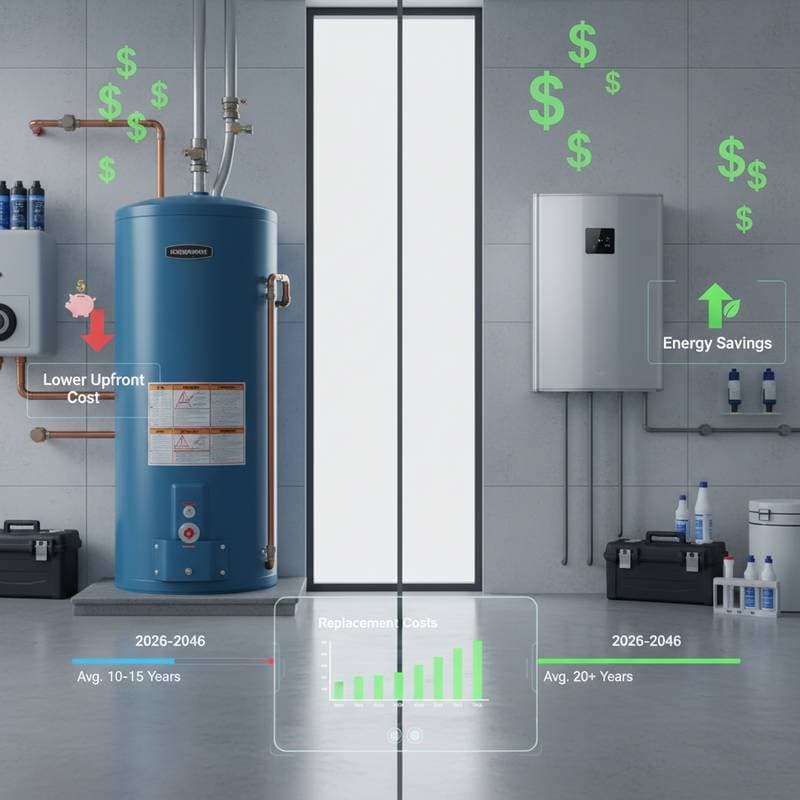
A tank model remains practical when budget and straightforward maintenance matter most. Full replacement including labor falls between 1500 and 3500 dollars.
A tankless system provides longer service life and lower energy use. Upfront costs range from 2800 to 6500 dollars, yet the unit often pays for itself through reduced utility bills over time.
Evaluate household size, future residency plans, and available installation space before choosing. A qualified plumber can inspect the existing setup and supply accurate pricing for both system types.
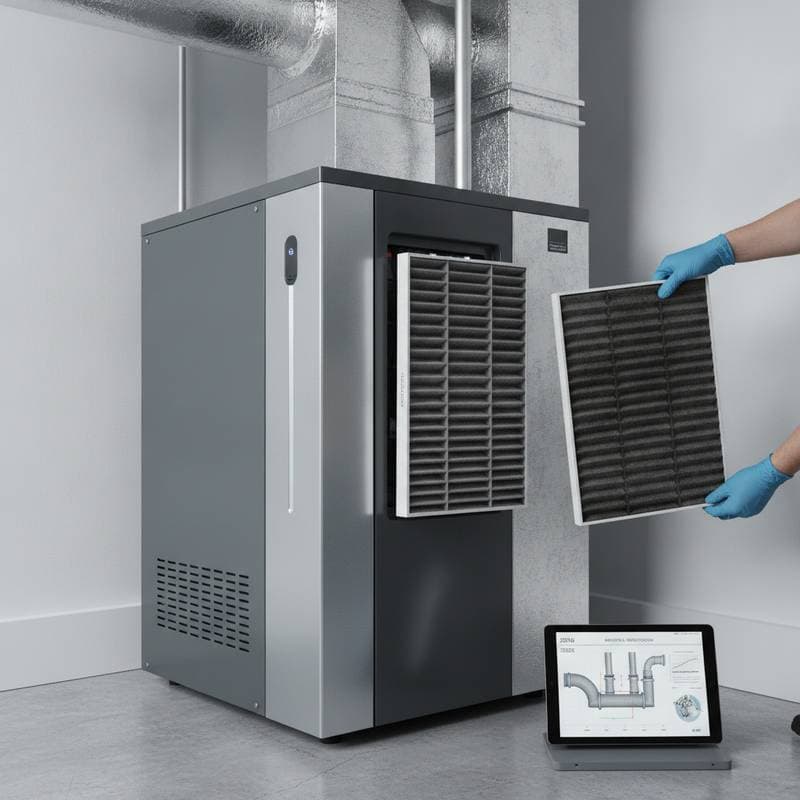
Schedule annual service and retain maintenance records. Consistent care improves efficiency and extends equipment life.
Next Steps for Homeowners
Compare total ownership costs over ten years rather than focusing only on purchase price. Factor in local fuel rates, available rebates, and water quality conditions when finalizing the decision.