Tank vs Tankless Water Heaters: 2026 Cost Breakdown
Replacing a water heater ranks among the larger home maintenance expenses. The decision between a traditional tank model and a tankless unit shapes both immediate spending and ongoing utility costs. Homeowners benefit from comparing equipment prices, installation demands, and long-term performance before scheduling work.
Water Heater Cost Fundamentals
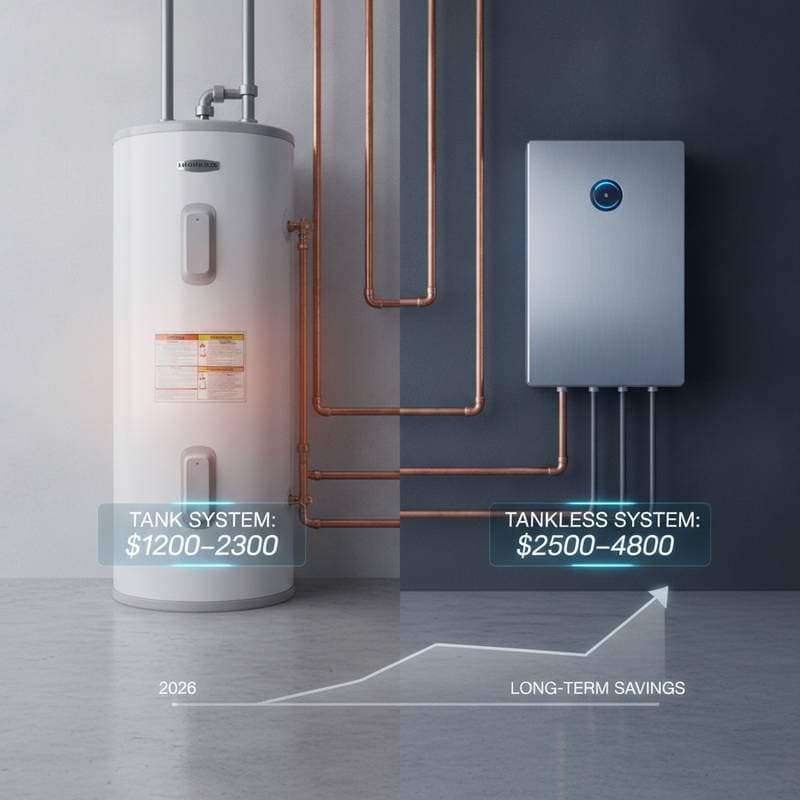
A tank water heater replacement typically totals between 1200 dollars and 2300 dollars when parts and labor are included. Tankless units generally range from 2500 dollars to 4800 dollars because they involve more complex piping and electrical work. Prices shift by region. Coastal cities with elevated labor rates often run 15 to 25 percent higher than inland areas. Colder climates increase the heating load on tankless models and can raise both equipment size and operating expense.
Material costs and fuel prices also move through the market. Steel price changes affect tank models most directly, while gas line requirements influence tankless bids.
Pricing Models and Structures
Contractors present several billing options.
- Hourly rates run from 75 dollars to 200 dollars depending on location and skill level.
- Flat fees cover removal, installation, and site cleanup in one quoted amount.
- Per unit pricing applies when multiple heaters serve larger homes.
- Package pricing bundles disposal, permits, and first-year maintenance.
- Subscription plans add annual flushing and inspection for a yearly fee.
Flat or bundled quotes simplify budgeting because they deliver one total figure.
Service Tiers and Their Price Points
Basic 40 or 50 gallon tank replacements cost 1200 dollars to 1800 dollars installed. Mid efficiency tankless systems begin near 2800 dollars and reach 3800 dollars. Premium hybrid or condensing models fall between 3500 dollars and 5000 dollars and deliver lower operating costs over time. Larger homes or light commercial sites may require multiple units or recirculation loops, pushing totals above 6000 dollars. Energy Star rated equipment carries a higher initial price yet can cut annual energy use by up to 25 percent.
Key Variables Influencing Water Heater Pricing
Several factors determine final cost.
- Capacity needs rise with household size. A 50 gallon tank adds roughly 15 percent to the price of a 40 gallon unit.
- Gas models usually cost less to run but require extra venting and gas line work during installation.
- Switching from tank to tankless often means upgrading electrical service or plumbing runs.
- Tight spaces or basement locations increase labor hours.
- Condensing tankless units need stainless steel vent pipe instead of standard PVC.
Add on Services and Supplemental Charges
Additional line items appear on many invoices.
- Old unit removal and recycling fees range from 75 dollars to 150 dollars.
- Permits and inspections cost 50 dollars to 300 dollars depending on local rules.
- A water softener added to protect against scale adds 800 dollars to 1200 dollars.
- A recirculation pump for instant hot water at every tap costs 400 dollars to 900 dollars.
- Same day emergency service carries a 10 to 20 percent surcharge.
Comparing Long Term Value
Tankless systems last nearly twice as long as standard tanks and supply endless hot water. They also cut energy use by 20 to 40 percent in most homes. Tank models need simpler maintenance and lower upfront spending, which suits households watching immediate budgets. Surveys show that roughly 60 percent of homeowners who chose tankless units noticed lower utility bills within six months. Payback time still depends on local energy rates and daily hot water volume.
High demand homes with multiple bathrooms usually gain the most from tankless performance. Smaller households often achieve better value by staying with a tank replacement.
Planning Your Replacement
Collect three written quotes from licensed plumbers. Confirm that each quote lists warranty coverage, permit fees, and disposal charges. Verify that the selected model matches your household size and fuel type. A properly sized system provides reliable hot water while keeping operating costs predictable for years ahead.