Stop Attic Mold Before It Starts: Season by Season Plan
Attic mold develops when moisture meets limited airflow. Warm air from living spaces carries vapor that settles on cooler roof surfaces. Leaks, blocked vents, and uneven insulation trap this moisture and allow spores to multiply. The Environmental Protection Agency notes that mold growth begins once relative humidity stays above forty to fifty percent for long periods.
Prevention relies on consistent airflow and moisture management. A dry, well ventilated attic rarely supports mold colonies.
Seasonal Inspection and Maintenance Plan
A structured routine addresses changing conditions throughout the year.
Spring
- Examine the roof for leaks after winter weather.
- Clear soffit and ridge vents to restore airflow.
- Scan insulation for damp areas or discoloration.
Summer
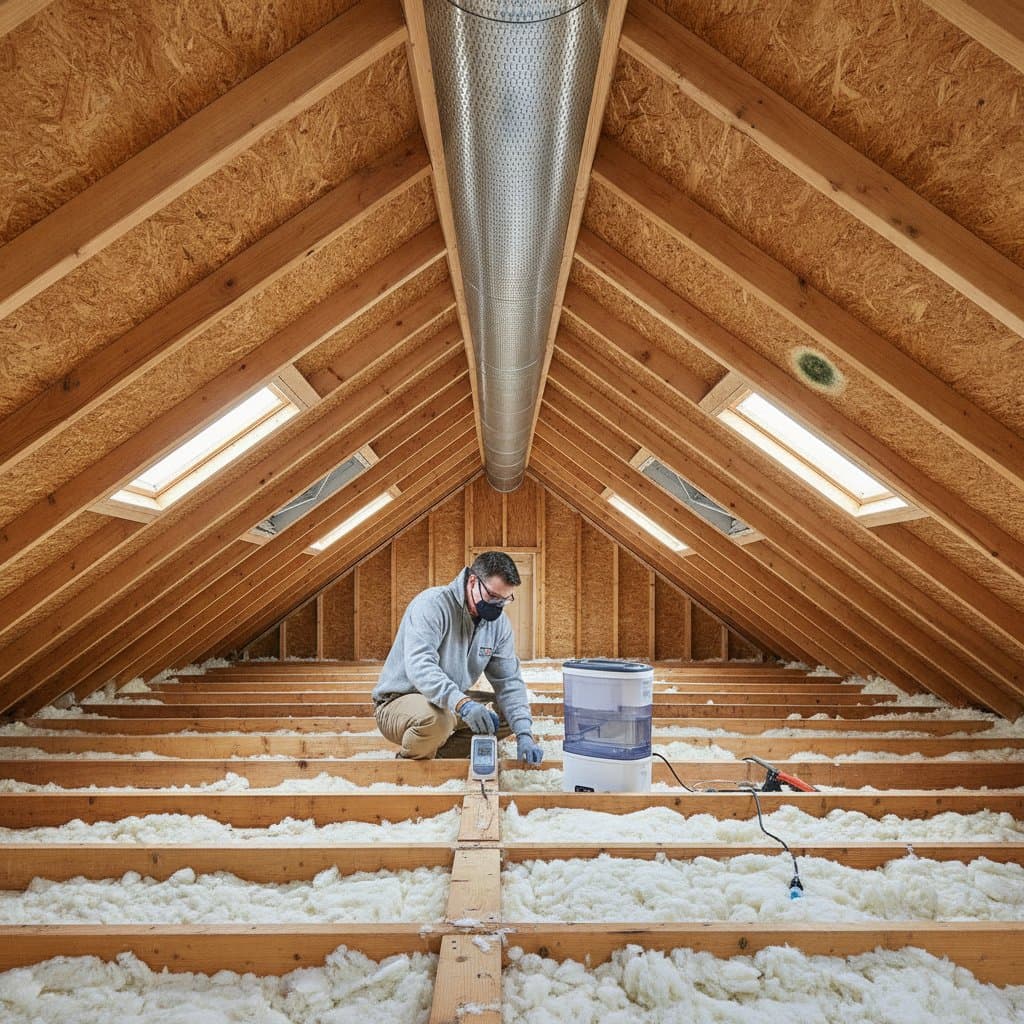
- Track humidity with a digital hygrometer placed in the attic.
- Add powered or passive vents if readings remain high.
- Confirm that bathroom and kitchen fans exhaust to the exterior rather than the attic space.
Autumn
- Remove leaves and debris from roof vents.
- Check rafters for condensation after cool evenings.
- Arrange a professional roof inspection ahead of seasonal rains.
Winter
- Look for frost or ice on the underside of roof decking.
- Seal access doors and hatches to limit warm air intrusion.
- Redistribute insulation evenly to avoid cold spots on the roof.
Inspection and Remediation Costs
Professional attic inspections typically range from one hundred to three hundred dollars. Minor mold removal averages five to ten dollars per square foot. Extensive growth can require several thousand dollars in labor and materials. Humid regions often see higher rates because of greater demand.
Ventilation upgrades provide lasting protection. A powered attic fan installation costs between three hundred and seven hundred dollars. New insulation averages two dollars per square foot. These improvements lower mold risk and reduce heating and cooling expenses.
Factors That Affect Prevention Expenses
Several variables determine final costs.
- Attic size and ease of access influence labor requirements.
- Roof condition may necessitate repairs before mold work begins.
- Existing vent openings may require structural changes if they prove inadequate.
- Persistent humidity can call for dehumidifiers or HVAC modifications.
Certified specialists often bundle air sampling, moisture mapping, and sealing services. These additions increase upfront cost yet deliver extended peace of mind.
Optional Upgrades for Stronger Protection
Additional measures reinforce basic prevention.
- Air sealing limits vapor movement from living areas into the attic.
- Dehumidifier installation holds humidity between forty and fifty percent.
- Mold resistant coatings on wood surfaces deter future spore attachment.
- Scheduled inspection plans provide early detection through regular visits.
Each upgrade ranges from one hundred to several hundred dollars based on materials and scope.
Ongoing Attic Care Practices
Mold prevention demands repeated attention rather than a single effort. Seasonal checks combined with prompt repairs keep moisture levels low. Homeowners who record inspection dates and humidity readings spot problems before they expand. Routine vent cleaning and gap sealing protect both structural integrity and indoor air quality over many years.