Spring Deck Care Prevents Costly Repairs
Spring offers an ideal window to prepare outdoor spaces for extended use. Proactive attention to wood surfaces reduces the risk of major damage and supports long term value.
- Inspect all boards, fasteners, and supports for wear.
- Clean surfaces to remove dirt and mildew.
- Apply a suitable sealer to block moisture.
- Address small repairs before they expand.
- Establish simple habits for year round protection.
Inspect All Surfaces First
Begin with a systematic review of the entire structure. Walk the deck and note loose boards, protruding nails, or areas that feel spongy underfoot. Tap each board with a hammer handle and listen for dull thuds that indicate internal decay. Examine railings and stair stringers for any movement, then tighten screws and bolts as needed.
Focus on board ends and post bases where water collects most often. Early detection allows replacement of individual pieces at low cost rather than full section reconstruction later.
Clean the Deck Thoroughly
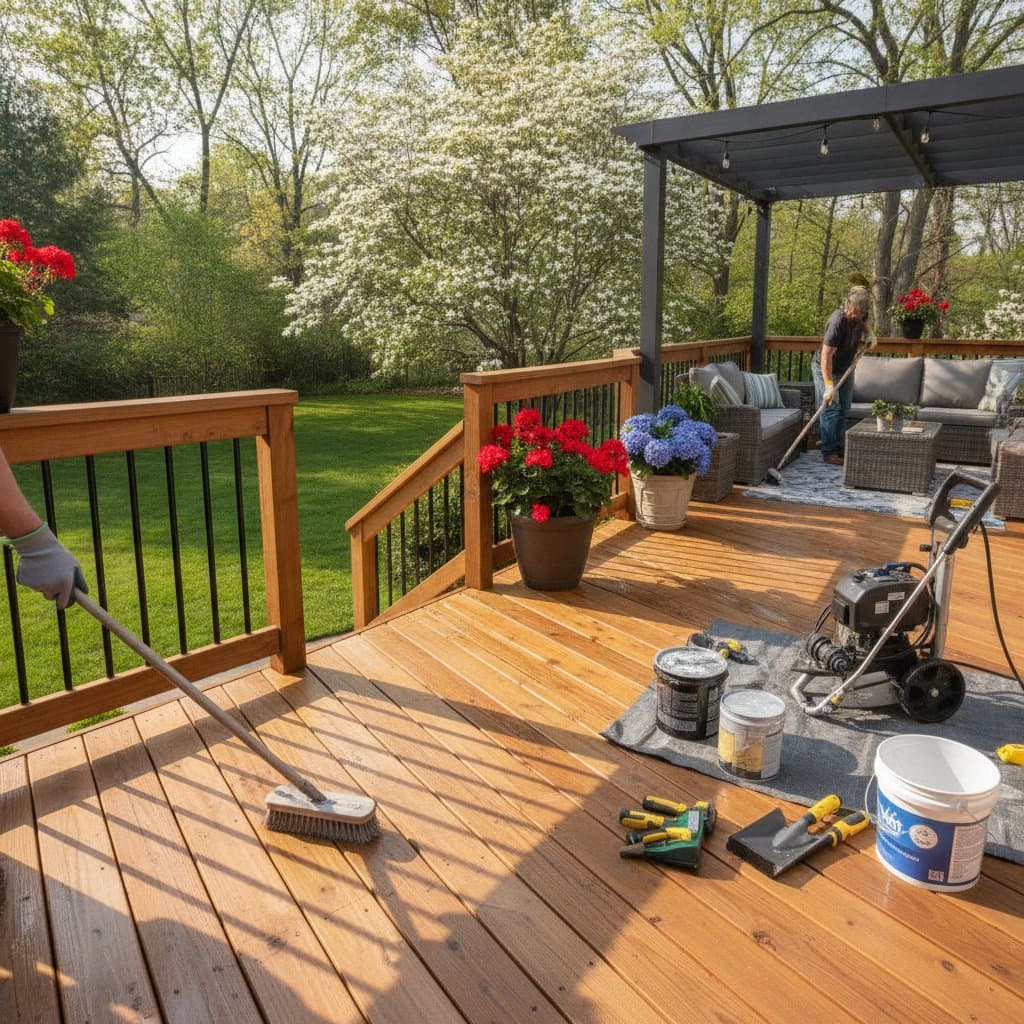
Remove all furniture, planters, and debris. Sweep the surface, then scrub with a solution of mild detergent and water applied by stiff brush. Rinse thoroughly with a garden hose. For stubborn mildew, prepare a mixture of one part oxygen bleach to four parts water, apply it, allow it to dwell briefly, and rinse again.
Permit the wood to dry completely, typically two to three days of clear weather, before moving to sealing. Proper cleaning ensures the sealer bonds evenly and lasts longer.
Choose and Apply Sealer Wisely
Select a water based product matched to local climate conditions. Clear sealers preserve natural tone yet require more frequent renewal. Semi transparent stains introduce color while revealing grain and offer moderate durability. Solid stains supply maximum ultraviolet resistance at the expense of visible wood texture.
Stir the product well without shaking. Apply with a roller on open areas and a brush on railings and edges. Work in shaded conditions to avoid lap marks. Allow the full cure time stated on the label before returning furniture.
Complete Timely Repairs
Replace rusted nails with coated deck screws. For splits, inject exterior wood glue, clamp the board overnight, then sand smooth. Severely rotted members must be cut out and replaced with matching treated lumber. New boards receive the same finish as surrounding surfaces.
Wear gloves and eye protection during sanding or cutting. Dispose of removed material according to local guidelines for treated wood.
Maintain Protection Through the Seasons
Sweep the deck weekly during spring and summer. Address spills immediately. Shift furniture positions every few weeks to prevent uneven fading. In fall, clear leaves promptly. Elevate planters and cover seating with breathable fabric during winter.
A short recurring checklist kept near the door supports consistent execution without added effort.
Practical Outcomes Reported by Owners
Homeowners who perform annual inspection and sealing often avoid contractor expenses exceeding several hundred dollars. Testing stain on a hidden board first prevents mismatched color across the full surface. These measured approaches demonstrate that regular small interventions preserve both safety and appearance.
Answers to Frequent Deck Questions
Most wood decks require resealing every one to three years. Sprinkle water on the surface; rapid absorption signals the need for a fresh coat. Paint may cover stain after cleaning and light sanding, though it conceals the grain entirely. Composite surfaces need only manufacturer approved cleaners and never require sealers.