Preparing Your Chimney for Fall to Avoid Creosote Fires
When cooler weather arrives, many homeowners anticipate the first fire of the season. A fireplace provides comfort only when the chimney and firebox remain safe. Dust, soot, and creosote accumulate over months of use. These deposits lead to smoke issues or chimney fires when left unaddressed. A structured preparation process keeps the system reliable.
This guide explains inspection, cleaning, and maintenance steps. It also covers tool selection, firewood choices, cost considerations, and indicators for professional service. Each recommendation promotes efficient operation and reduces risk throughout the heating months.
Essential Tools and Supplies for Chimney Maintenance
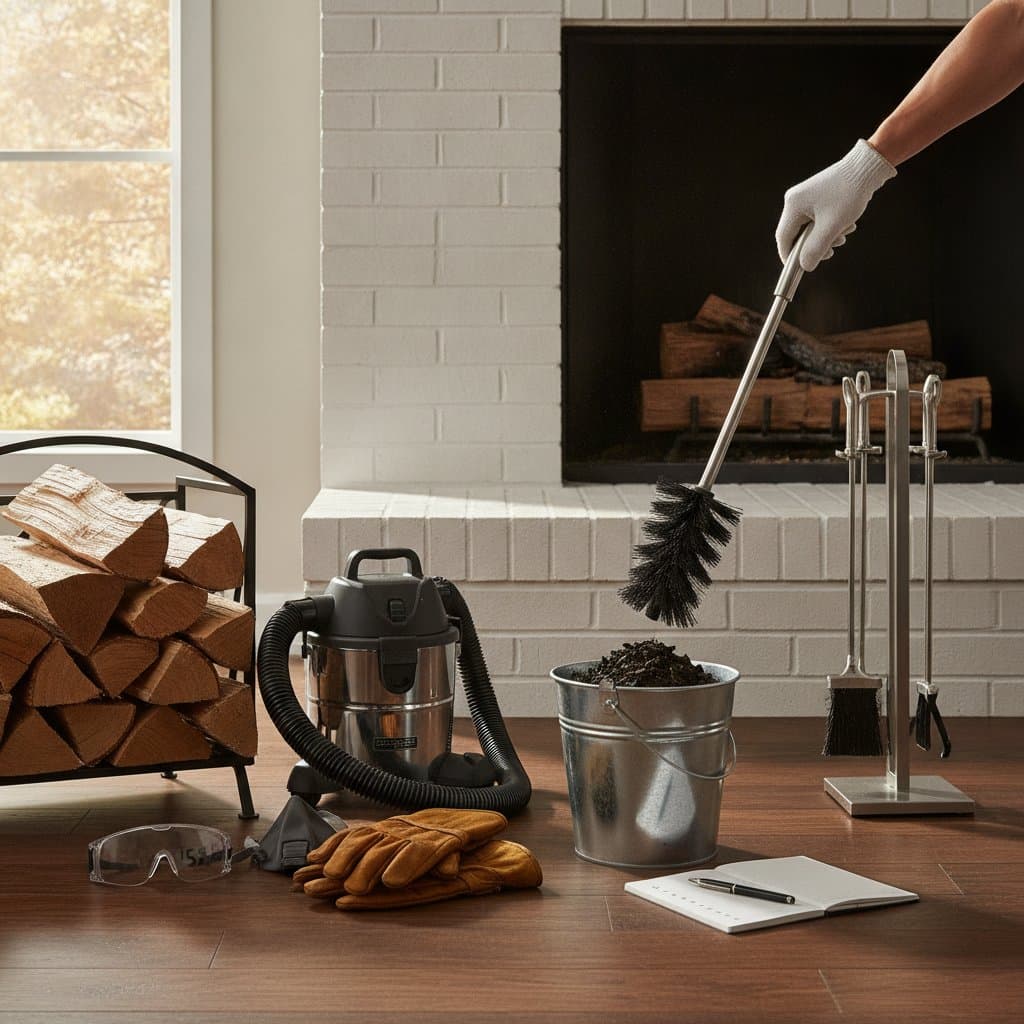
Assemble the required items before beginning any work. Proper equipment improves safety and speeds completion of tasks.
Suggested Tools
- Chimney brush matched to flue dimensions
- Extension rods to reach full height
- Flashlight or inspection camera
- Dust mask and safety goggles
- Drop cloths or tarps for floor protection
- Small wire brush for firebox corners
- Metal bucket for ash removal
- Ladder rated for roof access
Optional but Helpful Additions
- Vacuum equipped with a fine dust filter
- Moisture meter to check firewood dryness
- Heat resistant gloves
- Mirror for viewing restricted areas
A labeled photograph of these items arranged on a work surface clarifies selection.
Cleaning the Chimney: DIY or Professional Help
Homeowners may perform cleaning themselves or engage certified sweeps. Success depends on experience level and available equipment.
DIY Cleaning Steps
- Don protective gear including goggles and mask.
- Spread tarps to contain soot.
- Remove or open the damper fully.
- Insert the brush from top or bottom and apply firm strokes.
- Vacuum or sweep debris from the firebox.
Heavy buildup or tall flues warrant professional service. Certified sweeps employ rotary brushes and cameras for thorough results.
When to Call a Pro
- Thick or shiny creosote appears during inspection.
- The chimney has gone several seasons without cleaning.
- Scraping or animal sounds occur inside the flue.
- Smoke enters the room despite an open damper.
Professional cleaning typically ranges from several hundred dollars based on height and deposit volume. Request certification and insurance documentation. Many providers supply an inspection report for future planning.
Safe Firewood Selection and Storage
Appropriate wood maintains cleaner flues and hotter fires. Wet or green wood generates excess smoke and accelerates creosote formation.
Choose the Right Wood
- Select seasoned hardwoods such as oak, maple, or birch.
- Avoid softwoods like pine that leave sticky residue.
- Confirm logs have been split and dried for several months.
Store Wood Properly
Elevate stacks on pallets or racks. Shield the top from rain while allowing side airflow. Position piles at least twenty feet from the house to limit pest entry.
A photograph of stacked firewood under partial cover illustrates correct storage.
Cost Comparison: DIY versus Professional Chimney Care
| Task | DIY Cost Range | Professional Cost Range | Recommended Frequency |
|---|---|---|---|
| Basic inspection | Low | Included in cleaning | Once a year |
| Full cleaning | Low to medium | Medium to high three figures | Once a year or more with frequent use |
| Chimney cap replacement | Low | Medium | As needed |
| Mortar repair | Low to medium | Medium to high | Every few years |
A bar chart comparing these cost ranges supports budgeting decisions.
Seasonal Maintenance Tips for Lasting Performance
Consistent habits preserve efficiency during colder periods. Apply the following practices regularly.
- Clear ashes after several fires to sustain airflow.
- Clean soot from bricks using a vinegar and water solution.
- Keep the hearth clear of rugs or loose papers.
- Arrange annual inspections regardless of usage frequency.
- Install a chimney balloon or draft stopper during off seasons to block cold air.
These measures lower energy consumption and minimize future repairs.
Expert Advice and Real World Feedback
Homeowners often report outcomes on improvement forums. One noted that pre season cleaning reduced smoke odor and produced brighter flames. Another installed a stainless steel cap and eliminated repeated animal intrusions. Safety organizations emphasize that most chimney fires result from neglect and recommend yearly inspections as primary prevention.
A regional maintenance study observed seventy percent fewer smoke complaints and structural issues in homes receiving annual service. This evidence underscores the benefit of routine attention.
Addressing Water Intrusion Risks
Moisture causes corrosion of metal components and deterioration of masonry. Seal visible cracks promptly. Install proper flashing and caps to divert water. Schedule inspections after heavy storms to detect early damage.