
Essential AC Maintenance Tips Before Summer Heat Hits
As temperatures rise, your air conditioner becomes one of the most important systems in your home. Few things prove more uncomfortable than discovering your AC fails to cool properly when you need it most. Preparing your system early helps avoid breakdowns, keeps energy costs manageable, and extends the lifespan of your equipment. A well maintained air conditioner delivers consistent comfort while running efficiently.
This guide covers professional and DIY maintenance steps that homeowners can take before summer heat arrives. It includes inspection checklists, cleaning procedures, and key warning signs that indicate when professional service is needed.
Step by Step AC Maintenance Checklist
A complete tune up involves several detailed tasks. Some can be handled by homeowners while others are best left to licensed HVAC professionals. Use this checklist to guide your preparation.
1. Replace or Clean the Air Filter
A clogged air filter ranks among the most common causes of poor airflow and weak cooling performance. Replace disposable filters or clean reusable ones at least once every few months. Increase frequency if you have pets or allergies. Hold the filter up to a light source. If light fails to pass through clearly, replacement time has arrived.
Clean filters reduce strain on the blower motor and improve indoor air quality. This step alone can lower energy consumption noticeably.
2. Inspect the Thermostat Settings
Verify that your thermostat functions correctly. Set it to cooling mode and lower the temperature to confirm the system activates properly. Homes with uneven cooling benefit from a programmable or smart thermostat. These devices maintain consistent temperatures and adjust automatically when you are away.
3. Clear Debris Around the Outdoor Unit
The outdoor condenser coil requires proper airflow to release heat. Check the area around the unit and remove leaves, branches, grass clippings, or dirt accumulated during cooler months. Trim shrubs or plants to maintain at least two feet of clearance around the unit.
If coil fins appear bent, use a fin comb to straighten them gently. Avoid high pressure water that can damage fins or push debris deeper inside.
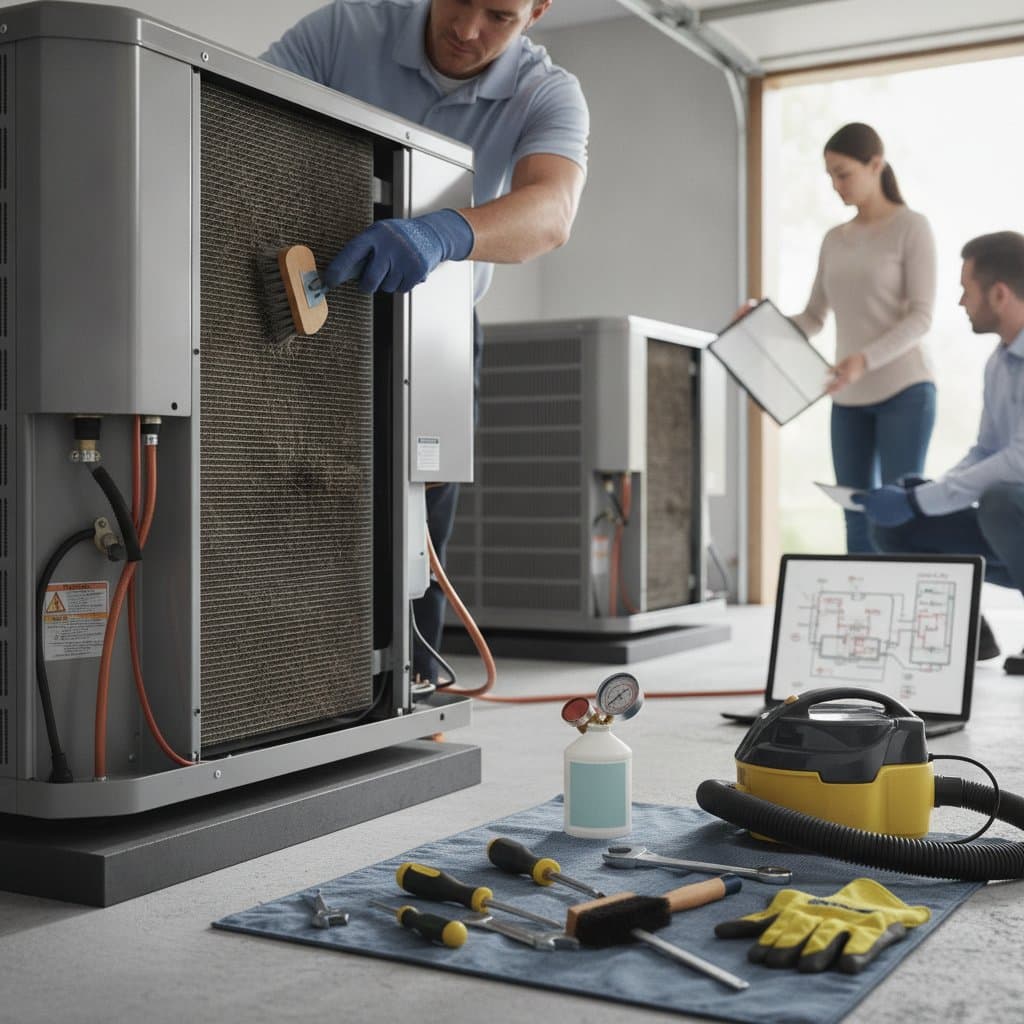
4. Clean the Condenser Coils
Dirty coils reduce the system ability to transfer heat and may cause overheating. Shut off power to your AC before cleaning. Remove the top panel or side panels carefully. Use a soft brush or vacuum with a brush attachment to remove surface debris. For deeper cleaning, apply a coil cleaner designed for HVAC systems and rinse gently with a garden hose from inside out.
5. Inspect the Evaporator Coil and Drain Line
The indoor evaporator coil absorbs heat from your home and collects dust and mold over time. Accessing it usually requires removing a panel on the indoor unit. If buildup appears, use a soft brush and a no rinse coil cleaner. Ensure the condensate drain line remains clear. A blocked drain causes water leaks and mold growth around the air handler. Pour a cup of vinegar solution through the drain line to remove algae and prevent clogs.
6. Check Refrigerant Levels
Low refrigerant levels cause the system to blow warm air or freeze up. This issue requires professional service. A technician measures pressure, identifies possible leaks, and recharges refrigerant if needed. Homeowners should never handle refrigerants because improper handling damages the system and violates environmental regulations.
7. Examine Electrical Components and Connections
Loose wiring or corroded terminals cause intermittent shutdowns or circuit trips. Turn off power to the unit before inspecting electrical components. Look for signs of frayed wires, burnt marks, or loose screws. Address any irregularities through a licensed HVAC technician to ensure safety and system reliability.
8. Lubricate Moving Parts
Motors, fans, and other moving components require proper lubrication to operate smoothly. Some modern units have sealed bearings that need no maintenance. Older systems may require periodic oiling. Follow manufacturer instructions for lubrication points and use only approved lubricants.
9. Test the System Performance
After cleaning and inspection, restore power to the unit and run a full cooling cycle. Listen for unusual noises such as rattling or grinding. Measure the temperature difference between air entering the return vent and air leaving the supply vents. A difference of fifteen to twenty degrees indicates proper operation. Weak or inconsistent air requires further diagnosis.
Common AC Problems to Watch For
Even with regular maintenance, air conditioners develop issues. Recognizing early warning signs helps prevent more serious problems.
- Warm air from vents often results from low refrigerant or a dirty condenser coil.
- Weak airflow usually links to a clogged filter or blocked ductwork.
- Unusual noises such as grinding, rattling, or squealing indicate a loose component or worn motor bearings.
- Frequent cycling results from an oversized unit or thermostat malfunction.
- Unpleasant odors suggest mold in the coil or drain pan when musty, or electrical issues when burning.
Schedule an inspection with a qualified technician if symptoms persist after basic maintenance. Ignoring them leads to higher repair costs or complete system failure during peak summer heat.
Cost Saving Tips for Efficient Cooling
Preventive maintenance reduces energy use. Homeowners can take additional steps to keep costs low during hot months.
- Seal air leaks around windows, doors, and duct joints to prevent cooled air from escaping.
- Use ceiling fans to circulate air and allow a higher thermostat setting without losing comfort.
- Install reflective window coverings or insulated curtains to block heat from direct sunlight.
- Schedule cooling cycles strategically with a programmable thermostat to reduce runtime when you are away.
- Keep vents open and unblocked to balance airflow throughout the home.
Combining AC maintenance with smart thermostat use cuts annual cooling costs substantially.
Protecting Your Cooling Investment
Consistent AC maintenance protects indoor comfort, reduces energy bills, and prevents unexpected repair costs. Simple steps such as changing filters or clearing debris create a remarkable difference in performance. Schedule a tune up early, complete your checklist, and confirm that every part of your air conditioner stands ready to deliver reliable comfort.




