
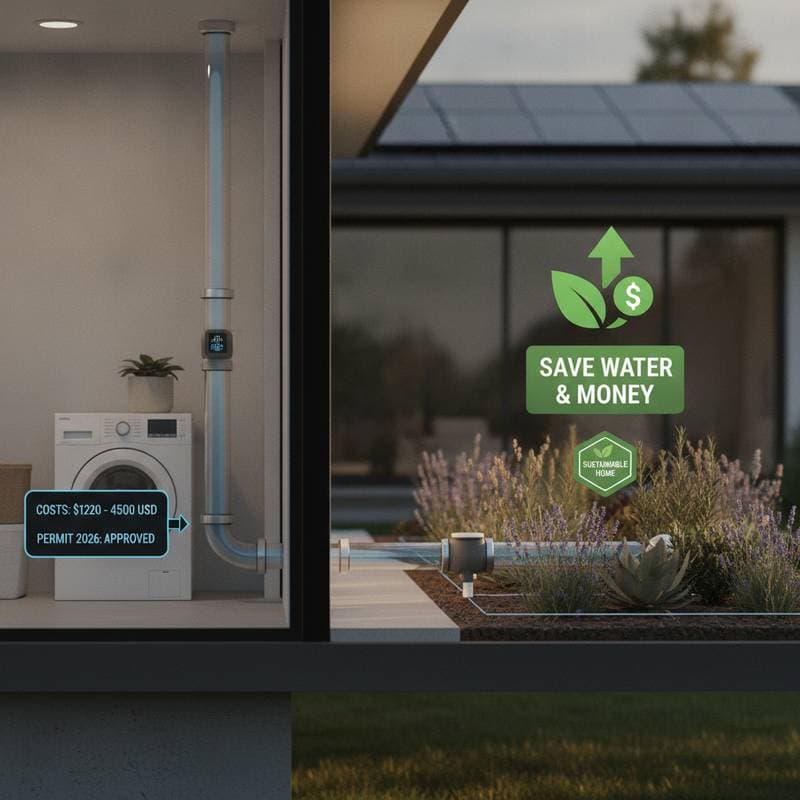
Why Homeowners Choose Greywater Systems
Greywater systems capture water from showers, sinks, and laundry for reuse in irrigation or toilet flushing. This approach lowers monthly utility expenses and supports gardens during dry periods. Homeowners also reduce pressure on septic tanks and municipal water supplies.
Key advantages include the following:
- Outdoor water consumption drops by as much as 50 percent when laundry and shower water irrigates lawns.
- Gardens remain healthy without additional municipal supply during restrictions.
- Septic systems receive less volume, which can extend their service life.
- Overall household demand on public water decreases.
Typical Installation Costs
Project expenses depend on system scale, site conditions, and whether gravity or pumped delivery is required. A basic diverter serving one washing machine often totals a few hundred dollars. Larger branched systems that serve multiple fixtures commonly reach several thousand dollars.
Cost Components
| Component | Low-End Cost | High-End Cost | Notes |
|---|---|---|---|
| Diverter valve and piping | $150 | $400 | Gravity feed only |
| Storage tank | $300 | $1,000 | Size and material affect price |
| Filters and screens | $100 | $600 | Sediment plus carbon stages |
| Pumps and controls | $400 | $1,200 | Required for uphill delivery |
| Labor | $800 | $3,000 | Site access and plumbing changes |
| Permits and inspections | $100 | $500 | Vary by jurisdiction |
Soil type, slope, and distance between collection points and irrigation zones can shift these figures. Homeowners should obtain written quotes that itemize each line.
Permit Requirements
Most jurisdictions classify greywater work as plumbing and require permits before installation begins. Officials typically verify that the system maintains a physical separation from potable lines and that overflow routes to an approved drain. Some areas limit irrigation to subsurface emitters or require backflow prevention devices.
Contact the local building department early. Provide a simple site sketch showing collection points, tank location, and discharge zones. Approval times range from a few days to several weeks depending on review workload.
Maintenance Tasks and Ongoing Costs
Regular attention keeps filters clear and prevents odors or clogs. Homeowners usually spend less than one hour each month on the following steps:
- Rinse or replace filter cartridges every three months.
- Flush collection lines to clear sediment.
- Inspect valves and emitters for proper flow.
- Check pump operation on an annual schedule if the system includes mechanical components.
Replacement parts for pumps or valves average under $200 per year for most residential setups.
Measuring Return on Investment
A mid-size system can reuse 30,000 to 40,000 gallons annually in a typical household. At current water rates this volume often recovers the initial outlay within three to five years. Pairing greywater with rainwater collection increases flexibility during extended dry spells.
Steps Before Starting Work
- Review current local codes and permit fees.
- Map existing plumbing to identify the shortest collection routes.
- Begin with a single-fixture diverter if the concept is new.
- Hire licensed plumbers for any work that alters drain lines.
- Design tank and filter locations with clear access panels.
Early planning avoids later modifications that raise total expense.
Planning Your Installation
Greywater reuse delivers measurable water savings and garden support when sized correctly and installed according to local rules. Begin with a site assessment and permit inquiry to set a realistic budget and timeline.




