
Essential Chimney Prep for Safe Fall Fireplace Fires
A fireplace brings warmth and comfort as cooler air moves in. The chimney requires attention before any fire starts. Neglect leads to smoke issues or fire hazards. This guide details preparation steps, costs, and safety measures.
Step-by-Step Guide to Fall Chimney Preparation
1. Start with a Visual Inspection
Examine the firebox, damper, and flue with a flashlight. Check for cracked bricks, loose mortar, and moisture stains. Inspect the exterior cap and flashing for security. Structural damage such as leaning or missing bricks requires professional repair before use.
Suggested image:
Alt text: Close-up of chimney crown and cap showing proper seal against moisture.
2. Schedule a Professional Cleaning
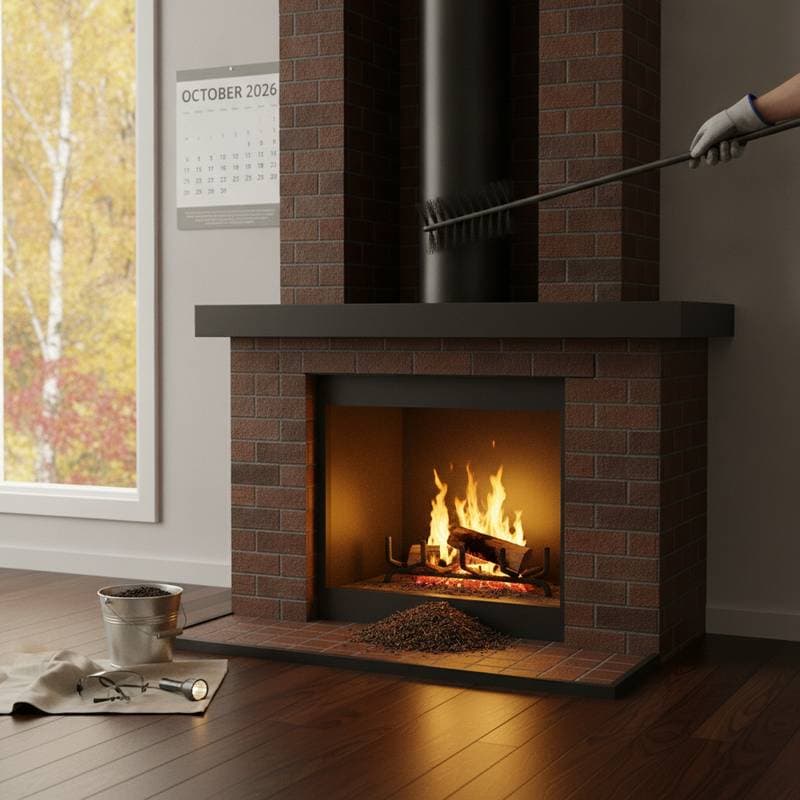
Soot and creosote accumulate out of sight. A certified sweep cleans the flue with brushes and vacuums. Video tools reveal hidden areas. Most wood-burning households need one annual service, with more frequent visits for heavy use.
Suggested image:
Alt text: Chimney technician using rotary brush system inside flue during cleaning.
3. Test the Damper and Draft
Operate the damper handle to confirm smooth movement. A faulty damper allows smoke to enter living spaces. Test draft by burning a small newspaper piece near the opening. Smoke must rise steadily. Warm the flue briefly if airflow stalls.
4. Examine the Chimney Cap and Screen
The cap blocks weather and animals. The screen prevents debris entry while allowing gas escape. Replace damaged screens immediately. A secure cap also reduces spark hazards to the roof.
Suggested image:
Alt text: Properly installed chimney cap with mesh screen preventing debris entry.
5. Check the Chimney Liner
Inspect for cracks, flaking, or rust in clay, metal, or ceramic liners. Damage permits heat transfer to framing. A camera inspection covers the full flue length. Stainless-steel liner installation improves safety in older chimneys.
6. Inspect the Hearth and Firebox
Remove ashes and debris. Look for gaps, loose bricks, and warped metal. Small cracks need refractory cement. Extensive damage requires professional attention.
Suggested image:
Alt text: Clean fireplace firebox with visible intact mortar joints and no soot buildup.
7. Test Smoke and Carbon Monoxide Detectors
Verify alarms near the fireplace. Replace batteries as needed. Functional detectors provide early alerts for leaks or poor combustion.
Common Repairs and Their Costs
Average costs vary by location. The following table outlines typical ranges.
| Task | Description | Typical Range |
|---|---|---|
| Chimney Sweep | Full cleaning with brush and vacuum | Moderate |
| Chimney Cap Replacement | Includes new stainless or copper cap | Low to moderate |
| Mortar Repointing | Replacing damaged mortar joints | Moderate |
| Liner Installation | Stainless-steel or ceramic liner insert | High |
| Full Chimney Rebuild | For severe structural damage | Very high |
Suggested chart:
Alt text: Bar chart comparing typical chimney maintenance costs by service type.
Early repairs prevent larger expenses. Documented maintenance supports insurance considerations.
Expert Opinions and User Insights
Technicians report frequent summer blockages from nests and debris. Annual cleaning resolves many smoke complaints quickly. Certified professionals follow full-system standards and carry insurance.
Comparing DIY and Professional Options
Homeowners can manage basic tasks between visits. The table below shows suitable divisions.
| Task | DIY Possible | Expert Recommended |
|---|---|---|
| Basic soot removal from firebox | Yes | No |
| Flue cleaning with full brush system | Risky | Yes |
| Damper lubrication | Yes | Optional |
| Liner repair or replacement | No | Yes |
| Structural brickwork | No | Yes |
Professional inspections detect issues invisible to homeowners.
Implementing Your Maintenance Plan
Begin with a visual review. Book a sweep before peak season. Confirm detector function and keep provider contacts handy. Consistent care delivers reliable heat, protects property value, and extends system life.
A well-maintained chimney supports safe, efficient fires throughout the season.




