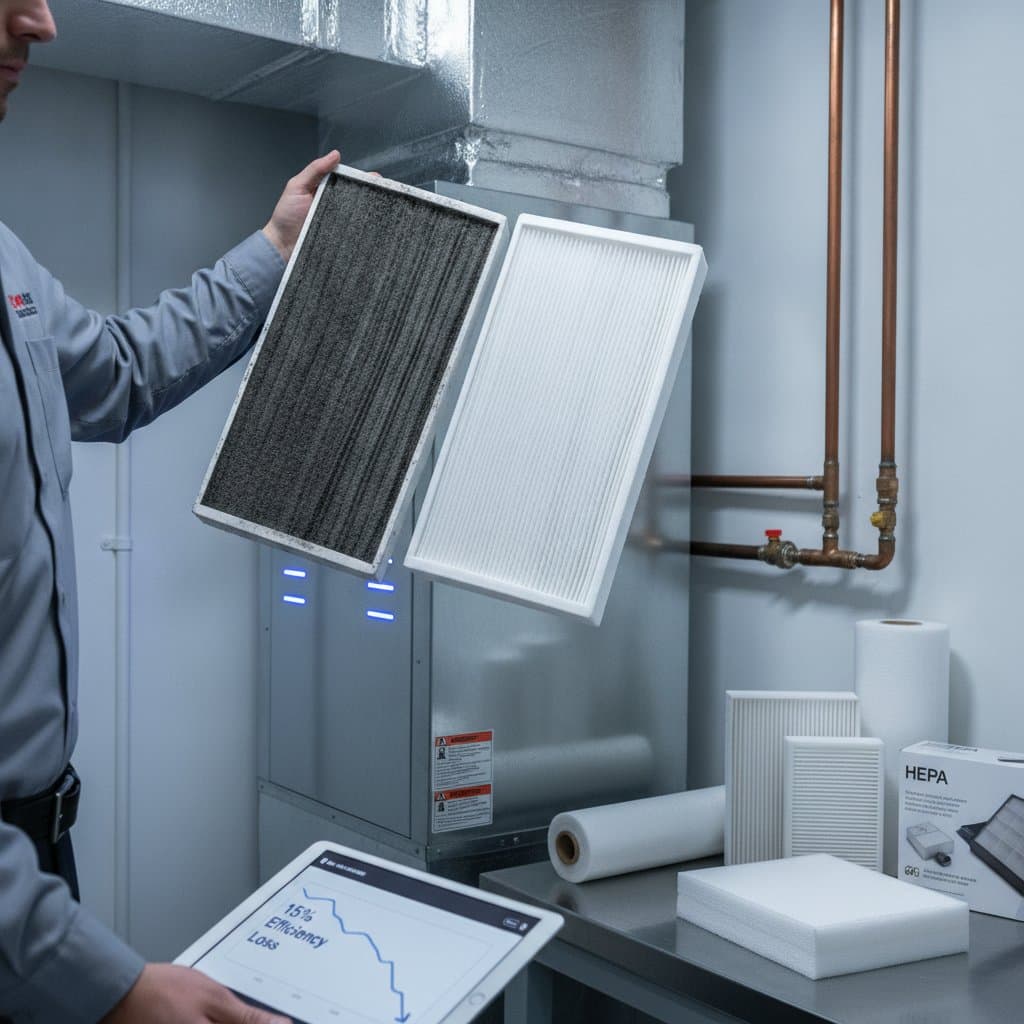
When and Which HVAC Filter to Swap This Summer
A home never feels quite right when the air feels heavy or dusty. You might notice allergies flaring up, rooms cooling unevenly, or your system running longer than usual. These are all signs that your HVAC filter is due for a change.
Summer heat puts extra stress on your cooling system. Having the right filter in place keeps indoor air clean while helping equipment run efficiently. This guide breaks down exactly when to replace your HVAC filter, which filter to choose, and how to keep your system performing its best through the hottest months.
The Quick Answer: Replace Every 30 to 90 Days
Most homeowners should replace their HVAC filters every 30 to 90 days during the cooling season. That range depends on your home size, occupancy, and air quality.
Here is a quick breakdown:
- Small home with no pets: Every 90 days
- Larger home or light use of AC: Every 60 days
- Home with one pet: Every 45 days
- Multiple pets or allergies: Every 30 days
- Construction or renovation nearby: Every 30 days
These intervals assume standard filters. High efficiency filters may last longer, but they also restrict airflow more quickly if not properly sized. Always check your filter monthly during heavy use, even if you use a longer lasting type.
Choosing the Right Filter Material
Filter material affects both performance and lifespan. Here are the most common types.
Fiberglass Filters
- Thickness: Usually 1 inch
- Best for: Basic dust control
- Lifespan: 30 days
- Cost: 1 to 5 dollars each
These filters protect your system but do little for air quality. They are fine for secondary homes or short term rentals but not ideal for families with allergies.
Pleated Filters
- Thickness: 1 to 4 inches
- Best for: Most homes
- Lifespan: 60 to 90 days
- Cost: 10 to 40 dollars each
Pleated filters have a larger surface area that traps smaller particles. They are the go to choice for most homeowners balancing cost and performance.
Electrostatic Filters
- Thickness: 1 to 2 inches
- Best for: Homes with pets or smokers
- Lifespan: Washable, reusable up to 10 years
- Cost: 40 to 100 dollars
These filters use static electricity to attract dust and dander. They require periodic washing, usually every 4 to 6 weeks. Keep a spare on hand while one dries.
HEPA Filters
- Thickness: 4 to 5 inches
- Best for: Allergy or asthma sufferers
- Lifespan: 6 to 12 months
- Cost: 50 to 120 dollars
HEPA filters capture up to 99.97 percent of particles as small as 0.3 microns. They can restrict airflow in older systems, so confirm compatibility before installing.
Common Mistakes to Avoid
Even a simple job like changing filters comes with pitfalls. Avoid these frequent errors.
- Using the wrong size: A gap as small as one quarter inch can let unfiltered air bypass the filter.
- Ignoring airflow direction: Installing backward reduces effectiveness and increases strain on the system.
- Overusing filters: Pushing a filter past its lifespan leads to restricted airflow and higher electric bills.
- Choosing a MERV rating too high: Filters that are too restrictive make your blower work harder, increasing wear.
- Skipping monthly checks: Dust levels vary seasonally. Always inspect before assuming it still looks clean.
When to Call a Professional
If you replace your filter often but still notice dust buildup, poor airflow, or uneven cooling, your ductwork or blower motor could be the problem. A professional HVAC technician can measure static pressure and airflow rates, inspect for duct leaks or blockages, test the blower motor speed, and recommend compatible high efficiency filters.
Hiring a pro costs between 80 and 150 dollars for an inspection, but it can prevent thousands in future repairs. Look for certified technicians who follow National Air Duct Cleaners Association standards.
Accessibility and Safety Tips
For households with mobility challenges or high mounted return vents, filter changes can be difficult. Here are solutions.
- Install grille mounted filters for easier access from the floor level
- Use a telescoping reach tool to remove and replace filters without climbing
- Schedule a quarterly maintenance plan with a professional to handle replacements safely
- Label vents clearly if your home has multiple return locations to avoid confusion
Safety comes first. Never climb unstable ladders or stretch to reach ceiling vents without help.
Next Steps for Efficient Cooling
Measure your current filter dimensions today. Select a pleated or electrostatic option matched to your household needs. Set a recurring calendar reminder based on the 30 to 90 day guidelines. These actions deliver cleaner air, lower energy costs, and longer equipment life throughout the season.